
How to Do Amazon Marketing: The most popular advice on how to do Amazon marketing is already behind the marketplace. Add keywords, launch Sponsored Products, raise bids on exact match terms, and watch ROAS. That playbook can still produce sales, but it misses the harder problems facing sellers now: AI-mediated discovery, conversational shopping, rising media costs, and profit that survives after fees and advertising.
Amazon marketing in 2026 requires a broader operating system. Your product detail page must make sense to shoppers and shopping assistants. Your campaigns must collect useful search and product signals instead of just spending budget. Your reporting must distinguish revenue that would have happened anyway from incremental demand.
And the work isn’t about abandoning PPC. It’s about using PPC, creative, content, reviews, and economics together.
How to Do Amazon Marketing: Table of Contents
- The New Reality of Amazon Marketing
- Building a Compliant and Converting Listing
- Mastering the Modern Advertising Stack
- Enforcing Profit Discipline Beyond ROAS
- Leveraging Reviews and External Traffic
- Scaling Tactics and Continuous Optimization
How to Do Amazon Marketing: The New Reality of Amazon Marketing
“Just run Sponsored Products” is no longer a complete Amazon strategy. It can generate measurable sales, but relying on it alone turns growth into a bidding contest. Durable brands create demand before the click, convert it on the detail page, and measure whether each sale produces acceptable profit.
Amazon Ads identifies faster inspiration-to-purchase cycles and AI-influenced shopping behavior as forces shaping 2026, while industry coverage points toward assistant-native placements and AI-enabled campaign management. Amazon Ads’ 2026 marketing trends provides useful context. A conversational shopper may describe a need, compare alternatives, or request a recommendation based on use case, compatibility, or budget rather than enter one precise keyword.
That changes how product information must be written. A listing built around repetitive search terms can struggle when discovery depends on interpretation. Conversational discovery needs clear facts, natural language, explicit use cases, and credible differentiation. “Lightweight” says little by itself. Explain what the product helps the customer do. “For travel” becomes more useful when the page identifies the travel problem, intended user, and compatibility limits.
Practical rule: Write the detail page so shoppers understand the product quickly and AI systems can match it accurately to a specific need.
Profit requires a second correction to older Amazon tactics. Attractive ROAS can hide weaker economics when media costs rise, organic demand softens, or advertising captures customers who were already ready to buy. Benchmark reporting indicates that rising media costs can coexist with improving ROAS, making surface performance misleading. Evaluate contribution after fees, advertising, returns, and operational costs, not just the platform metric.
Use this operating model:
- Relevance earns discovery.
- Clarity earns the click and conversion.
- Creative earns attention beyond keyword search.
- Measurement shows whether growth is incremental.
- Profit determines whether scaling is safe.
For day-to-day control, the Amazon Seller Central management guide belongs alongside the advertising workflow. Seller Central brings inventory, content, pricing, customer experience, and operational constraints into the same working environment. Ads cannot compensate for an unavailable product, an unclear offer, or a listing that creates avoidable returns.
How to Do Amazon Marketing: Building a Compliant and Converting Listing
Before you spend on traffic, make the product detail page answer the buyer’s basic questions without forcing detective work. What is it? Who is it for? What problem does it solve? What makes it different? What are its limits? If the page leaves those questions unresolved, advertising only pays to send more shoppers into uncertainty.
Amazon’s content rules create hard boundaries. Product titles, descriptions, bullet points, and images can’t contain pornographic, obscene, or offensive content under Amazon’s product-detail-page content requirements. Treat compliance as part of conversion strategy, not as a final moderation check. A suppressed or restricted listing can’t convert traffic, regardless of campaign quality.
Build the page around buyer decisions
Start with the title. Put the product type first, then the most important differentiator, use case, compatibility detail, or size information. Avoid stuffing every possible phrase into one sentence. A title should help a shopper identify the right product before they evaluate the brand.
Use bullet points to handle decisions in sequence:
- Primary outcome: Explain the problem the product solves in concrete language.
- Product proof: Describe materials, construction, included components, or operating features without inflated claims.
- Fit and limitations: State compatibility, intended users, dimensions, exclusions, and setup requirements.
- Use context: Show where and when the product belongs in the buyer’s routine.
- Risk reduction: Clarify care, warranty, support, or what arrives in the package.
Backend search terms should support discovery without duplicating visible copy or adding irrelevant language. Think in terms of legitimate variations, customer vocabulary, and use cases that fit the product. Backend fields won’t rescue a weak value proposition, and they shouldn’t become a dumping ground for unrelated queries.
Images do more selling than most keyword edits. Amazon’s listing guidance says the main image should show only the actual product on a pure white background, with the product filling at least 80% of the image area. Amazon also recommends images of at least 1,000 pixels on the long side so shoppers can zoom without blur. Follow the requirements in Amazon’s product advertising image guidance, then use secondary images to demonstrate scale, use, components, comparisons, and important details.
Make enhanced content do a job
A+ Content shouldn’t repeat the bullets in a wider layout. Use it to explain the brand’s point of view, compare related products, demonstrate a workflow, or resolve objections that need more visual context. A useful module reduces ambiguity. It doesn’t decorate the page.
AI-driven discovery makes this structure even more important. Use natural language in the title, bullets, image text where appropriate, and A+ modules, but keep every statement precise. An assistant can only recommend a product responsibly when the page gives it accurate attributes and clear boundaries.
Finally, inspect the offer itself. Price, coupons, fulfillment, stock status, variation structure, and reviews influence whether a click becomes a sale. Amazon product listing optimization guidance is useful here, but the operating principle is simple: fix the conversion environment before increasing traffic.
How to Do Amazon Marketing: Mastering the Modern Advertising Stack
Amazon advertising uses a cost-per-click auction model across key campaign types. Amazon Ads support states that CPC bids apply to Sponsored Products, Sponsored Brands configured for page visits, and Sponsored Display campaigns configured for page visits or conversions. In practical terms, you pay for eligible clicks rather than purchasing a flat-fee placement. Amazon’s CPC bidding documentation explains where this model applies.
That structure makes bid control important, but bid control isn’t the same as strategy. A higher bid can buy more opportunities while worsening economics. A lower bid can protect margin while starving a campaign of useful data. The right decision depends on query intent, product economics, placement, inventory, conversion quality, and the role the campaign plays in the funnel.
Use campaign types for different jobs
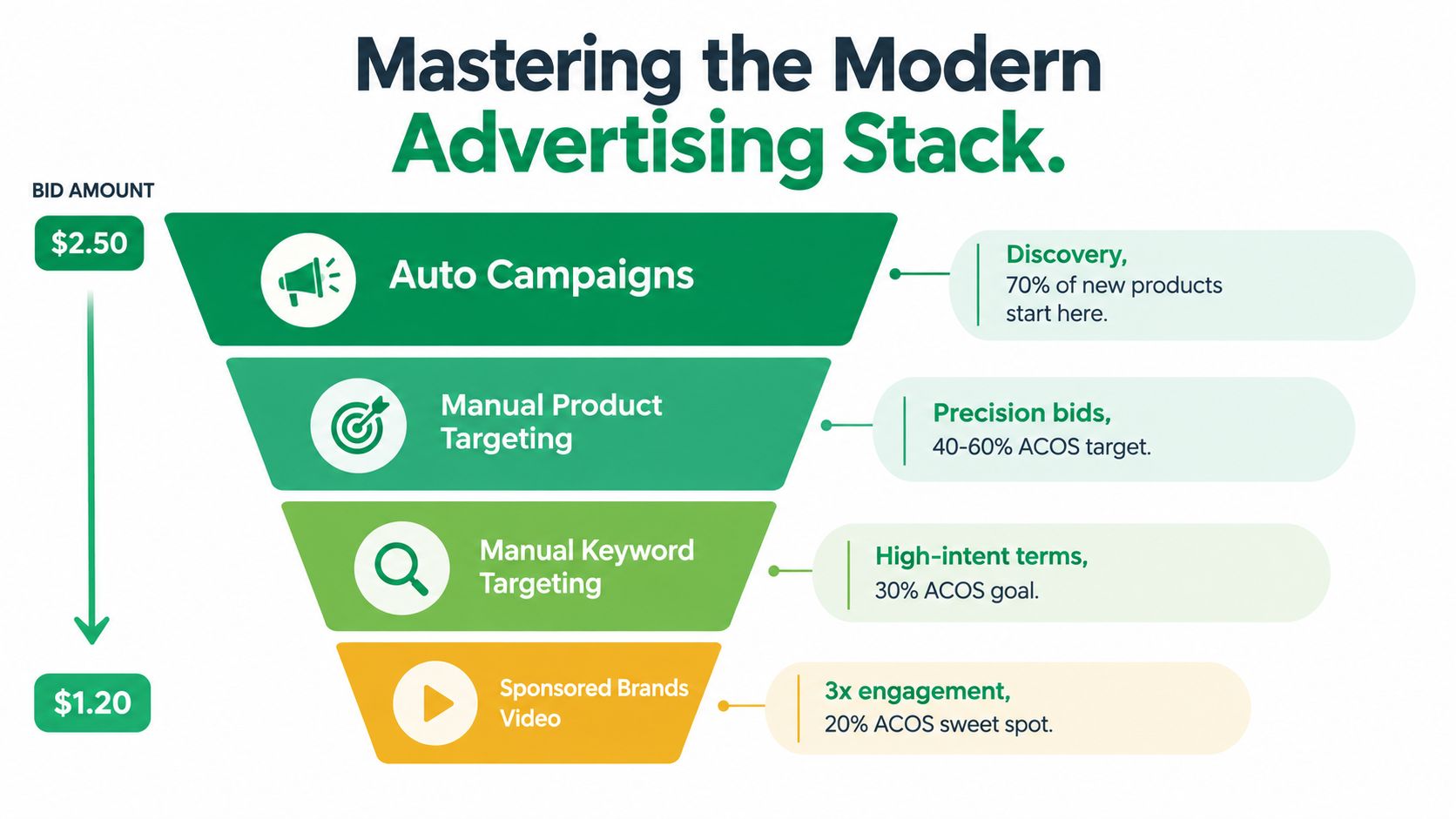
Sponsored Products belong close to product discovery and purchase. Use automatic targeting to uncover queries and product relationships, then move useful search terms and product targets into controlled manual campaigns. Separate branded, non-branded, competitor, and product-targeting logic where the data supports it. That separation makes budget and intent easier to read.
Sponsored Brands can introduce the brand rather than only one product. Send shoppers to a focused Store page or relevant collection when multiple products solve adjacent problems. A broad destination wastes the attention you paid to earn.
Sponsored Display can support consideration, cross-selling, and retargeting. It can be useful when the buyer needs more time, but it also demands restraint. Retargeting a shopper who was already likely to purchase isn’t automatically incremental growth.
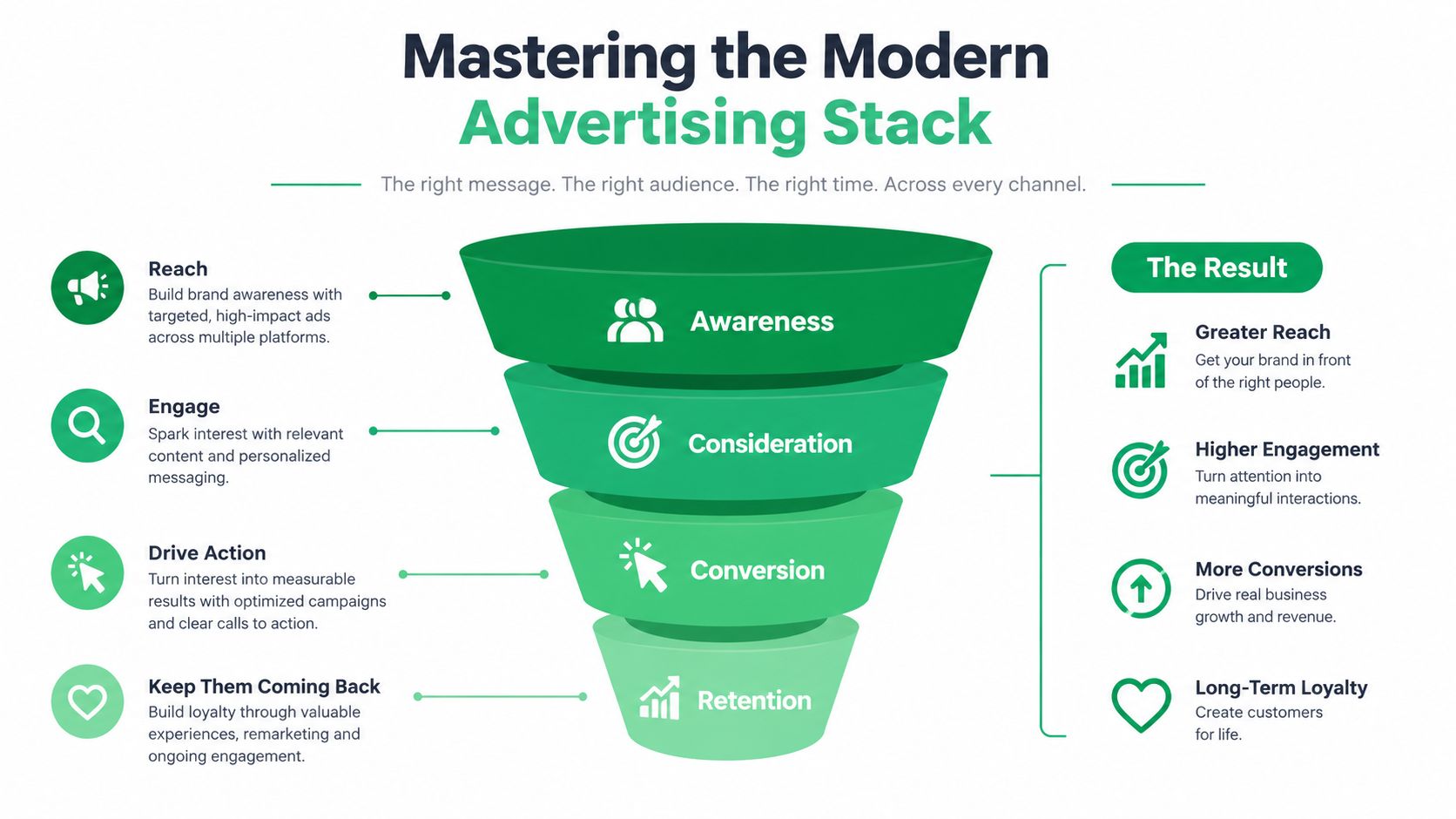
The stack works when each layer has a defined role. It fails when every campaign competes for the same audience with overlapping budgets and no economic guardrails.
How to Do Amazon Marketing: Adapt creative for conversational discovery
AI-mediated shopping changes the creative brief. Don’t write only for a typed phrase. Write for the underlying request.
A customer asking for a practical gift for a frequent traveler needs different information from a customer searching a model number. Your copy should make the product’s use case, audience, constraints, compatibility, and trade-offs easy to extract. Product images should reinforce those facts rather than introduce a lifestyle scene that looks attractive but communicates little.
Use campaign data to find language customers use, but don’t turn every discovered phrase into awkward copy. Search terms are evidence about demand. They aren’t automatically good marketing language.
The winning creative often isn’t louder. It’s easier to classify, easier to trust, and easier to connect to a real customer problem.
AI-assisted campaign management can help with organization, targeting suggestions, and bid workflows, but automation still follows the inputs and rules you give it. Set exclusions, monitor search-term quality, protect branded budgets, and check whether automated changes align with contribution margin. A system that optimizes an incomplete goal can spend efficiently on the wrong outcome.
A practical weekly review should examine wasted queries, converting non-branded terms, placement differences, product-targeting quality, budget pressure, and creative engagement. For deeper campaign operations, use this Amazon advertising campaign resource as a companion to the platform’s own reporting.
Enforcing Profit Discipline Beyond ROAS
ROAS can look healthy while a product loses money. It measures attributed sales returned for advertising spend, not whether the purchase was incremental, whether the shopper was new to the brand, or whether the order covered product costs, Amazon fees, fulfillment, promotions, returns, and discounts.
That distinction should determine budget allocation. A campaign with lower last-click ROAS may acquire valuable new-to-brand customers, while a high-ROAS campaign may mainly capture shoppers who already intended to buy. Judge both against contribution and growth.
Replace one score with an economic view
Build a contribution model for each important SKU. Include revenue, landed product cost, referral and fulfillment fees, discounts, expected return impact, and advertising spend. Then set the maximum acquisition cost the product can support without weakening the business.
Review these measures together:
- Attributed sales: Useful for checking delivery, but not proof that advertising created the purchase.
- Incremental sales: Demand associated with advertising after baseline activity and reasonable comparison methods are considered.
- New-to-brand growth: A signal that campaigns are expanding the customer base instead of only capturing existing buyers.
- Contribution margin: Money remaining after variable costs, rather than revenue reported by the ad console.
- Lifetime value: A basis for accepting a different acquisition threshold when repeat purchase or cross-sell is realistic.
Use this marketing ROI calculation guide to structure the financial logic. The spreadsheet format matters less than the decision rule. Define the value of a profitable order before campaign results tempt you to justify an unprofitable one.
| Metric Type | What It Measures | Why It Can Be Misleading |
|---|---|---|
| Vanity Metrics | Attributed revenue, clicks, impressions, and headline ROAS | They can reward demand capture without proving incremental growth or healthy margin |
| Profit Metrics | Contribution margin, incremental sales, new-to-brand growth, and lifetime value | They require better inputs and judgment, but connect advertising to business value |
How to Do Amazon Marketing: Allocate budget by role
Protect campaigns that defend branded demand and convert efficiently, but don’t let strong reporting absorb the entire budget. Fund discovery when the product can support acquisition and the team has a process for turning useful signals into better targeting, offers, and customer acquisition decisions.
Rising media costs make this discipline more important. Benchmark reporting describes Amazon ad CPMs climbing sharply year over year even as CPA falls and ROAS improves. Apparent efficiency can therefore coexist with more expensive media, especially when attribution captures demand that would have converted anyway.
Set thresholds and act on them. If a campaign exceeds its allowable acquisition cost, reduce exposure, improve the offer, tighten targeting, or stop it. If it brings new customers at a defensible margin, keep funding it even when its ROAS trails branded search. In 2026, profit control has to sit above dashboard scores.
Leveraging Reviews and External Traffic
Reviews and external traffic work best as one trust system, not as disconnected growth hacks. Advertising creates an opportunity, the listing explains the product, reviews reduce perceived risk, and external audiences can bring qualified shoppers who already understand the problem.
The review process must stay compliant. Use Amazon’s Request a Review function where available, provide neutral post-purchase support, and use package inserts only for permitted service and product guidance. Don’t ask for positive reviews, offer incentives for reviews, or pressure dissatisfied customers to contact you instead of reviewing. Short-term review manipulation creates account and trust risk that no ranking lift can justify.
Negative feedback deserves operational attention. Look for repeated complaints about sizing, packaging, setup, durability, or misleading expectations. A courteous response doesn’t erase the review, but it can reveal the product or content change that prevents the next one.

Turn traffic into a measurable flywheel
External traffic should have a reason to exist beyond “send visitors to Amazon.” A creator video can demonstrate the product in context. An email campaign can reach existing subscribers with a relevant launch or replenishment offer. Social content can answer a use-case question before the shopper ever sees the listing.
Use Amazon Attribution when the channel and program support it, so you can compare external activity with Amazon outcomes rather than relying on platform-level engagement. Track the quality of the visit, not just its volume. A smaller audience with clear product intent can be more useful than broad traffic that produces clicks but no purchases.
A practical flywheel looks like this:
- External content explains the problem and product use.
- The Amazon page confirms the promise with accurate copy and images.
- A smooth product experience earns authentic feedback.
- Feedback improves the page, product, packaging, or support.
- Better clarity improves conversion across paid and organic discovery.
A+ Content supports the middle of that loop by answering objections visually. Reviews supply independent evidence. External traffic supplies demand signals and new customer opportunities. None of these elements fixes a poor product, but together they can make a credible offer easier to discover and easier to choose.
The guide to getting more reviews on Amazon is a useful reference for building a compliant process. Keep the workflow simple enough that operations, customer support, and marketing can maintain it consistently.
Scaling Tactics and Continuous Optimization
Scaling doesn’t begin when you increase every bid. It begins when the brand can absorb more demand without breaking inventory, margin, customer experience, or creative quality.
Consider a hypothetical launch for a product with a clear use case. Early campaigns gather search language and product-targeting signals. The team removes irrelevant traffic, improves the title and images, and builds a focused Store page. As conversion becomes more dependable, it adds complementary products, tests external creator content, and separates acquisition campaigns from retention and branded demand.
That scenario scales through controlled expansion, not one dramatic budget change.
Build a repeatable operating rhythm
Use Amazon Posts to keep the brand visible with product education, use-case content, and seasonal relevance. Evaluate Subscribe & Save when the product supports repeat purchasing and the offer can remain profitable after the associated economics. International expansion should follow operational readiness, including localized content, fulfillment, compliance, pricing, and customer support. Translating a listing alone isn’t a market-entry plan.
Testing needs structure. Change one meaningful variable at a time where possible, document the hypothesis, and avoid declaring a winner from a short-lived fluctuation. Main images deserve special care because they influence click behavior before shoppers read the page. A+ modules deserve separate tests because they work later in the decision process.
A disciplined cadence might look like this:
- Weekly: Review search terms, product targets, spend pacing, stock risk, placement performance, and customer complaints.
- Monthly: Reassess contribution thresholds, new-to-brand performance, creative tests, product-page questions, and budget by campaign role.
- At every launch or change: Record the reason, expected outcome, and measurement window before editing the account.
The scale-up point arrives when profitable demand is repeatable. Then you can expand targets, formats, audiences, content, and marketplaces in measured stages. If margin weakens, inventory tightens, or reviews reveal a product issue, slow down and repair the constraint.
Mr. Green Marketing, LLC offers Amazon marketing, creative tools management, creator content, SEO, PPC, and related digital strategy for businesses that need marketplace growth connected to broader acquisition goals. Visit Mr. Green Marketing, LLC to request a free audit and performance report, then use the findings to prioritize listing improvements, campaign structure, and profit-focused measurement.
Leave a Comment
sing in to post your comment or sign-up if you dont have any account.