
Best Lead Generation Examples: And the surprising part is this, the best lead generation examples are usually not the flashiest ones. They’re the systems that connect a clear audience, a strong offer, and a page or channel built to convert, which is why B2B websites still convert only 2%–5% of visitors into leads even while 90.7% of marketers use their websites for lead generation and sales, according to 2026 benchmark reporting on Martal’s lead generation statistics. That gap is the whole game. Traffic alone doesn’t do much unless the offer, the funnel step, and the follow-up are tight.
The strongest way to judge lead generation examples is to treat each one like a mini-funnel. Who is it for, where does it live, what does it promise, and what happens after the click? A blog post, a LinkedIn message, a webinar, and a referral program can all work, but they work for different audiences and different levels of intent. Immediate channels, like PPC and LinkedIn outreach, can generate leads fast. Compounding channels, like SEO and content marketing, can keep producing over time if you keep feeding them.
A practical benchmark also helps keep expectations grounded. Content marketing can generate 3x more leads at 62% lower cost, landing pages with video can increase conversions by 86%, and companies with 40+ landing pages can generate 12x more leads than those with fewer pages, according to 2026 industry research summarized by Colorlib. That’s why the best examples aren’t random tactics. They’re repeatable systems with a clear audience, a specific offer, and a measurable conversion event.
Best Lead Generation Examples: Table of Contents
- 1. Content Marketing and SEO-Driven Lead Magnets
- 2. Pay-Per-Click Advertising Campaigns
- 3. Email Marketing and Nurture Sequences
- 4. LinkedIn Outreach and Professional Networking
- 5. Landing Pages and Conversion Optimization
- 6. Social Media Advertising and Audience Targeting
- 7. Webinars and Virtual Events
- 8. Referral and Affiliate Programs
- 9. SEO Optimization and Technical Authority Building
- 10. Strategic Partnerships and Co-Marketing
- 10 Lead Generation Strategies Comparison
- Turn the Examples Into a Working Funnel
1. Best Lead Generation Examples: Content Marketing and SEO-Driven Lead Magnets
Content-led lead generation works when the topic matches a real buying question. A local service business can publish a guide that answers a problem people already search for, then gate a template, checklist, or audit behind a short form. That’s why examples like HubSpot’s free marketing templates, Neil Patel’s SEO guides, and Amazon seller content built around listing optimization are so durable. They meet demand where it already exists.
Audience, channel, offer, and CTA
The audience here is usually already researching. They’re not looking for a pitch, they’re looking for a fix. The channel is organic search, the offer is a downloadable resource or tool, and the funnel step is mid-to-top awareness moving into lead capture.
A useful CTA has to promise a concrete outcome. “Download the template,” “Get the checklist,” or “See the audit” are better than vague buttons because the visitor knows what happens next. If you want to keep the page useful after the form conversion, build internal paths into deeper content, which is also why a strong resource like this content marketing best practices guide belongs in the same ecosystem.
Practical rule: choose the keyword first, then choose the lead magnet. If the searcher wants an answer in five minutes, a long ebook is probably the wrong offer.
The implementation template is simple. Pick one long-tail keyword, write the page to solve that search intent, add a focused download, and connect the form to email follow-up. The trade-off is speed versus scale. SEO is slower than paid traffic, but the asset can compound if the page keeps ranking.
Mini-funnel template: search query, educational page, gated resource, email capture, nurture sequence.
2. Best Lead Generation Examples: Pay-Per-Click Advertising Campaigns
PPC is the fastest way to buy visibility when the buyer already has intent. A contractor running Google Local Services Ads, an e-commerce brand bidding on branded and product keywords, or an Amazon seller using sponsored product campaigns all share the same logic, paid placements meet people who are already close to action. The channel is immediate, but the message has to be sharp or the budget leaks fast.
Audience, channel, offer, and measurement
The audience is usually high-intent searchers. The offer can be a quote request, a product page, a demo, or a local service call. The funnel step is bottom-of-funnel, and the measurement focus should be cost per conversion, not clicks for their own sake.
That’s why exact-match keywords and separate ad groups matter. They help keep the ad promise aligned with the landing page promise. Negative keywords matter just as much, because they stop irrelevant clicks before they become expensive habits. A good PPC campaign is really a message-testing system tied to a conversion page.
The implementation template is straightforward. Start with your highest-intent keyword set, build one landing page per category, and test copy variations continuously. Monitor Quality Score, but don’t treat it like a vanity metric. It only matters if it helps lower costs or improve relevance. For a deeper tactical breakdown, PPC for lead generation is the kind of internal asset that fits this channel well.
The fastest wins usually come from narrowing, not expanding. Broad targeting feels productive until the conversion rate tells the truth.
3. Best Lead Generation Examples: Email Marketing and Nurture Sequences
Email is one of the few channels that can keep moving someone forward without asking them to re-enter your world every time. That makes it ideal for free trial users, agency prospects, and abandoned carts. A SaaS onboarding series, a six-to-twelve-week agency nurture, or an e-commerce recovery flow all work because the recipient has already shown some interest.
Audience, funnel step, and CTA copy
The audience here is warm, not cold. The funnel step is post-capture, which means the email sequence does the selling. The offer might start as a helpful article or onboarding tip, then move toward a consultation, demo, or purchase.
CTA copy should match the stage. A new lead doesn’t need a hard close on email one. They need a useful next step. “See how it works,” “Reply with your biggest challenge,” or “Finish setup” will usually outperform generic buttons because the message feels like a conversation, not a blast.
Segmentation matters more than volume. If a subscriber came from a pricing page, that person should not get the same sequence as someone who downloaded an introductory guide. Keep the first few sends spaced out, then adjust based on behavior. And clean the list regularly, because deliverability is part of the funnel whether teams like it or not.
A practical implementation template looks like this. Tag the lead by source, write one welcome sequence, create one conversion sequence, and send people down different paths based on clicks or replies. If you want the automation layer to be more advanced, what marketing automation does is a useful operational companion.
4. Best Lead Generation Examples: LinkedIn Outreach and Professional Networking
LinkedIn works because the audience is already in a business context. Consulting firms, recruiters, and B2B SaaS teams can all use the platform to connect with decision-makers, but the mechanics are different from paid ads or SEO. You’re not waiting for a search query. You’re earning attention through profile clarity, relevant content, and careful outreach.
Audience, channel, offer, and trust signals
The audience is usually a named account, a job title, or a narrow professional segment. The channel is direct outreach plus content distribution. The offer can be a conversation, a consultation, a diagnostic, or an invite to a relevant asset.
Profile quality matters more than many teams admit. If the headline is vague and the summary reads like a brochure, the outreach gets weaker before it starts. The better play is to lead with a specific credibility signal, then use connection requests and comments to create a bit of familiarity before making an ask.
Practical rule: comment before you pitch. People are much more likely to reply when they’ve seen your name show up in a useful context first.
The implementation template is lean. Optimize the profile, post one useful insight each week, build a target list in Sales Navigator, and send personalized messages tied to a real reason for connecting. Then track responses, not just sends. For teams that want a broader framework around this channel, B2B lead generation tactics fits naturally here.
5. Best Lead Generation Examples: Landing Pages and Conversion Optimization
Landing pages are where most lead generation examples either succeed or fail. A strong ad can drive the right traffic, but if the page has too many exits, too many fields, or too much vague copy, the lead dies there. SaaS free-trial pages, free audit offers, and consultation pages all work for the same reason. They give one action a clean runway.
Audience, page goal, and form friction
The audience is already somewhat warm, often coming from an ad, email, or search result. The funnel step is conversion, and the page should focus on a single action, not a menu of options. The offer is usually a trial, a demo, an audit, or a consultation.
The best pages are honest about the trade. The visitor gives contact information, and the brand gives something useful immediately. Social proof helps, but only if it supports the action instead of cluttering the page. If the form has too many fields, drop them. If the headline names the product instead of the outcome, rewrite it.
A practical implementation template is to align one page with one message. Match the ad copy, write a benefit-driven headline, keep the form short, and test one element at a time. The image on a digital tablet can help anchor the experience visually, and this one fits the pattern well:
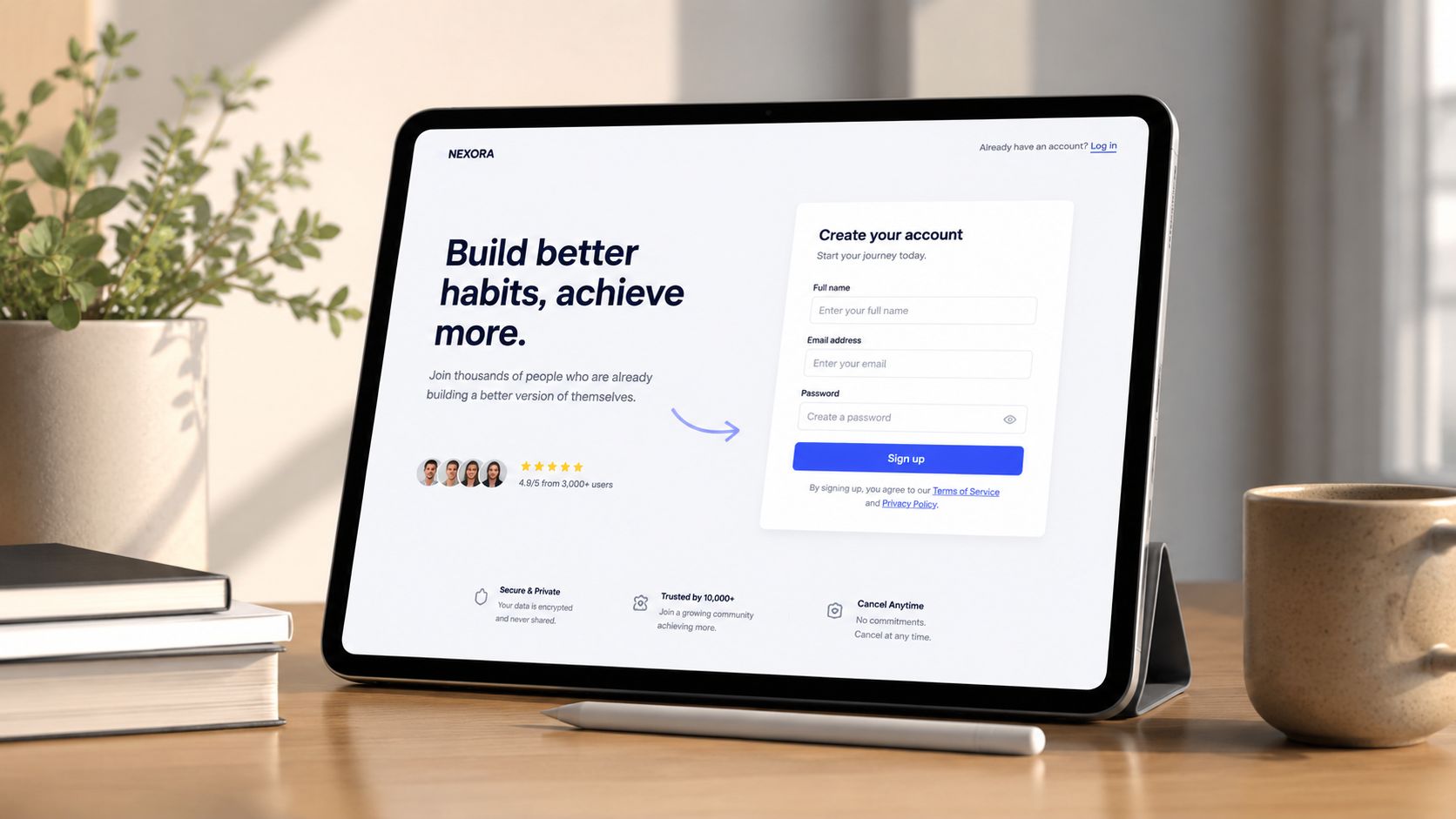
Examples of high-converting landing pages is the sort of internal reference that makes this asset easier to build in practice.
6. Best Lead Generation Examples: Social Media Advertising and Audience Targeting
Social ads are strongest when the audience is visual, mobile, and already spend time on the platform. E-commerce brands, service providers retargeting warm visitors, and B2C startups using lookalike audiences all fit well here. The buyer might not be ready to search, but they’re open to noticing a relevant offer while scrolling.
Audience, creative, and retargeting logic
The audience definition should be tighter than the first attempt for many marketing teams. Broad targeting wastes spend and muddies the data. The better move is to start with a narrow segment, use creative that matches the platform, and let the algorithm learn from a clean signal.
Video usually helps because it gives the user more context before the click. That matters when the product needs explanation or when the offer depends on visual appeal. Retargeting is especially useful for warm prospects, since they’ve already signaled some interest and just need the right nudge.
The funnel step varies. It can be top-of-funnel if you’re collecting emails, or mid-funnel if you’re pushing to a landing page or cart. The measurement focus should be on conversion quality, not just engagement. A lot of likes and comments can still produce weak leads.
Use social for precision, not volume. The best campaigns usually feel specific enough that the wrong person scrolls past without clicking.
The implementation template is clean. Define one audience, write one message angle, create multiple creative variations, track with pixels, and build a retargeting path for visitors who don’t convert on the first touch.
7. Best Lead Generation Examples: Webinars and Virtual Events
Webinars still work because they give people a reason to spend real time with your brand. HubSpot’s free certification and training webinars, Amazon seller optimization sessions, and agency education events all use the same basic structure, teach something useful, then invite the attendee to take the next step. The replay value extends the shelf life, which makes the asset more efficient than a one-time live pitch.
Audience, registration, and post-event follow-up
The audience is usually researching a problem and wants more depth than a blog post can provide. The funnel step is consideration, and the offer is education first, conversion second. The registration form should capture enough information to personalize the follow-up without turning the sign-up into a chore.
The live event needs discipline. Keep it focused, avoid padding, and leave room for a soft CTA at the end. If the session feels like a lecture with no useful outcome, attendance and follow-up both weaken. If it feels like an actual working session, the lead quality improves.
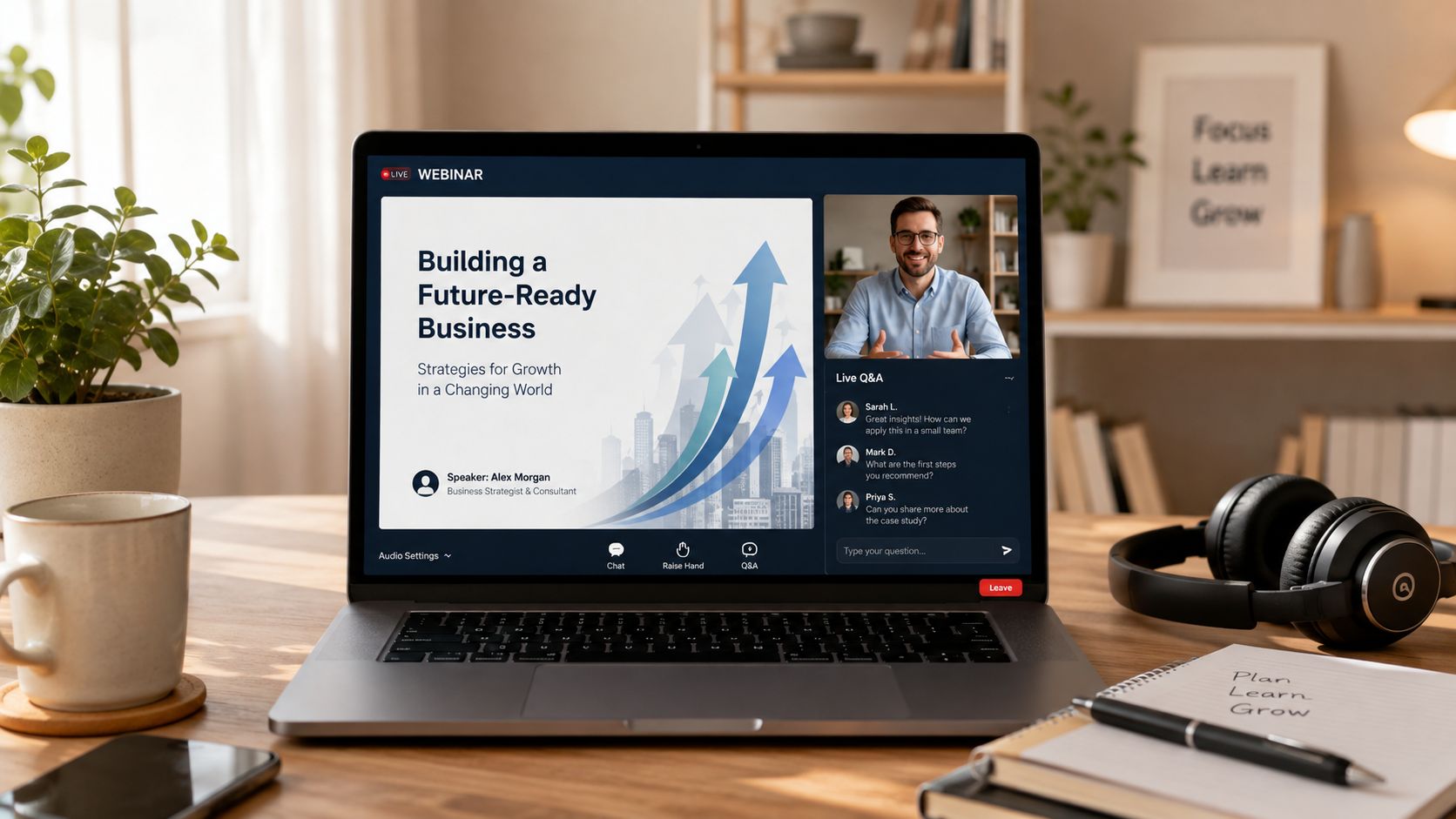
A practical implementation template starts before the event. Promote through email, social, and ads, send reminders close to the event time, then follow up quickly with attendees and no-shows. A good webinar image reinforces the format nicely:
8. Best Lead Generation Examples: Referral and Affiliate Programs
Referral programs work because trust transfers. A friend, customer, or partner can do the persuading before your sales team ever speaks. Slack, Amazon Associates, and Dropbox all show different versions of the same pattern. Existing users or partners become a distribution layer.
Audience, incentive, and conversion quality
The audience is your current customer base, your partner network, or an affiliate community. The offer is a reward, commission, or perk, and the funnel step is advocacy turning into acquisition. The strength here is not just volume. It’s the quality of the lead that comes in already carrying social proof.
The program has to be easy to use. If people need to hunt for a referral link, they won’t share it often. If the reward feels weak or one-sided, participation drops. If both the referrer and referee benefit, the action feels more natural.
A strong implementation template looks like this. Build a simple share flow, add pre-written copy, define the reward clearly, and track partner performance separately. Then give participants updates so they can see the program is real. That visibility keeps the loop alive.
Practical rule: if your customers need an explanation to refer you, the program is too complicated.
9. Best Lead Generation Examples: SEO Optimization and Technical Authority Building
SEO is the long game that keeps paying if the site stays healthy. Local contractors ranking for “plumber near me” or “HVAC services [city],” e-commerce category pages ranking for product terms, and agencies ranking for industry plus location keywords all depend on the same thing, matching intent with authority. Once the page ranks, the traffic keeps coming without a media bill attached to every visit.
Audience, structure, and authority signals
The audience is usually in an active search state. The funnel step can be early or late, depending on the query. The offer might be a service page, a pricing page, a location page, or an article that answers a buying question.
Technical quality matters because search engines need a page they can crawl, understand, and trust. That means clean internal linking, fast load times, strong Core Web Vitals, and content that answers the searcher’s intent. E-E-A-T signals help too, especially for service businesses where trust is part of the buying decision.
The implementation template starts with a keyword map. Build pages around intent, connect related pages internally, and fix the technical issues that make good content harder to rank. SEO isn’t glamorous, but it compounds in a way that most channels never do. That’s why it sits near the center of many lead generation plans.
10. Best Lead Generation Examples: Strategic Partnerships and Co-Marketing
Partnerships turn someone else’s audience into your distribution path, as long as the fit is right. A logistics provider co-hosting with an e-commerce platform, a digital agency teaming up with a tech platform, or Amazon sellers cross-promoting with complementary brands all follow the same logic. The companies don’t compete, but they serve similar customers.
Audience match, offer design, and shared effort
The audience is borrowed, but it still has to be relevant. If the partner’s followers don’t care about your offer, the campaign becomes noise. The channel can be a webinar, a co-branded guide, a newsletter swap, or a shared event. The funnel step is often mid-funnel, where credibility matters more than novelty.
The offer needs enough value that both audiences feel they gained something. A thin email exchange rarely works well. A useful co-created resource, though, can create a better result because each brand brings context, trust, and promotion.
The implementation template is to start small. Define responsibilities, build one valuable asset, promote it on both sides, and measure each partner’s contribution separately. That way, you can see whether the partnership deserves to scale. Good partnerships are selective. They work because the audiences overlap without being identical.
10 Lead Generation Strategies Comparison
| Tactic | Implementation Complexity | Resource Requirements | Expected Outcomes | Ideal Use Cases | Key Advantages |
|---|---|---|---|---|---|
| Content Marketing & SEO-Driven Lead Magnets | Moderate–High (research, long-form content, gating) | Content creators, SEO tools, time (months) | Compounding organic, high-intent leads and increased authority | Service providers, SaaS, e‑commerce building long-term authority | Low long-term CPL; sustainable traffic; thought leadership |
| Pay-Per-Click (PPC) Advertising Campaigns | Moderate (campaign setup, bidding, optimization) | Ad budget, analytics, campaign management expertise | Immediate, measurable lead flow that stops when budget pauses | Immediate revenue needs, product launches, local services | Fast results; precise targeting; highly measurable & scalable |
| Email Marketing & Nurture Sequences | Low–Moderate (automation and segmentation setup) | Email platform, quality list, copywriting, CRM integration | High conversion ROI and improved customer lifetime value | Businesses with existing lists, SaaS onboarding, e‑commerce retention | Very high ROI; automated scaling; strong relationship building |
| LinkedIn Outreach & Professional Networking | Moderate (personalized outreach, content cadence) | Time, Sales Navigator/tools, content creation resources | High-quality B2B leads and direct access to decision-makers | B2B agencies, consultants, enterprise software, recruiters | Direct decision-maker access; credibility and relationship-driven leads |
| Landing Pages & Conversion Optimization | Low–Moderate (design, copy, A/B testing) | Designers/copywriters, CRO tools, testing time | Higher conversion rates from existing traffic; clear performance gains | Paid campaigns, product launches, service lead generation | Improves ROI on traffic; quick to iterate; data-driven uplift |
| Social Media Advertising & Audience Targeting | Moderate (creative production, audience testing) | Ad budget, creative assets, pixel/tracking setup, platform expertise | Broad reach and scalable acquisition, strong for visual products | E‑commerce, consumer brands, startups, retargeting warm audiences | Massive scale; refined targeting; strong creative-driven engagement |
| Webinars & Virtual Events | High (planning, promotion, live execution) | Presenters, webinar platform, promotion budget, production support | High-quality, engaged leads and authority with long-tail replay value | SaaS demos, consulting, B2B education, product launches | Deep engagement; expert positioning; replay-driven lead generation |
| Referral & Affiliate Programs | Moderate (program design, tracking, payouts) | Tracking software, reward budget, partner materials | Low CAC over time with trust-based, high-quality referrals | Companies with happy customers, SaaS, subscriptions, marketplaces | Pay-for-performance; leverages existing trust; scalable growth |
| SEO Optimization & Technical Authority Building | High (technical fixes, content, link building) | SEO specialists, tools, ongoing content and outreach effort | Sustainable organic traffic and high long-term ROI once ranked | Local services, e‑commerce, established firms seeking durable leads | Long-term free traffic; strong authority; complements other channels |
| Strategic Partnerships & Co-Marketing | Moderate (coordination, agreements, co-creation) | Partner outreach, co-branded content, shared promotion resources | Immediate audience access and shared costs; results vary by partner | B2B agencies, SaaS, e‑commerce expanding reach via partners | Fast access to new audiences; shared expenses; credibility boost |
Best Lead Generation Examples: Turn the Examples Into a Working Funnel
The easiest way to use these lead generation examples is to stop treating them like a menu and start treating them like components. Choose one audience and one offer first. Then pair one acquisition channel with one focused landing page, and add email follow-up before the traffic arrives. If the conversion event isn’t defined before launch, the campaign will produce activity without a clear result.
A practical testing sequence is usually this, acquisition first, conversion second, nurture third. For cold or early-stage traffic, content marketing, SEO, webinars, and social can build awareness. For high-intent demand, PPC, LinkedIn outreach, landing pages, and demo forms can capture it faster. Referral programs and partnerships sit in the middle, since they depend on trust and audience fit more than raw reach.
A compact matrix helps sort the options quickly.
Speed: PPC, LinkedIn outreach, and landing pages are the fastest to launch.
Compounding potential: SEO, content marketing, webinars, and email sequences keep working after the first push.
Audience fit: referrals and partnerships work best when trust already exists, while social ads and PPC can open up new audiences faster.
Setup effort: simple forms and basic email sequences are lighter, while webinar programs, partnership campaigns, and multi-page SEO systems take more coordination.
Primary metric: use conversion rate for landing pages, cost per lead for PPC, reply rate for outreach, attendance and follow-up for webinars, and lead quality or meeting acceptance for referral and ABM-style efforts.
The point isn’t to find one perfect tactic. It’s to build a stack that fits your buyer and your sales cycle. A local service provider may need SEO, PPC, and a short consultation funnel. A B2B SaaS team may lean harder on content, webinars, LinkedIn, and nurture. An e-commerce brand may get more from product ads, social retargeting, and email recovery than from long-form content alone.
That’s also where outside support can help. Mr. Green Marketing, LLC offers strategy-led help across SEO, PPC, web design, branding, and conversion-focused campaigns, and the team can start with a free audit and performance report to identify visibility gaps before you spend more on traffic. If you’re trying to turn one of these lead generation models into a working system, not just a campaign, that kind of audit can show you where the bottleneck really is.
Mr. Green Marketing, LLC helps businesses turn traffic into qualified leads with SEO, PPC, conversion-focused websites, and campaign strategy built around measurable goals. If you want help choosing the right lead generation examples for your audience and turning them into a working funnel, visit Mr. Green Marketing, LLC to request a free audit and performance report.
Leave a Comment
sing in to post your comment or sign-up if you dont have any account.