
Marketing Campaign Plan: A campaign plan isn’t a longer list of activities. It’s a decision system that connects a business outcome to an audience, offer, message, channel role, timeline, budget, and measurement rule before money leaves the account. That distinction matters because empirical research reviewed 17 studies that found formal planning improved performance, compared with 4 that found no effect and 3 that found worse outcomes, making planning a management discipline rather than a creative document (research on formal marketing planning and performance).
The seven examples below apply the same lens to very different situations: an Amazon launch, local lead generation, B2B account-based marketing, organic growth, social community building, podcast promotion, and YouTube expansion. Each plan shows who it suits, what each channel should do, how work should be sequenced, how budget allocation should be reasoned through, and when to scale, pause, or revise.
The budgets are frameworks, not universal price promises. A local emergency service, an enterprise software company, and a consumer product won’t share the same sales cycle or attribution model. Use the recurring execution logic as your working checklist, then adapt the numbers, owners, assets, and thresholds to your economics.
Marketing Campaign Plan: Table of Contents
- 1. E-Commerce Product Launch Campaign
- 2. Local Service Provider Lead Generation Campaign
- 3. B2B SaaS Account-Based Marketing Campaign
- 4. Content Marketing and SEO Integration Campaign
- 5. Social Media Community and Engagement Campaign
- 6. Podcast and Audio Content Promotion Campaign
- 7. Video Production and YouTube Channel Growth Campaign
- 7 Marketing Campaign Plans Compared
- Turn One Campaign Plan Into Your Working Checklist
1. Marketing Campaign Plan: E-Commerce Product Launch Campaign
An Amazon launch needs more than a product page and a few Sponsored Products campaigns. The practical objective is to create enough qualified attention, product-page engagement, and early sales activity to give the listing a credible starting point, while building assets that can support organic discovery after launch.
Consider a kitchen gadget brand introducing a new product. Its audience includes shoppers already searching for the problem the gadget solves, existing customers who may buy related products, and discovery audiences reached through TikTok or Pinterest. The message should connect a specific use case to a clear benefit, not merely announce a new SKU.
The channel mix works best when each platform has a defined job:
- Amazon Sponsored Products: Capture high-intent searches and test keyword-to-conversion fit.
- Sponsored Brands and the Brand Store: Build branded discovery and provide context for shoppers comparing products.
- TikTok and Pinterest: Demonstrate the product and create pre-launch awareness.
- Email: Activate an opted-in audience and support coordinated launch-day demand.
- Amazon SEO and A+ Content: Improve relevance, clarity, and product-page persuasion.
Sequence the launch around evidence
Build the email audience before launch, prepare the listing and A+ Content early, then use search-query and conversion data to refine paid targeting. Product variations should solve a customer choice problem, not inflate catalog complexity. External traffic can support discovery, but review requests and incentives must follow Amazon’s rules.
Practical rule: Treat launch velocity as an operating window, not a permanent excuse to buy unprofitable traffic.
Measurement should separate paid performance from marketplace outcomes. Track click-through rate, advertising cost, conversion rate, organic ranking movement, repeat purchases, and contribution margin. A supplement company, for example, might coordinate Sponsored Ads, its Brand Store, and email nurture, while an FBA seller could add creator unboxings and a carefully timed Lightning Deal. The plan should specify what happens if conversion quality disappoints, such as revising the listing before increasing spend.
For a marketplace-specific audit and strategy reference, see Amazon marketing strategy guidance from Mr. Green Marketing.

2. Marketing Campaign Plan: Local Service Provider Lead Generation Campaign
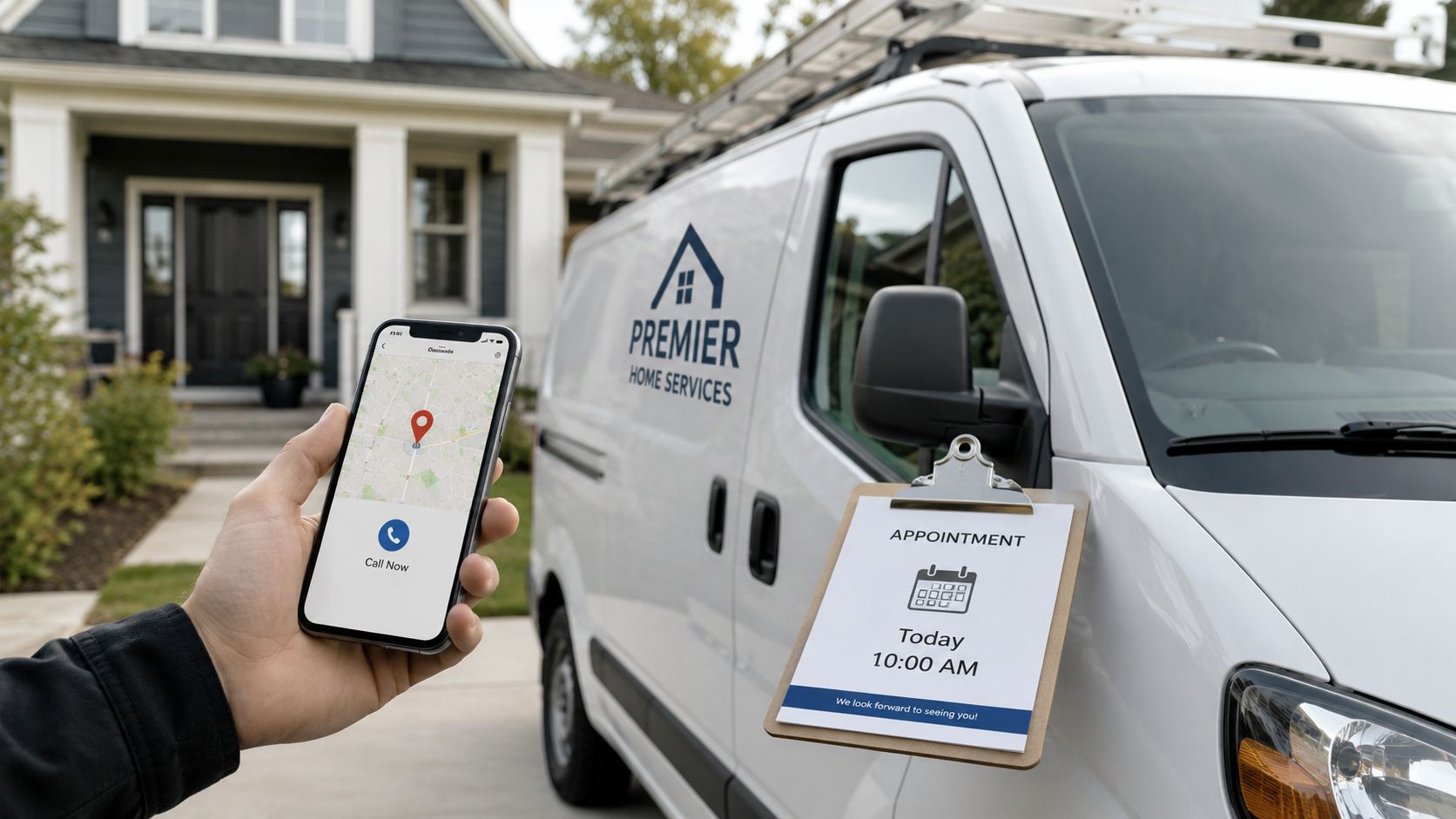
A local campaign succeeds when it turns urgent intent into a qualified conversation without overwhelming the service team. For a plumber, dentist, electrician, HVAC contractor, or law firm, the primary outcome is usually a booked appointment or viable consultation, not a large impression count.
Start with a defined service area, customer problem, and response capacity. Google Local Services Ads can support high-intent discovery, while geo-targeted Google Ads capture searches that need more control over keyword, message, and landing-page experience. Local SEO, location pages, review generation, and call tracking create additional conversion paths.
A practical message might be simple: the service offered, the location served, the proof available, and the next step. A plumbing business should not send every searcher to a generic homepage. A location-specific landing page should clarify service boundaries, display relevant testimonials, explain the booking process, and make calling easy on mobile.
Make the budget follow capacity
Budget allocation should reflect margins, seasonality, and appointment availability. If a heating contractor has limited technician capacity, increasing spend during a peak period can create missed calls and poor customer experiences. Smaller geographic boundaries may outperform broad coverage when travel time or service economics make distant leads unattractive.
Use negative keywords aggressively, separate campaigns by service and location, and assign a unique call-tracking number to each meaningful source. Review requests should follow completed work, and responses to public reviews should remain prompt and professional. A law firm may need a stricter intake process than a home-service provider because lead qualification and case value differ substantially.
The cheapest lead isn’t automatically the best lead. Track booked jobs, qualified consultations, revenue, and cancellation behavior before changing bids.
The execution checklist is straightforward:
- Before launch: Verify service areas, schedules, tracking, forms, and landing-page claims.
- During launch: Monitor missed calls, search terms, lead quality, and budget pacing.
- At review points: Reallocate toward profitable services and locations, not merely high-volume ones.
Businesses that need to connect local visibility with lead capture can review local SEO lead generation services from Mr. Green Marketing.
3. Marketing Campaign Plan: B2B SaaS Account-Based Marketing Campaign
Account-based marketing changes the unit of planning from a broad audience to a named account and its buying committee. That makes it suitable for enterprise SaaS, security software, consulting, and B2B services where several stakeholders influence a long, high-value purchase.
An HR software company might select a focused list of target organizations, then map the people involved in evaluation. The HR director may care about operational outcomes, a finance stakeholder may need a business case, and an implementation leader may focus on integration risk. One generic ad won’t carry all three concerns.
LinkedIn can introduce account-specific themes, email can support relevant follow-up, paid display can maintain recognition, and website personalization can reduce friction when an identified account returns. Sales outreach should add context rather than repeat the ad. A personalized webinar or customer proof point may be more valuable than another product announcement.
Measure account movement, not surface activity
The plan should define account stages, buying signals, owners, and handoffs. Track engagement by account, meetings, opportunities, pipeline influence, deal progression, and eventual deal quality. Clicks still provide directional information, but they shouldn’t become the primary success criterion for a campaign designed around complex buying groups.
Start with a manageable account set and develop message pillars for different personas. Use LinkedIn Sales Navigator or comparable research workflows to understand company priorities, then coordinate marketing and sales timing. If sales contacts an account immediately after every ad exposure, the experience can feel automated. A short delay and a useful reason for contact often produces a more credible sequence.
ABM works when personalization changes the conversation. Adding a company name to a generic email isn’t account strategy.
The stop-or-scale rule should consider account progression. If target accounts engage but never accept a meeting, revisit the offer, proof, or sales motion. If opportunities advance, expand the pattern carefully rather than multiplying accounts before the team can support them. For a supporting B2B acquisition perspective, see B2B lead generation tactics from Mr. Green Marketing.
4. Marketing Campaign Plan: Content Marketing and SEO Integration Campaign
Organic growth is a compounding plan, not a short launch burst. The objective is to earn qualified visibility for problems customers actively research, then connect that visibility to a useful next step such as a consultation, product comparison, demo, or email signup.
A B2B SaaS company might organize content around one commercial topic, with a central pillar page supported by narrower articles that answer related questions. Technical SEO removes crawl and experience barriers, semantic optimization clarifies topic coverage, internal linking guides readers, and ethical outreach helps useful content earn references.
The audience definition should include search intent, not just industry. Someone searching for a definition needs education. Someone comparing vendors needs proof, differentiation, and evaluation criteria. Someone searching for a solution plus a location may be close to contacting a provider. Those users shouldn’t all receive the same call to action.
Marketing Campaign Plan: Build an asset system, not isolated articles
A strong campaign turns one researched idea into multiple formats. A detailed guide can become a video outline, podcast discussion, social posts, an infographic, and an email. This increases the usefulness of the research without pretending every format serves the same intent.
Use a content calendar with named owners, review dates, optimization tasks, and conversion tracking. Monitor impressions, qualified organic sessions, rankings for priority topics, assisted conversions, leads, and revenue where the data supports it. Refresh declining pages when the underlying search intent remains valuable, but don’t update content mechanically. The revision should improve accuracy, usefulness, structure, or proof.
A service provider targeting local searches may need location pages and distinct local information, while an e-commerce brand may gain more from buying guides and comparison pages. A SaaS company may prioritize product education and integration topics. The business model determines the content architecture.
For a deeper implementation resource, explore SEO content strategy from Mr. Green Marketing.
5. Marketing Campaign Plan: Social Media Community and Engagement Campaign
A social campaign built around community has a different success condition from a paid acquisition campaign. The objective may be stronger customer participation, usable zero-party insight, creator-led discovery, or a reliable stream of content that makes the brand easier to remember and trust.
A DTC beauty brand could use TikTok for demonstrations and creator content, Instagram for product education and community interaction, and YouTube for longer explanations. It shouldn’t automatically publish identical material everywhere. Platform-native editing, pacing, captions, and calls to action affect how audiences respond.
Give the audience a role
Storytelling, user-generated content, comment responses, creator partnerships, and recurring formats should work together. A snack brand might invite customers to participate in a themed challenge, then use the strongest submissions as social proof. A fitness app could make transformation stories, short workouts, and motivational prompts recurring community assets rather than occasional promotional posts.
Choose a small number of platforms and assign each one a job. Track watch behavior, saves, shares, comments, profile visits, opt-ins, assisted conversions, and the quality of conversations. Reach can reveal distribution, but it doesn’t explain whether the audience cares or whether the business receives useful downstream action.
- Creative test: Vary the opening hook, demonstration, creator voice, and offer.
- Community test: Compare questions, replies, polls, and customer features.
- Conversion test: Use consent-based landing pages and distinct campaign links.
Authenticity doesn’t mean careless production. It means the format matches the platform and the audience’s expectations. A polished product film may support brand positioning, while a direct customer demonstration may earn more interaction. The plan should allow both, then fund the formats that produce meaningful signals.
For help managing the operational side, see social media community management from Mr. Green Marketing.
6. Marketing Campaign Plan: Podcast and Audio Content Promotion Campaign
Podcast promotion works best when the show has a specific reason to exist. “Business conversations” is too broad for most new programs. A sharper concept might focus on customer implementation lessons, a particular profession, or the operational decisions behind a defined type of growth.
For a B2B SaaS company, customer success stories can support thought leadership and sales enablement. Guest appearances on established shows can create borrowed credibility, while LinkedIn clips, email summaries, transcripts, and short video extracts extend each recording into a broader content system. The episode itself is only one asset.
Marketing Campaign Plan: Plan the production and distribution chain
A practical campaign begins with positioning, guest criteria, editorial standards, recording workflow, distribution, and a landing page with an email opt-in. Each episode should have a promotion package prepared before publication, including a compelling title, social excerpts, a useful summary, and a clear next step.
Measure the path from listener attention to business value. Track downloads or platform consumption where available, referral traffic, email signups, guest-driven visits, qualified conversations, and influenced opportunities. Sponsorship planning requires a separate audience and inventory model. Don’t assume a growing audience automatically creates a suitable sponsor proposition.
A consultant launching an interview show may prioritize guesting on other programs before investing heavily in production. A company with strong customer access may prioritize owned episodes. An executive thought-leadership show may accept slower direct attribution because its value appears through sales conversations and account familiarity.
Audio earns trust through consistency and relevance. It won’t rescue a vague editorial promise.
Create a repeatable checklist covering guest research, consent, recording, editing, show notes, transcript review, tracking links, publication, promotion, and post-release analysis. Review the format after enough episodes to identify patterns, not after a single release.
7. Marketing Campaign Plan: Video Production and YouTube Channel Growth Campaign
YouTube planning starts with viewer intent, not camera equipment. A software company can build a tutorial series around the questions customers ask before and after purchase. An e-commerce brand can create product demonstrations and comparison videos. A fitness professional can organize training content into programs that encourage viewers to continue watching.
The primary objective might be qualified website traffic, product education, channel authority, or subscriber growth. Those outcomes require different calls to action. A tutorial may send viewers to documentation or a demo. A product comparison may send them to a buying page. A broad educational video may focus on returning viewers and brand familiarity.
Design for discovery and continuation
Research searchable topics before production, then write titles and thumbnails that accurately represent the value inside the video. The opening should establish relevance quickly. Chapters, descriptions, playlists, cards, and end screens can help viewers move to the next useful asset.
A campaign calendar should include series themes, production owners, publishing dates, collaboration opportunities, and repurposing tasks. One long-form video can become Shorts, TikTok clips, Instagram Reels, a blog article, an email, and sales enablement material. Each derivative should be edited for its destination rather than cut randomly.
Measure impressions, click-through rate, retention, returning viewers, qualified traffic, assisted conversions, and actions after viewing. A video with fewer views can be more valuable if it attracts the right buyers and answers a high-friction question. Conversely, a widely viewed entertainment clip may build awareness without producing immediate leads. Both can have a role, but they shouldn’t share the same KPI.
- Before production: Confirm the search or customer problem and the intended next action.
- Before publication: Check the thumbnail, title, description, captions, links, and tracking.
- After publication: Review retention and comments, then improve the next episode rather than only promoting the current one.

7 Marketing Campaign Plans Compared
| Campaign | Implementation Complexity | Resource Requirements | Expected Outcomes | Ideal Use Cases | Key Advantages |
|---|---|---|---|---|---|
| E-Commerce Product Launch Campaign (Amazon & Multi-Channel) | High, synchronized PPC, Amazon SEO, email, social and inventory coordination | High, significant PPC budget, creative assets, inventory planning, analytics/agency support | Rapid measurable ROI (30–60 days); sales velocity to trigger algorithm; organic ranking stabilization in 2–3 months | Amazon sellers, DTC brands launching new SKUs in competitive categories | Fast visibility, algorithmic flywheel, multi-channel presence, data-rich optimization |
| Local Service Provider Lead Generation Campaign (Google Local & PPC) | Medium, LSA verification, geo-targeted campaigns, local SEO and call-tracking setup | Medium, LSA/ads spend, review management, phone/CRM infrastructure, location pages | Predictable qualified leads and CAC; immediate local conversions; seasonal variability | Plumbers, electricians, HVAC, dentists, law firms, multi-location franchises | High local intent, pay-per-lead LSA model, measurable via call tracking and CRM |
| B2B SaaS Account-Based Marketing (ABM) Campaign | Very High, account-level personalization, multi-channel orchestration, sales-marketing alignment | High, ABM platforms, intent data, custom content, dedicated sales resources | Higher conversion rates and larger deal sizes; longer sales cycles; strong pipeline influence | Enterprise SaaS, consulting, high-ticket B2B targeting defined ICPs | Highly targeted outreach, efficient CAC for big deals, stronger relationships, clear account ROI |
| Content Marketing & SEO Integration Campaign (Organic Growth) | High (long-term), technical SEO, content planning, link-building and site architecture work | Medium–High, writers, SEO tools, outreach resources, sustained time investment | Compounding organic traffic and authority; lower long-term acquisition cost; meaningful results in 3–12+ months | All industries; especially SaaS, publishers, e-commerce, service providers with longer sales cycles | Sustainable growth, brand authority, lower ongoing ad spend, repurposable content |
| Social Media Community & Engagement Campaign (TikTok, Instagram, YouTube) | Medium, platform-native creative cadence, community management, trend monitoring | Medium, creators/influencers, content production, community managers, modest ad boosts | Audience growth, high engagement and UGC; variable direct sales attribution; potential viral reach | DTC, consumer brands, beauty, fitness, F&B, entertainment | Authentic brand loyalty, viral reach potential, first-party audience data, lower production cost for authentic content |
| Podcast & Audio Content Promotion Campaign | Medium, production workflow, distribution, guest booking and repurposing | Low–Medium, audio equipment/production, hosting, editing, promotion | Deep listener relationships, steady lead generation over time; numerous repurposed assets; sponsorship revenue potential | B2B thought leadership, consulting, education, coaching, entrepreneurship | High listener loyalty, repurposable content assets, monetization via sponsorships, intimate audience connection |
| Video Production & YouTube Channel Growth Campaign | High, regular production schedule, YouTube SEO, thumbnails, series architecture | Medium–High, equipment or production budget, editing, thumbnail/design, analytics tools | Long-term traffic and engagement; strong search visibility; monetization via YPP; requires 6–12+ months for traction | SaaS tutorials/demos, e-commerce product videos, education, coaching, entertainment | Highest engagement rates, long-tail discoverability, repurposable assets, dual visibility in YouTube and Google search |
Marketing Campaign Plan: Turn One Campaign Plan Into Your Working Checklist
The seven plans differ in channel mechanics, but the planning logic stays stable. Begin with one primary business outcome. Revenue, qualified leads, booked appointments, product sales, pipeline, retention, and audience growth can all matter, but a campaign becomes difficult to manage when every outcome has equal priority.
Formal planning is most useful when it creates a baseline before launch. Document channel targets such as CPA, expected volume, and spend ceilings, then monitor meaningful variances against plan so the team can decide whether to scale, pause, or reallocate. This approach turns reporting into a control system rather than a post-campaign explanation (research on formal planning and performance measurement).
Integrated planning matters because customers move between channels and devices. Nearly 47% of businesses lack a digital marketing strategy, while coordinated marketing teams and channels can increase campaign efficiency by 31%, according to Optimizely’s marketing statistics overview. The same source reports that 94% of small businesses planned to increase digital marketing spend in 2024, and it places digital advertising and marketing at $667 billion. Those figures don’t tell you what to spend, but they explain why isolated channel activity is increasingly hard to defend.
Use this adaptation checklist before approving work:
- Offer: State what the audience receives and why it matters now.
- Audience: Define segment, buying context, pain point, decision-maker, and exclusions.
- Message: Write the core promise, proof points, objections, and channel adaptations.
- Assets: List landing pages, listings, emails, ads, videos, social posts, forms, and sales tools.
- Owners: Assign one accountable person to every deliverable and approval.
- Timeline: Set milestones for preparation, launch, monitoring, learning, and reporting.
- Budget: Separate fixed production costs from variable media and distribution costs.
- Attribution: Install conversion tracking, call tracking, campaign parameters, CRM stages, and consent controls before launch.
- Review rules: Decide what evidence triggers a creative test, budget shift, pause, or scale decision.
- Learning loop: Record what changed, what happened, and what the next campaign should do differently.
AI-era planning adds another layer. Google’s 2025 guidance describes growing emphasis on AI-integrated content creation, paid search, real-time personalization, privacy-first data, and measurement that helps steer the next action rather than merely summarize the past (Google’s 2025 marketing strategy guidance). Build governance into the plan. Define which data can be used, who approves automated changes, how experiments are reviewed, and when a human must intervene.
Channel portfolios also need to reflect fragmented discovery. Consumers discover brands through online ads, social ads, and search, while short-form video, community recommendations, search, retail media, and local discovery can serve different stages of intent (GWI’s marketing trends report). Assign each channel a role instead of asking every platform to create awareness, trust, conversion, and retention at once.
Benchmarks can inform ambition, but they shouldn’t replace unit economics. WARC’s case-study database reports median revenue ROI of 4.33:1 and median profit ROI of 2.5:1, while a broader WARC summary reports median revenue ROI of 3.99:1 and median profit ROI of 2.26:1 (WARC’s ROI benchmarks). Use those figures as context, then set targets that reflect your margins, sales cycle, capacity, and attribution limits.
Mr. Green Marketing, LLC can support businesses that need help turning this framework into a practical plan. Its services span SEO, PPC, Amazon marketing, social media, content, web design, video production, branding, and campaign strategy, and businesses can request a free audit and performance report to identify visibility gaps and prioritize opportunities.
Mr. Green Marketing, LLC helps businesses turn campaign ideas into measurable plans across SEO, PPC, Amazon marketing, social media, content, web design, video, and email. Request a free audit and performance report, then visit Mr. Green Marketing, LLC to identify visibility gaps and build the next campaign around clear priorities.
Leave a Comment
sing in to post your comment or sign-up if you dont have any account.