
Search Engine Consulting: You’re probably in one of two spots right now. Either your website gets some traffic but not enough of the right traffic, or you’re spending on ads and wondering why every click feels expensive. And then search keeps changing. Google updates, AI answers, zero-click results, marketplace search, local packs. It’s a lot.
That’s where search engine consulting earns its keep. Not as a vague “SEO service,” but as the strategic layer that helps a business decide what to fix, what to ignore, and where search can produce revenue instead of busywork.
Search Engine Consulting: What Is Search Engine Consulting Anyway
Search engine consulting is the work of diagnosing how your business appears in search, then building a plan to improve that visibility in ways that support leads, sales, and margin. The keyword there is plan.
A consultant isn’t just trying to push a few pages higher. A good one looks at the whole search system around your business: your website, your content, your technical setup, your local presence, your brand mentions, your marketplace listings if you sell on Amazon, and the way paid search and organic search affect each other.
That matters because search is huge and crowded. One industry report says eCommerce brands ranked for an average of 1,783 keywords in organic search in 2025, generated about 9,625 organic monthly visits, and would have needed to spend almost £11,800 per month in paid search to buy similar traffic, according to Reboot’s SEO statistics roundup. That’s the business case in one snapshot. Organic visibility compounds.
What a consultant actually does
At the practical level, search engine consulting usually means a business hires someone to answer questions like these:
- Why aren’t we visible for the searches that matter
- Why does traffic come in but fail to convert
- Why are competitors showing up in more places than we are
- What should we fix first, second, and not at all
Search consulting is part mechanic, part strategist, part translator. It turns search noise into a priority list.
What it is not
It’s not a magic trick. It’s not “rank number one for everything.” And it’s definitely not a pile of generic recommendations exported from a tool.
Good consulting narrows the field. It tells you where search can drive profitable demand, where your site is blocking that demand, and where your team is wasting effort. For a small or mid-sized business, that clarity matters more than another dashboard.
Search Engine Consulting: The Modern Search Consultant’s Toolkit
The modern consultant’s toolkit is broader than classic SEO. It still starts with the website, but it doesn’t stop there.
A solid engagement usually has six working parts: technical SEO, content strategy, authority building, AI search readiness, paid and organic alignment, and platform-specific search like Amazon when it applies.
Here’s the roadmap most businesses need to see before they hire anyone:
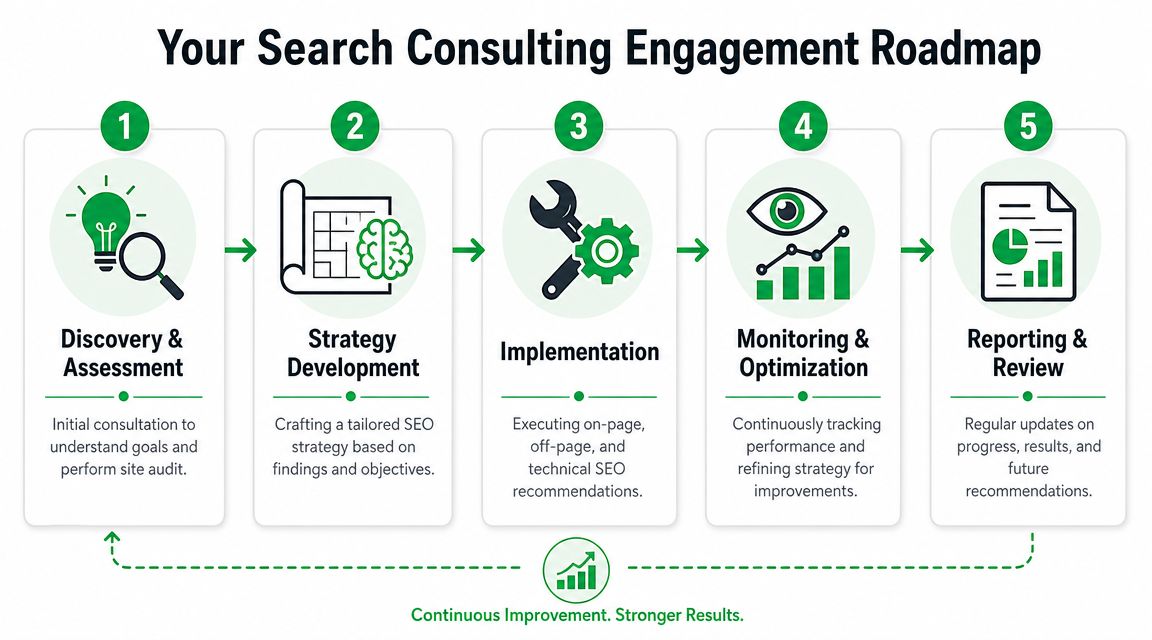
The foundation still matters
Traditional SEO is still the base layer. That means site architecture, title tags, internal linking, crawlability, content depth, and pages that match real search intent.
If the basics are weak, everything else gets harder. AI search doesn’t rescue a messy site. Paid search doesn’t fix poor landing pages. Amazon traffic doesn’t help if your product detail pages are thin. Same principle everywhere.
Search Engine Consulting: Technical work fixes hidden drag
This is the part business owners often underestimate because users don’t always see it. But search engines do.
A consultant checks whether pages can be discovered, crawled, indexed, and understood properly. They look at Search Console signals, page templates, canonicals, sitemaps, robots controls, structured data, broken links, duplicate pages, image handling, and render issues. If your site is leaking authority or confusing crawlers, you can publish content all day and still stall out.
Practical rule: Don’t add more content to a site that still has unresolved crawl and indexation problems.
Search Engine Consulting: Content strategy is not a blog quota
A lot of SEO work goes sideways here. Businesses hear “content marketing” and assume volume wins.
But industry commentary from Search Engine Land argues that “more content is no longer a reliable way to grow SEO,” especially as visibility shifts toward zero-click and AI-summarized search where citations, mentions, and external authority signals matter more than raw publishing output. Their take is worth reading in the original Search Engine Land analysis of unreliable content-led SEO growth.
That’s why consultants should map content to gaps, buying stages, and authority signals, not just keywords. If you’re also thinking about AI visibility, this guide on how to optimize for AI search is a useful companion.
Newer layers that matter now
Later in the process, consultants often add newer workstreams:
- AI search readiness: Making content citable, structured, and clear enough for AI-generated search experiences.
- Paid and organic alignment: Using PPC query data to inform SEO priorities, and using SEO landing page insights to improve paid campaigns.
- Amazon search consulting: For brands that sell on marketplaces, optimizing product titles, imagery, copy, and conversion paths inside Amazon’s own search environment.
This video gives a practical overview of how a consulting engagement tends to work in practice:
Search Engine Consulting: What works and what usually doesn’t
| Approach | Usually works | Usually fails |
|---|---|---|
| Technical SEO | Fixing crawl and indexing blockers first | Chasing vanity scores in audit tools |
| Content | Publishing fewer, better pages with clear intent | Posting generic blogs on a rigid schedule |
| Authority | Earning relevant mentions and links | Buying low-quality backlinks |
| AI visibility | Building citation-ready, useful pages | Assuming AI visibility will happen automatically |
| Paid plus organic | Sharing data across channels | Running PPC and SEO in separate silos |
The toolkit is wider now. The job is still the same. Find demand, remove friction, build authority, and make sure the business shows up where buyers look.
Search Engine Consulting: Your Engagement Roadmap Process And Deliverables
Most businesses don’t need mystery. They need to know what happens after they sign the agreement, who owns what, and what they’ll receive.
A good search engine consulting engagement follows a sequence. Not because agencies like process diagrams, but because skipping steps usually creates rework.
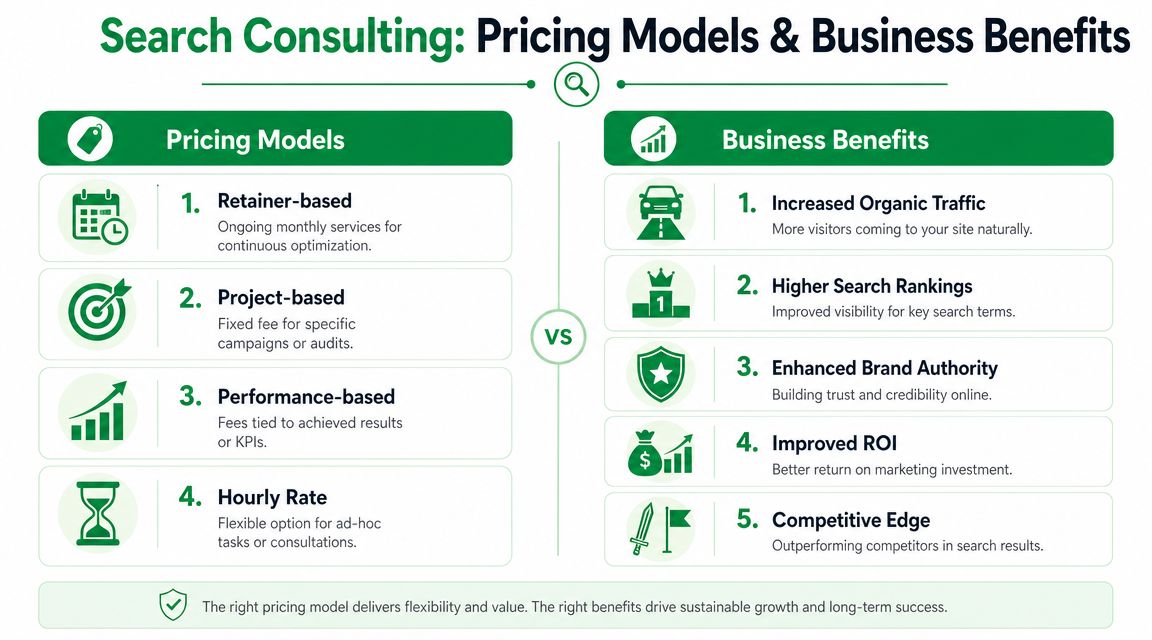
Phase one starts with diagnosis
A rigorous engagement should begin with a technical audit, content audit, and backlink audit together, because each one reveals a different type of problem. Technical review exposes crawl and indexation issues. Content review surfaces relevance gaps. Backlink review shows authority weaknesses, as outlined by Apiary Digital’s explanation of search consulting audit layers.
That combination matters. A business might think it has a content problem when the actual issue is indexation. Or assume it needs links when the page itself doesn’t answer the query well enough to compete.
What you should expect early
The first deliverables usually look something like this:
- Audit findings: A plain-English summary of what’s broken, weak, duplicated, missing, or misaligned.
- Opportunity map: Which topics, pages, categories, or product groups have the best upside.
- Baseline measurement: Current rankings, traffic patterns, lead or sales paths, and conversion behavior.
- Priority list: What should be fixed first based on business impact and implementation effort.
If you get a long audit with no prioritization, you don’t have a roadmap. You have homework.
Strategy turns findings into decisions
After the audit, the consultant should translate findings into a working plan. At this stage, weaker providers often get fuzzy.
The plan should define target themes, page types, technical fixes, ownership, reporting cadence, and what success looks like. It should also address channel overlap. For example, if your paid search data shows strong conversion around a service cluster, that may justify a deeper organic buildout. If your Amazon listings convert well for certain phrases, that language may inform your website merchandising and category pages.
Search Engine Consulting: Implementation is where momentum is won or lost
Some consultants only advise. Others handle execution. Both models can work, but the handoff needs to be clean.
If your in-house team or web developer will implement, the consultant should provide annotated recommendations, examples, QA checks, and a sequence. If the consultant also executes, ask how changes are tested, approved, and documented. Search work falls apart fast when nobody owns deployment.
A practical implementation plan often includes:
- High-impact technical fixes first
- Core page optimization next
- Content expansion after the foundation is stable
- Authority and distribution work in parallel
- Monthly review and refinement
Reporting should answer business questions
The best reporting isn’t the busiest. It answers simple questions clearly:
- Are we becoming more visible for the searches that matter?
- Are better-qualified visitors reaching the site?
- Are those visitors converting?
- What changed this month, and why?
That’s the difference between consulting and task fulfillment. One gives you direction. The other just logs activity.
Search Engine Consulting: Navigating Pricing and Realizing Business Benefits
A business owner usually asks the pricing question for a simple reason. “What will this cost me, and what do I get back?”
Fair question. Search consulting can range from a one-time audit to an ongoing advisory relationship that covers SEO, paid search coordination, Amazon visibility, and AI search readiness. The right model depends on how much complexity you have, how fast you need traction, and whether your team can implement the work.
A local company with a stable site may get plenty of value from a focused project plus occasional check-ins. A multi-location brand, ecommerce business, or team dealing with migration risk, channel overlap, and generative search shifts usually needs ongoing support. More moving parts means more decisions, more QA, and more chances to waste budget if nobody is steering.
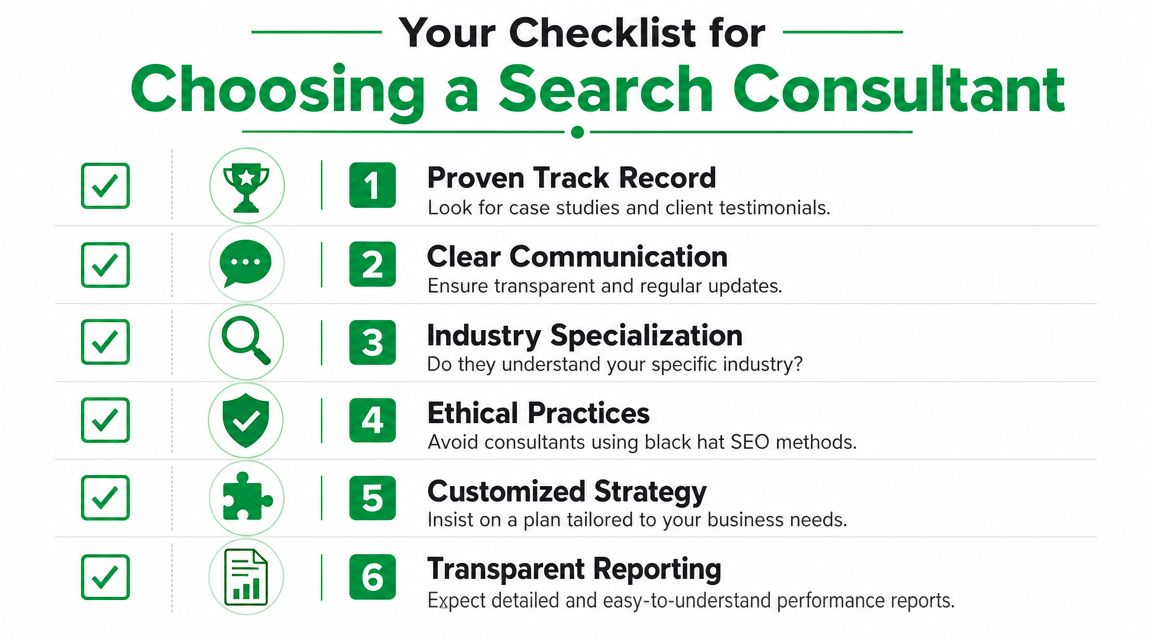
Common pricing models and the trade-offs
| Model | Best for | Watch out for |
|---|---|---|
| Monthly retainer | Ongoing growth, testing, reporting, cross-channel alignment | Vague deliverables, too much time spent on status updates |
| Project-based | Audits, migrations, site restructures, recovery work | Good recommendations with no follow-through |
| Hourly consulting | Executive input, troubleshooting, second opinions | Progress stalls if no one owns implementation |
| Performance-based | Narrow KPI agreements with clean attribution | Incentives can push short-term wins over durable growth |
Cheap consulting often costs more later. I see it in rewrites after weak audits, rushed migrations, and content plans built around low-intent keywords that never had revenue potential in the first place.
What you’re actually buying
You are not paying for a stack of SEO tasks. You are paying for prioritization.
That matters because search now touches more than Google rankings. A good consultant helps decide whether the next dollar should go into technical cleanup, new service pages, paid search support, better product feed language, Amazon listing improvements, or content built to show up in AI-generated answers. Same channel family. Very different returns.
The strongest engagements also reduce internal waste. Teams stop publishing random content, bidding blindly on terms organic could cover, or treating Amazon and website search language as separate worlds. That efficiency rarely shows up in a flashy report, but it affects profit.
Search Engine Consulting: The business case is usually broader than traffic
One industry summary cites strong SEO returns over time, including examples of businesses generating multiples on their investment, in OuterBox’s SEO statistics summary. Treat that as directional, not guaranteed. Results vary by offer strength, sales process, competition, and execution quality.
The better way to look at ROI is practical. Does search reduce paid dependency for high-intent queries? Does it bring in leads your sales team wants? Does it improve visibility across Google, AI search experiences, marketplace search, and core category terms where buyers compare options?
That is the core value equation.
Where the return usually shows up
- Lower paid media pressure: Organic coverage can reduce the need to buy every click for terms you should own.
- Better lead quality: Pages matched to real search intent tend to bring in people closer to action.
- Stronger conversion paths: Good consulting improves page structure, offer clarity, and internal pathways to inquiry or purchase.
- Longer shelf life: A well-built page or category hub can keep producing after the initial work is finished.
- Smarter channel coordination: Paid search, organic search, Amazon, and AI visibility perform better when the messaging and targeting work together.
Search Engine Consulting: Tools matter. Judgment matters more.
Software can speed up audits, clustering, monitoring, and basic optimization workflows. It cannot decide which opportunities fit your margins, sales cycle, or implementation reality.
For teams comparing software against hands-on advisory support, reviewing Automated SEO tool costs can help frame what automation covers and where human strategy still earns its keep.
The best spending decision is rarely “tool or consultant.” It is choosing the right mix of software, strategic guidance, and execution support for your stage of growth.
Search Engine Consulting: Measuring What Matters Most Your KPIs
If your consultant reports only rankings, you’re not getting the full picture. Rankings matter, but they’re an intermediate signal, not the end goal.
A business owner should care more about whether search brings qualified visitors who take meaningful actions. Calls. Form fills. Demo requests. Purchases. Branded searches after discovery. Better conversion paths. That’s what turns search into a growth channel instead of a vanity project.
The KPIs worth watching
A smarter KPI set usually includes:
- Organic lead volume: Not just sessions. Actual inquiries or sales from organic search.
- Conversion rate from organic traffic: Because more traffic with weak intent can make reports look better while the business gets worse.
- Non-branded visibility: This shows whether new people are finding you, not just people who already know your name.
- Landing page performance: Which pages attract search demand and which pages turn that demand into action.
- Share of visibility across devices: Especially mobile.
That last point matters more than many teams realize. Aleyda Solis recommends replicating audits and research for mobile targeting, including use of the smartphone crawler and comparison of desktop-versus-mobile optimization gaps, in her guidance on successful SEO consulting and mobile validation. If your mobile experience lags, your KPI story may be misleading.
What to stop obsessing over
A few metrics deserve less attention than they usually get:
- Raw impressions without context
- A single trophy keyword
- Traffic spikes from irrelevant blog posts
- Tool-generated visibility scores with no tie to revenue
A page that ranks fifth and converts well is worth more than a page that ranks first and attracts the wrong visitors.
Search Engine Consulting: Build KPI reviews around decisions
The best KPI review asks three things:
- What improved
- What stalled
- What decision follows from that result
That keeps reporting tied to action. Otherwise, teams end up admiring charts while competitors fix the pages that make money.
Search Engine Consulting: How To Choose The Right Search Consultant
Hiring the right consultant is part expertise check, part fit check. Plenty of people can talk fluently about SEO. Fewer can connect search work to sales reality, internal workflows, and executive expectations.
You’re not looking for the slickest deck. You’re looking for someone who can diagnose problems clearly, explain trade-offs without jargon, and tell you what not to spend money on.
What to look for first
Use this quick checklist before you even ask about pricing:
- A clear process: They should explain audit, strategy, implementation, and reporting without hand-waving.
- Comfort with business goals: They ask about margin, lead quality, sales cycle, and customer value, not just keyword volume.
- Evidence of prioritization: They know the difference between urgent fixes and nice-to-have improvements.
- Cross-channel awareness: They understand local search, PPC overlap, content, and marketplace search if relevant.
- Communication discipline: Their reports and recommendations should be understandable by a business owner, not just a specialist.
If you need a broader agency selection framework, this guide on how to choose a digital marketing agency is a helpful place to compare evaluation criteria.
Search Engine Consulting: Questions that reveal real depth
Ask direct questions. Good consultants won’t be annoyed by them.
- How will you measure success beyond rankings
- What would you audit first on our site, and why
- What work should happen before new content production
- How do you handle technical fixes if our developer pushes back
- How do paid search data and organic strategy inform each other
- How would you approach visibility if clicks decline and AI answers increase
- Can you show me how you prioritize recommendations in a real report
Red flags worth noticing
| Signal | Why it matters |
|---|---|
| Guarantees of top rankings | Nobody controls the search results completely |
| One-size-fits-all packages | Good consulting should reflect your business model |
| Heavy focus on volume over intent | More traffic isn’t always better traffic |
| No questions about conversion | That usually means they stop at visibility |
A strong consultant should make the work feel clearer, not more mysterious.
Search Engine Consulting: A Quick Win Audit And A Case Study
Take a common SMB scenario. A regional home services company has a decent website, runs Google Ads, gets referrals, and assumes SEO is “kind of working.” Traffic exists. Leads are inconsistent. Some service pages never rank, and the blog gets visits that don’t turn into calls.
The consulting engagement usually starts by stripping away assumptions. Service pages may be too broad. Location pages may be thin or duplicative. Internal links may point users toward dead-end content instead of estimate requests. Paid search terms may reveal profitable services that the site barely supports organically.
A realistic before-and-after story
Before the engagement, the company is doing what many businesses do. Publishing occasional blog posts, tweaking headlines, and hoping authority builds over time.
After a proper review, the work shifts:
- Technical cleanup: Broken internal paths and duplicate page patterns get fixed.
- Core page rebuild: Main service and location pages are rewritten around actual customer intent.
- Conversion tightening: Calls-to-action, form placement, and page structure improve.
- Channel alignment: PPC search term data informs SEO priorities.
Nothing flashy. Just focused.
The fastest gains often come from fixing pages that already have demand but fail to convert or fully rank.
If you want a structured way to review your own site before hiring help, these digital marketing audit services show the kind of gaps a broader audit should uncover.
A quick-win audit you can do today
You don’t need enterprise software to spot a few important issues. Check these now:
- Search your brand and core services: See what pages appear. If the wrong pages show up, your site architecture may be muddy.
- Review title tags on key pages: Your homepage, service pages, and product pages should describe what the page is really about, not just your company name.
- Test your main contact path on mobile: Fill out the form yourself. Tap the phone number. If it’s clunky on a phone, that’s a revenue problem.
- Check for thin money pages: If your highest-value service has only a short paragraph, it’s probably underpowered.
- Look at internal links: Important pages should be easy to reach from navigation, supporting pages, and relevant on-site copy.
That little audit won’t replace consulting. It will tell you whether your current visibility problem is likely strategic, technical, or just neglected basics.
Frequently Asked Questions About Search Consulting
How long does search consulting take to show results
It depends on your site health, your market, and how fast recommendations get implemented. Technical fixes can create movement sooner than a content-heavy strategy, but search usually rewards consistency more than impatience.
Can’t I just use AI tools and do this myself
AI tools can help with research, drafting, clustering, and spotting patterns. They can’t reliably prioritize business trade-offs, diagnose nuanced technical issues, or decide what matters most for your specific sales model. Tools are useful. Strategy still needs judgment.
What’s the difference between a freelancer and a consulting agency
Usually breadth and capacity. A freelancer may be excellent for focused advisory work or a limited scope. An agency can be stronger when the engagement requires multiple skill sets at once, like technical SEO, PPC alignment, dev coordination, content planning, and reporting. The better choice depends on complexity.
Is search engine consulting only for Google
No. Google still matters, but search behavior now stretches across Google, AI search tools, Amazon, maps, YouTube, and platform-native search experiences. Good consulting adapts to where your buyers search.
What if we already have an in-house marketing team
That’s often the best setup. A consultant can provide diagnosis, prioritization, and specialist guidance while your internal team handles execution. It works well when roles are clear.
What’s the biggest mistake businesses make when hiring
Hiring for activity instead of outcomes. If the conversation starts and ends with blog counts, backlinks, or rank promises, you may end up with lots of output and very little business impact.
If your business needs clearer search priorities, stronger visibility, or a more connected approach across SEO, PPC, AI search, and Amazon, Mr. Green Marketing, LLC offers strategy-led digital marketing support built around measurable goals. A practical next step is a conversation or audit that shows where visibility is leaking and which fixes are worth acting on first.
Leave a Comment
sing in to post your comment or sign-up if you dont have any account.