
7 Best PR Agencies: Which PR agency is right for you?
That is the decision that matters. Not who has the biggest name, the longest client roster, or the flashiest case studies. If you’re hiring for a product launch, a funding narrative, a crisis response, or steady executive visibility, the right choice depends on your industry, your budget, your goals, and how much strategic support your team needs day to day.
A founder bringing a B2B SaaS product to market should not shop the same way as a private equity firm, a healthcare brand, or a national consumer company. Yet plenty of agency roundups blur those lines and rank firms as if PR were one category with one winner.
It isn’t.
PR is a broad market with room for global networks, sector specialists, and agencies that sit closer to an integrated growth partner. Each model comes with trade-offs. Large firms bring reach, process, and depth across functions, but they can be expensive and layered. Boutique specialists often move faster and know a category cold, but they may have less bench strength outside their niche. Mid-sized agencies can offer a strong middle ground if you want senior attention without enterprise pricing.
That is the lens for this list. Best for your situation, not best in the abstract.
Use it as a matching tool. If you need a clearer framework before you hire, start with a solid public relations strategy for setting goals, budget, and agency fit. Then evaluate agencies based on the problem you need solved, the audience you need to reach, and the level of coordination your business can realistically support.
1. Best PR Agencies: Edelman

Need one agency to keep a complex communications program aligned across leadership, regions, and risk-sensitive audiences? Put Edelman on the shortlist.
Edelman fits companies that need far more than press outreach. Its primary value is coordination. Brand communications, executive visibility, crisis response, public affairs, employee messaging, and digital support can sit under one roof, which matters when one inconsistent message can create legal, political, or reputational problems.
This is usually a fit question, not a prestige question.
7 Best PR Agencies: Where Edelman fits best
Edelman makes the most sense for large organizations, heavily scrutinized brands, and companies operating across multiple markets. If your challenge involves trust, reputation, regulatory pressure, or a high-stakes announcement with many internal stakeholders, the agency’s scale becomes an advantage. You are paying for structure, depth, and the ability to keep many workstreams moving in the same direction.
Its research-led approach is also a real differentiator for teams that need message development backed by audience insight, not just media pitching. That can help if you are refining a broader public relations strategy for setting goals, budget, and agency fit and need PR tied closely to business risk and stakeholder expectations.
Practical rule: Choose Edelman when alignment, message control, and reputation management matter more than speed alone.
The trade-offs are predictable.
- Best for high-complexity assignments: Global launches, trust rebuilding, crisis preparedness, and cross-functional communications are strong use cases.
- Harder to justify for narrow scopes: If you only need a lean product push or founder media outreach, the model can feel oversized.
- Process is part of the package: Large agency systems reduce risk, but they can also slow decisions and add layers between strategy and execution.
I would not point an early-stage company with a modest retainer here unless the stakes are unusually high. I would point a multinational brand, a regulated company, or a business under public pressure here without much hesitation.
Website: Edelman
2. Best PR Agencies: Weber Shandwick
Weber Shandwick is a strong fit when you want a large agency that can combine corporate polish with modern creative and analytics. Some firms feel like classic PR shops trying to bolt digital measurement on later. Weber Shandwick tends to feel more integrated from the start, especially for organizations that need sector expertise and enterprise process.
This is one of the better choices for health, financial services, public sector, and tech brands that need serious message discipline. You don’t hire a firm like this just for media lists. You hire it because the work often has to pass legal review, satisfy leadership, and still land externally.
What stands out
Weber Shandwick’s edge is the combination of strategic communications and broader consulting depth through its collective model. For buyers in regulated categories, that’s attractive. The team structure usually supports analytics, planning, and creative execution in a way many boutiques can’t match.
And that’s the trade-off. You get more infrastructure. You also get more process.
When a company says it wants a “nimble agency” but also wants international coordination, deep analytics, and category specialists, it’s usually describing a large firm with expectations that belong to a boutique.
That’s where buyers get themselves in trouble. They hire a major global network, then complain that onboarding isn’t fast enough. Of course it isn’t. Larger systems protect quality, but they add layers.
A few realistic pros and cons:
- Good for regulated sectors: Health, finance, and public sector buyers often need teams that understand approvals and stakeholder sensitivity.
- Strong creative plus data: If you need campaigns that look sharp and can still be defended in reporting, Weber Shandwick is a sensible pick.
- Heavier lift to start: Expect more structure, more meetings, and more alignment work than you’d get from a smaller specialist firm.
This isn’t the agency I’d put in front of a seed-stage company trying to get a founder story out quickly. It is one I’d consider for a mature organization that needs disciplined execution across earned media, strategy, and analytics.
Website: Weber Shandwick
3. Best PR Agencies: FINN Partners
FINN Partners sits in a useful middle ground. Bigger than a boutique, more independent in feel than some holding-company agencies, and broad enough to support integrated programs without always feeling bloated. For a lot of mid-market brands, that’s the sweet spot.
If you’re choosing among the best PR agencies and keep bouncing between “we need senior attention” and “we still need coverage across markets,” FINN is the kind of name to examine closely. It’s often a fit for teams that need PR, digital, creative, and sector expertise under one roof, but don’t want to default straight to the largest firms.
Why buyers like FINN
The appeal is balance. FINN can support substantial work, but the independent structure can make decision-making feel faster. That doesn’t mean every office or team runs the same way, but in general, buyers looking for responsiveness often find independents easier to work with.
FINN also covers a broad range of sectors well. That’s helpful for brands in education, health, financial services, and technology that want an agency partner with category familiarity but not an overly narrow point of view.
- Balanced scale: Large enough for multi-market work, without always bringing the full weight of a giant network.
- Integrated offer: Useful when your campaign needs earned media plus digital, creative, and content support.
- Better fit for mid-market than micro-budget: Early-stage startups may still find the engagement level too expensive or too heavy.
The caution here is simple. “Independent” doesn’t mean “small.” FINN is still a significant agency. If you’re expecting founder-level access every week on a modest retainer, set that expectation early and get the actual working team in the room before signing.
Best use case
FINN works well for brands that are growing up. Not tiny anymore. Not yet dealing with the complexity of a massive multinational comms structure. Maybe you have a serious in-house marketing lead, an ambitious growth plan, and a need for more than pure media relations.
That in-between segment often gets underserved by listicles that only celebrate giants or boutiques. FINN is one of the more practical options in that lane.
Website: FINN Partners
4. Best PR Agencies: Prosek Partners
If your business lives close to capital markets, Prosek Partners is one of the clearest specialist choices on this list. Asset managers, private equity firms, fintech brands, investor-focused businesses, and professional services firms often need a very different kind of PR partner. Less lifestyle storytelling. More precision, credibility, and stakeholder fluency.
Specialization yields success. Not always, but often. Recent roundup analysis points out that specialist firms can outperform generalists when the goal is measurable impact rather than prestige in this review of how to evaluate PR agencies.
Where Prosek earns its keep
Prosek understands finance language, transaction sensitivity, and the overlap between reputation, markets, and policy. That’s not a small distinction. A lot of agencies say they can handle financial communications. Fewer can do it in a way that sounds like they actually work in the category.
Its investor relations and crisis support are part of the attraction. So is the ability to tie brand and creative work into that world through Prophecy by Prosek. If you’re managing earnings communications, an M&A narrative, founder visibility in business media, and broader brand positioning at the same time, that integrated setup can be efficient.
You can usually tell within one meeting whether a PR team understands your sector or is learning the vocabulary in real time.
For finance and professional services brands, that matters a lot. Speed improves when the agency already knows the reporters, issues, pressure points, and compliance realities.
A few trade-offs to keep in view:
- Excellent for finance-heavy briefs: Especially when investor relations and strategic communications overlap.
- Less compelling for broad consumer work: A lifestyle, beauty, or mass retail brand should probably look elsewhere.
- Premium positioning: You pay for category expertise and high-stakes counsel.
For the right buyer, Prosek isn’t just a PR firm. It’s a sector-specific communications partner that can operate comfortably in rooms where markets and reputation move together.
Website: Prosek Partners
5. Best PR Agencies: 5W Public Relations
Need an agency that pushes visibility hard, not one that waits for attention to arrive?
That is the case for 5W Public Relations. The firm is a fit for brands that want to be active in the market, visible across channels, and comfortable with a PR partner that brings pace and volume. Its service mix spans consumer, corporate, crisis, tech, and public affairs, which makes it useful for companies with overlapping audiences or a brief that does not sit neatly in one box.
The more interesting question is whether that style fits your company.
5WPR tends to make more sense for brands chasing awareness, share of voice, product buzz, and executive visibility than for brands that want a restrained, low-profile communications program. If your team wants frequent story angles, timely commentary, and PR that supports broader discoverability, that can work well. If legal review is heavy, tone is tightly controlled, or the brand wins by being measured and quiet, expect more upfront calibration.
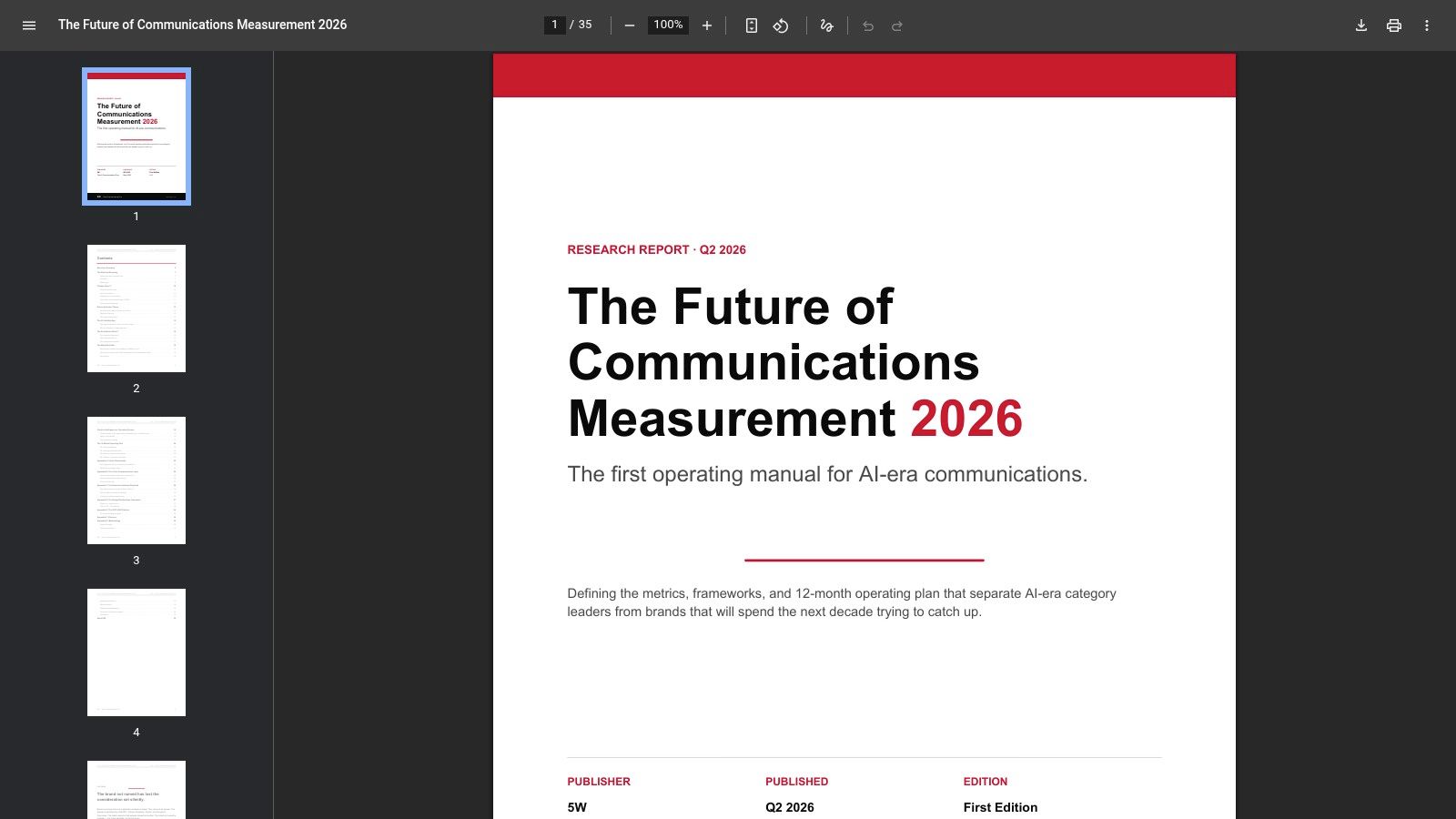
Its research content also adds practical value. Published agency research gives marketing teams, comms leads, and executives something they can reuse in pitches, thought leadership, sales enablement, and social content. That only matters if your internal team will put those assets to work, but when they do, the relationship can produce more than media coverage alone.
Best fit for 5WPR
I would shortlist 5WPR for companies that need momentum. Consumer brands are the obvious match, especially in categories where attention drives retail interest, creator activity, and search behavior at the same time. It can also suit companies that want PR connected more closely to digital visibility and executive presence.
A few practical trade-offs:
- Strong for consumer and lifestyle categories: Beauty, wellness, food and beverage, travel, and adjacent sectors often match the firm’s style.
- Useful for visibility-focused briefs: A good option if you want media relations tied to thought leadership, search presence, and broader market attention.
- Less natural for conservative brands: Teams that prefer understated messaging should test tone, approval pace, and risk tolerance early.
5WPR is not the universal answer. It is the right answer for a specific buyer. Choose it if your goal is to be seen often, stay part of the conversation, and use PR as an active growth channel.
Website: 5W Public Relations research and agency materials
6. Best PR Agencies: Walker Sands
Need a PR agency that can work with your demand gen team instead of operating beside it?
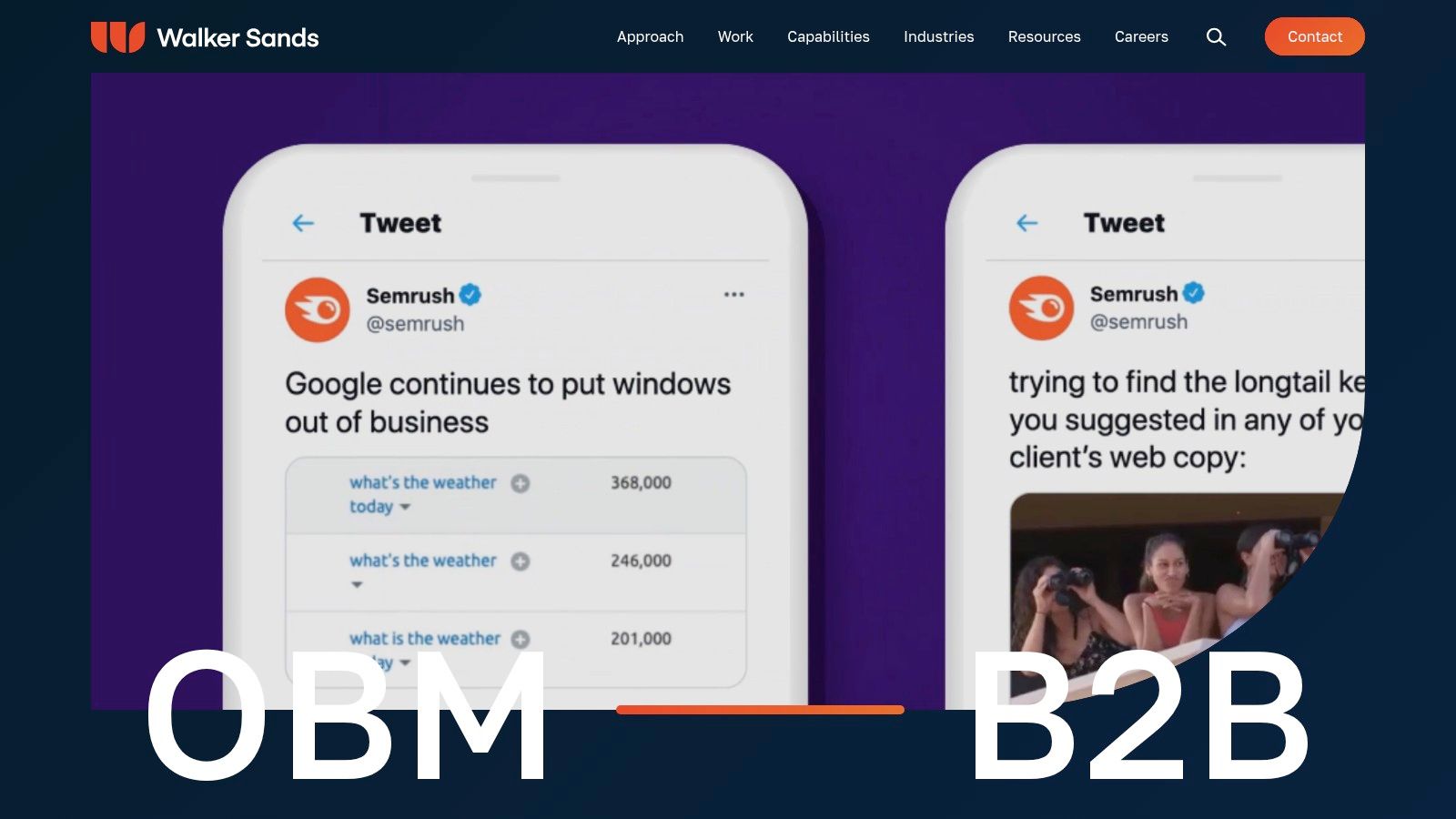
That question usually points buyers toward Walker Sands. The firm makes the most sense for B2B companies that want PR connected to pipeline goals, category visibility, and content performance. SaaS, cloud, cybersecurity, fintech, martech, HR tech. Categories where a strong media hit helps, but only if the message also supports search, sales conversations, and ongoing nurture.
The appeal is practical. Walker Sands brings PR together with content, SEO, paid media, creative, and web support under one roof. If you’ve managed separate agencies for each function, you already know the common failure point. Messaging drifts, reporting breaks into silos, and no one owns the full story from awareness to consideration.
That operating model is not right for every company. It is useful for teams that already measure marketing by influence on qualified pipeline, branded search, and sales enablement, not just share of voice.
Why B2B teams choose Walker Sands
Walker Sands tends to fit companies that need one partner to coordinate brand narrative and demand support at the same time. That can simplify execution for in-house teams, especially when product marketing, PR, content, and paid are all pushing toward the same commercial goal.
I would also call out a real trade-off. Integrated firms can be more effective when you want alignment, but they also require a clearer internal brief. If your leadership team is split on whether PR should build reputation, support launches, help SEO, or influence revenue, the engagement can get muddy fast. The agency model works best when your priorities are ranked, not vaguely grouped together.
A few practical filters:
- Best fit for B2B growth-stage and mid-market companies: Especially teams with complex products and long sales cycles.
- Strong choice if you want fewer agency handoffs: One partner can often keep messaging and reporting more consistent.
- Less natural for image-first consumer brands: Fashion, hospitality, and celebrity-driven campaigns usually need a different press engine.
- Better for teams with real internal ownership: Someone on your side still needs to connect PR work to product marketing, sales, and executive priorities.
Walker Sands is not the default choice because it is the biggest name on the list. It is the right choice for companies that want PR to support business development, not sit in a separate bucket.
Website: Walker Sands
7. Best PR Agencies: Highwire

Need a PR firm that can explain a technical product without flattening it into generic hype? Highwire is one of the clearer fits on this list for companies in B2B tech, cybersecurity, AI, healthtech, medtech, fintech, energy, and sustainability.
The value is specialization. If your buyers are technical, your category changes quickly, or analyst and trade coverage matter as much as top-tier business press, sector fluency starts to affect results. A team can have strong media contacts and still miss the mark if it cannot grasp the product, the buying committee, or the language your market uses.
That matters more than brand size for a certain kind of company. If you are choosing between a large generalist agency and a category specialist, the main question is not who has the biggest name. It is who can help your audience understand why your product matters, fast.
Highwire usually makes the most sense for venture-backed companies, growth-stage firms, and established tech brands that need PR tied to content, digital programs, and analyst relations. That combination is useful when coverage alone will not move the business.
A few practical fit signals:
- Best for innovation-led B2B categories: Especially where technical accuracy shapes credibility.
- Strong option for companies selling to informed buyers: Analysts, practitioners, security leaders, clinical stakeholders, and enterprise decision-makers.
- Good match if you want strategic depth from a specialist: Sector knowledge can shorten ramp time and sharpen messaging.
- Less suited to consumer buzz campaigns: Lifestyle, entertainment, and celebrity-driven work call for a different agency model.
The trade-off is straightforward. A specialist firm can be sharper inside its lane, but that lane is still a lane. If your brief is broad consumer awareness across mass-market channels, Highwire is probably not the cleanest fit. If your brief is category authority, product story clarity, and market education, it is a serious contender.
Website: Highwire
Top 7 PR Agencies Comparison
| Agency | Implementation complexity | Resource requirements | Expected outcomes | Ideal use cases | Key advantages |
|---|---|---|---|---|---|
| Edelman | High, multi‑layered global processes and governance | High, large retainers, senior teams, research access | Enterprise reputation lift, executive communications, measured trust insights | Global enterprises, multi‑stakeholder programs, crisis/reputation work | Market‑leading Trust Barometer, full integrated earned/owned/paid/social capability |
| Weber Shandwick | High, integrated creative + analytics workflows | High, enterprise budgets, analytics/consulting resources | Creative, data‑driven campaigns with measured impact and regulatory credibility | Health, financial services, public sector, large enterprises | Strong creative + rigorous data, deep sector practices and awards pedigree |
| FINN Partners | Medium, integrated but more agile than holding‑company peers | Medium‑high, cross‑functional teams, mid‑to‑large retainers | Integrated marketing + PR outcomes with faster decision cycles | Mid‑market to large brands seeking senior attention and global reach | Independence with scale, broad sector benches and integrated marketing under one roof |
| Prosek Partners | Medium, finance‑centric processes and IR workflows | Medium‑high, premium for investor relations and crisis specialists | Strong investor relations, transaction/crisis support, market credibility | Asset managers, private equity, fintech, professional services | Deep Wall Street language, IR expertise, proprietary creative arm (Prophecy) |
| 5W Public Relations (5WPR) | Medium‑High, assertive style and AI/visibility programs | Medium‑high, research and AI/GEO capabilities, sizable retainers | Consumer visibility, AI discovery lift, influencer and digital reach | Consumer brands, corporate, tech seeking earned coverage and AI visibility | Broad consumer capability, GEO/AI Visibility Index and repurposable research |
| Walker Sands | Medium, outcome‑based marketing tied to demand gen | Medium, SEO, paid, content and PR integrated teams | PR linked to pipeline, measurable demand‑gen and share‑of‑voice gains | B2B tech (SaaS, AI/cloud, cybersecurity, fintech) needing measurable impact | Strong B2B media relationships, integrated services reduce vendor sprawl |
| Highwire | Low‑Medium, agile sector squads and fast execution | Medium, senior specialist teams focused on innovation sectors | Technical storytelling, analyst engagement, targeted media traction | Venture‑backed scale‑ups and enterprise tech/health clients | Sector “squads”, strong analyst/media engagement, agile independent model |
Best PR Agencies – Your Next Move: Engaging a PR Agency the Smart Way
Once you’ve got a shortlist, don’t send the same vague note to every firm. That’s how buyers end up with generic proposals and polished chemistry calls that reveal almost nothing. Be specific. Tell the agency what business problem you’re trying to solve, what audience matters most, what kind of timeline you’re under, and what success should look like internally.
And be honest about budget range. Not exact to the dollar if you don’t want to be. But close enough that both sides can tell whether there’s a fit. A lot of wasted agency selection happens because companies hide the budget, agencies overbuild the scope, and everyone spends two weeks pretending the gap doesn’t exist.
A better first outreach usually includes three things:
- A clear goal: Brand awareness, executive visibility, product launch support, reputation management, investor communications, lead support, or something else.
- A real constraint: Budget, timeline, internal approval hurdles, limited spokesperson access, regulatory review, all of it.
- A reason you picked them: Reference a campaign, sector focus, or point of view that caused you to shortlist the firm.
The strongest PR buyers also ask better questions. Who will run the account day to day? How do you measure outcomes? How do you adapt if the first narrative angle doesn’t land? What does reporting look like beyond clips and coverage summaries? Those answers tell you more than an award slide ever will.
There’s also a bigger decision hiding underneath the agency search. Do you need a pure-play PR firm?
Sometimes yes. Especially for corporate reputation, public affairs, crisis work, and high-touch media relations. But sometimes the essential need is integrated visibility. Earned media, content, SEO, paid support, landing pages, executive positioning, and GEO for AI visibility all working together. In that case, an integrated partner may make more sense than a traditional PR retainer.
Mr. Green Marketing, LLC is one example of that kind of partner. The agency combines branding, web design, SEO, PPC, social media, content, and GEO-oriented digital execution for businesses that want visibility tied to measurable growth outcomes. For some companies, that will sit alongside PR. For others, it may be the more practical first move.
The best PR agencies aren’t the ones with the biggest names on a list. They’re the ones built for your stage, your category, your risk profile, and your definition of success.
If you want a partner that blends brand positioning with digital execution, Mr. Green Marketing, LLC can help you evaluate where PR fits into your wider growth strategy, identify visibility gaps, and build a plan across SEO, web, content, paid media, and GEO.
Leave a Comment
sing in to post your comment or sign-up if you dont have any account.