
Loyalty Program Design Blueprint for SMB Success: Your repeat buyers are slipping, your ad costs keep climbing, and the loyalty idea sitting in the backlog suddenly looks a lot less optional. That’s the point where loyalty program design stops being a branding exercise and starts looking like a retention lever, a data system, and a margin decision all at once. And if you’re running a small brand, a storefront, or a marketplace account, the wrong program can become an expensive discount engine.
The smart move is to treat loyalty like infrastructure, not decoration. The market is already moving that way, with the global loyalty management market estimated at USD 10.67 billion in 2023 and projected to reach USD 12.07 billion by 2030 at a 9.2% CAGR from 2024 to 2030, which points to sustained investment in tracking, segmentation, rewards administration, and analytics rather than simple punch-card mechanics (OpenLoyalty market overview). That scale matters because the brands winning here are designing for behavior, not just enrollment.
A good starting point is understanding where loyalty fits inside the bigger customer experience. If you’re still clarifying the role it plays in brand growth, this explainer on brand activation strategy is a useful companion piece, especially for teams trying to connect acquisition with retention. For simple local commerce, a platform for simple local shopping can also be a practical reference point when you want loyalty tied to neighborhood traffic, not abstract theory.
Loyalty Program Design Blueprint for SMB Success: Understanding the Business Case
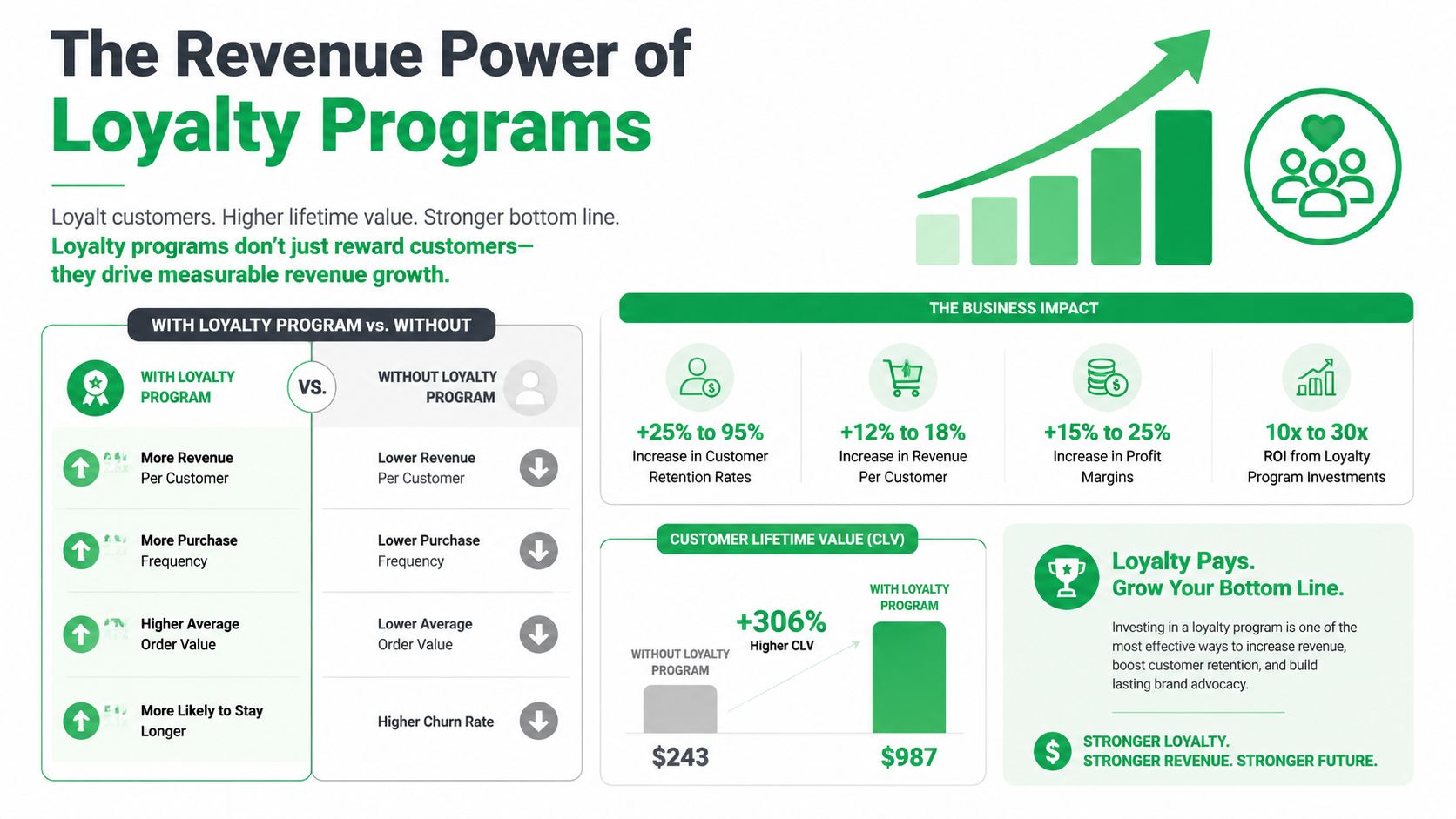
A local retailer can feel healthy on the surface and still be leaking value every week. Traffic is steady, the ads are running, and new buyers are coming in, but second purchases keep getting delayed, and the owner can’t explain why the revenue line feels soft. That’s usually the moment loyalty gets discussed, because a well-designed program isn’t there to “reward nice customers,” it’s there to make repeat buying more likely and more measurable.
The economic case starts with how customers behave once they join. One survey summary says 53% of customers want programs that are easy to use, 39% want great discounts, and 37% want programs that are easy to understand; the same source says 79% of customers said receiving exclusive benefits made them loyal (Queue-it loyalty program statistics). That’s a clean reminder that complexity doesn’t impress people. Clarity does.
A useful way to think about it is this. If customers redeem rewards, they spend more over time, and the program becomes a reason to return instead of a reason to shop around. The verified data says members who redeem rewards spend 3.1x as much annually as members who do not redeem rewards, while loyalty members generate 12–18% more incremental revenue growth per year than non-members (Queue-it loyalty program statistics). Those numbers don’t mean every program pays off automatically. They mean the upside is real when the design creates repeatable behavior.
Practical rule: if the program is hard to explain in one sentence, it’s probably hard to scale profitably.
That’s why the business case needs to be connected to member tracking, segmentation, and reward administration from day one. It’s also why the smartest small operators think in terms of systems, not gimmicks. If your baseline retention is weak, the program has to improve it without creating a margin leak.
Set Clear Objectives and KPIs
Before you sketch tiers or choose a points currency, define the business goal in plain language. The goal might be more repeat purchases, better redemption, stronger member activation, or a higher share of revenue from returning customers. If you can’t say what the program is supposed to change, you’re not designing loyalty, you’re creating a promo calendar.
Start with the baseline, not the reward
Benchmark current performance first. Industry guidance recommends this sequencing, then defining KPIs like active member rate and redemption rate, then moving into build, launch, and monitor steps tied to behaviors rather than enrollments (Data Axle six-step guidance). That order matters because a large signup list can look impressive and still do nothing for retention.
A workable KPI set for SMBs usually stays small. Track the metrics that show whether the program changes behavior, not just whether people joined.
- Active member rate: are people using the program after signup?
- Redemption rate: are rewards being claimed?
- Repeat purchase rate: are members coming back?
- Revenue per customer: is the customer worth more over time?
- Purchase frequency: are buying cycles shortening?
The same Data Axle guidance cites operating benchmarks of 40–60% for active member rate and 20%+ for redemption rate (Data Axle six-step guidance). Those aren’t universal truths, but they’re useful guardrails when you’re pressure-testing a proposal with finance or ownership.
Loyalty Program Design Blueprint for SMB Success: Keep the scoreboard CFO-friendly
A CFO doesn’t need a dashboard crowded with vanity numbers. They need to see whether the program creates incremental behavior that beats its cost. That means setting targets tied to customer actions, then checking them against profitability assumptions before launch. If the business case depends on people redeeming rewards too aggressively, the program is fragile from the start.
For measurement discipline, pair the loyalty dashboard with broader campaign tracking. This guide on how to measure marketing campaign effectiveness is helpful if you need a tighter link between retention metrics and the rest of your marketing stack. The goal is to make loyalty accountable in the same way you’d judge paid media or email, by behavior and contribution, not just activity.
A loyalty KPI should answer one question, did the program change how customers buy?
Map Member Journey and Tier Design
The best tier systems feel simple on the surface and deliberate underneath. Customers shouldn’t have to decode a rulebook to understand what happens next. If they can’t tell how to move forward, they stop caring, even if the rewards are technically attractive.
The survey data is blunt about what people want. 53% want programs that are easy to use, 39% want great discounts, and 79% say exclusive benefits drive loyalty (Queue-it loyalty program statistics). That combination tells you the tier structure has to do two things at once. It has to reduce friction, and it has to make status feel real.
Loyalty Program Design Blueprint for SMB Success: Build the journey in visible steps
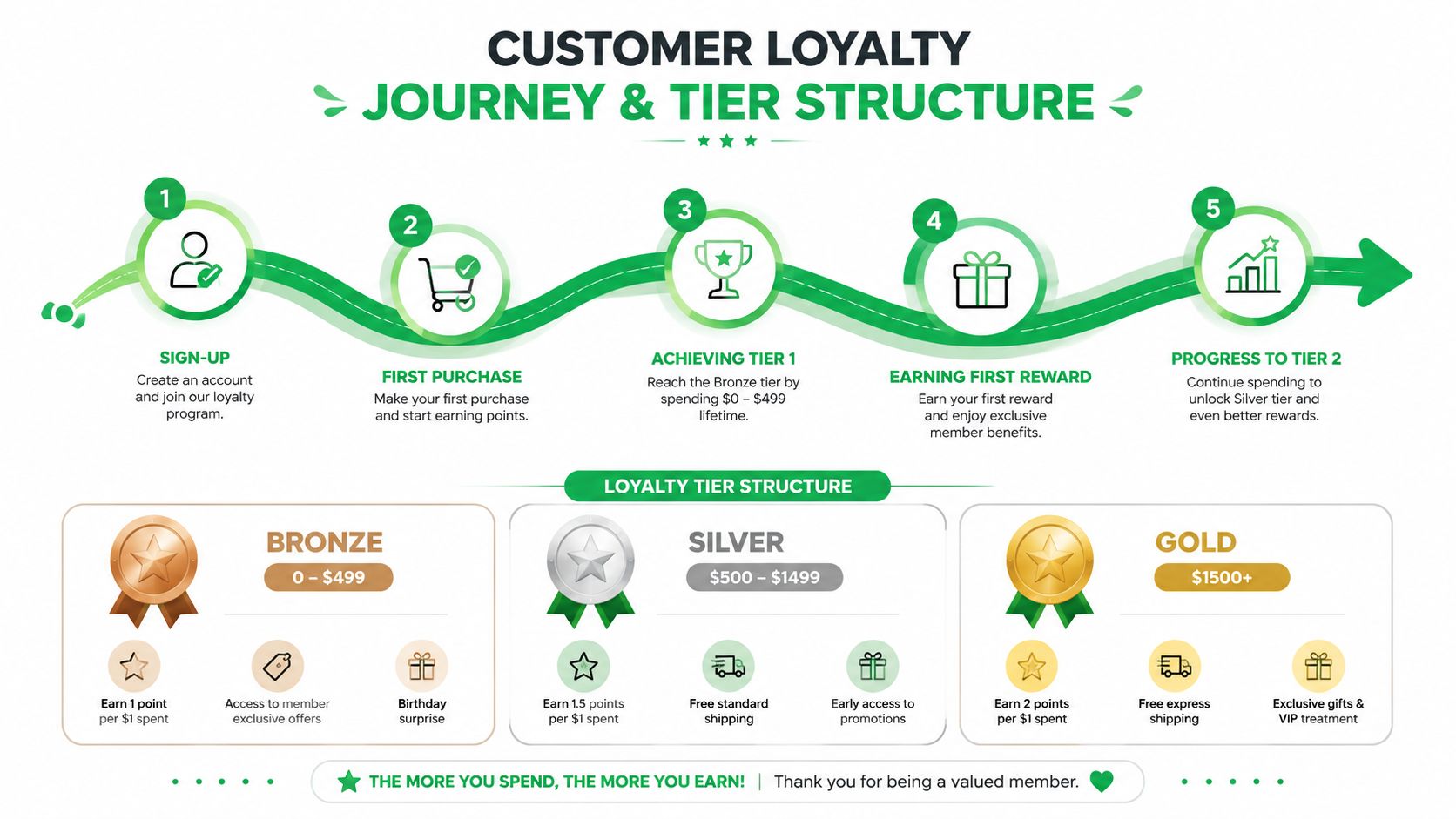
A practical journey for a small brand can look like this. Sign up, make the first purchase, reach the first reward, then progress into a higher tier with clearer perks. The point isn’t to create complexity for its own sake. It’s to make each action feel like a step forward.
The cleanest setups usually keep enrollment friction low, then let customers see progress immediately. QR, wallet-native enrollment, or a simple checkout opt-in tends to work better than forcing a long form at the point of sale. Once a customer is in, the program should show reward progress in the same place they already shop or browse, not in a hidden account area they’ll never revisit.
Use tier logic that matches the buying pattern
A three-tier structure can work well for SMBs if the thresholds are realistic. Bronze, Silver, and Gold are fine labels, but the primary design consideration lies in how quickly customers can move and what each tier offers. If the first reward feels too distant, participation drops. If tiers advance too fast, the status signal loses value.
Keep the earn path short enough that a customer can explain it to someone else without sounding confused.
Personalization matters here, too. The same member journey won’t fit every segment, so the rewards and prompts should reflect behavior, not just account age. For example, a marketplace seller may reward repeat category purchases, while a local retailer may reward store visits or referral behavior. The more the journey mirrors what people already do, the less resistance you create.
A useful reference for visualizing how structured tiers support habit is this guide to gym loyalty programs, since gyms often have to balance recurring behavior, visible progress, and status without making the program feel bureaucratic. That trade-off maps surprisingly well to retail and service brands.
Loyalty Program Design Blueprint for SMB Success: Craft Reward Structures and Economic Models
A reward that delights customers but wrecks gross margin is a bad reward. That’s why reward architecture has to be built with finance, not just marketing, in mind. The public conversation often gets stuck on points versus perks, but the first question should always be whether the economics survive real redemption behavior.
The strongest design guidance here says to model margin, discount caps, liability, and breakage, then validate the setup through pilot testing so redemptions don’t outrun the budget (Loyalty Reward Co redesign guide). That’s the kind of check many SMBs skip. They build for excitement, not sustainability.
Compare the main reward types honestly
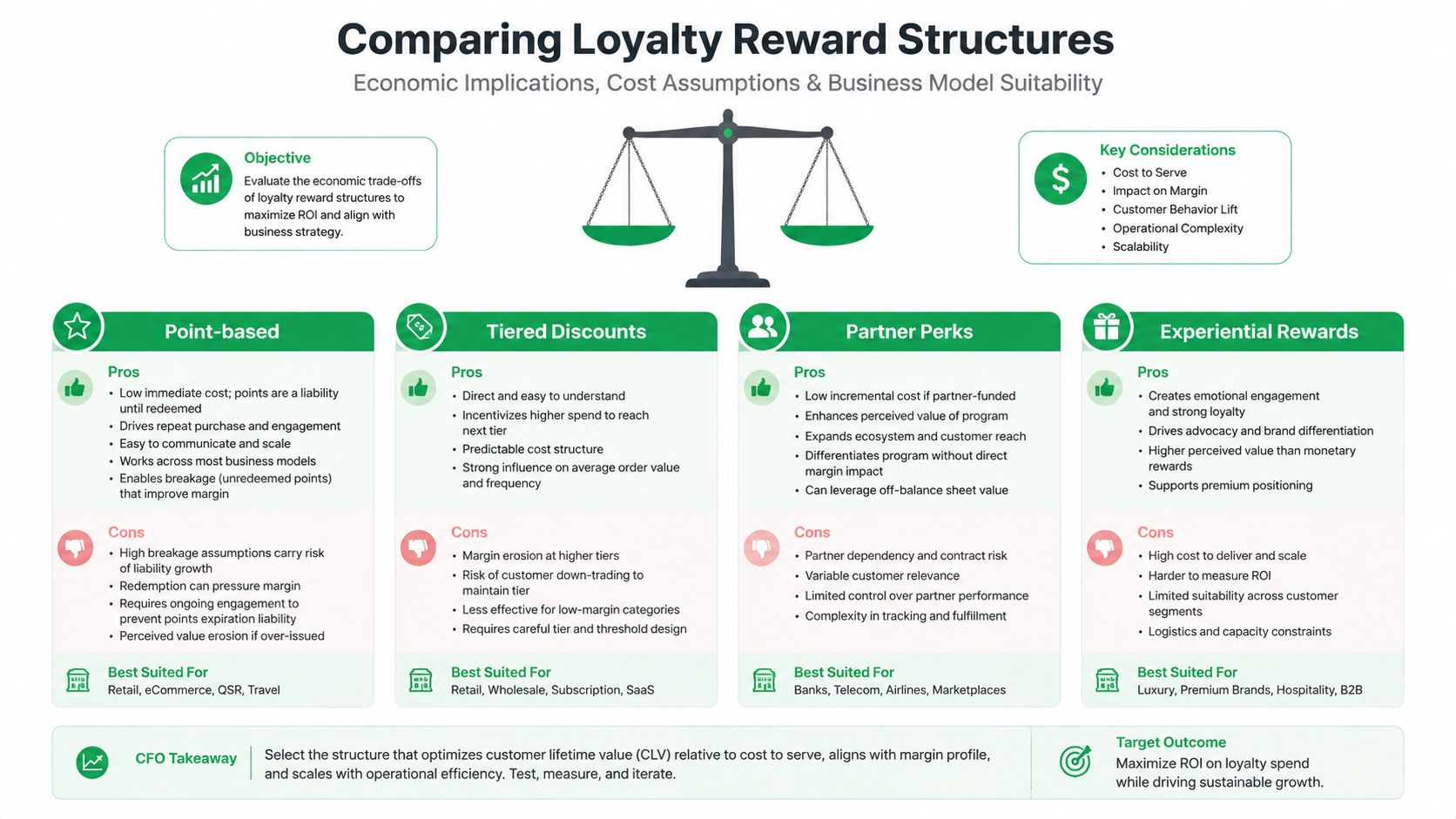
Point-based systems are flexible, which makes them easy to explain and easy to scale. The downside is that they can train customers to wait for discounts if the value feels too generic. Tiered discounts can increase urgency, but they can also compress margin if the threshold is too low. Partner perks help when you want differentiated value without carrying the whole cost yourself. Experiential rewards create strong emotional pull, but they’re harder to standardize and sometimes harder to fulfill.
Stress-test the reward threshold
The design question isn’t “what sounds generous?” It’s “what behavior do we need, and what can we afford if that behavior speeds up?” If the reward comes too fast, the program can become a subsidy for people who would have bought anyway. If it comes too late, customers stop paying attention.
Financial test: if you can’t describe the cost of a reward in a single scenario, you probably haven’t modeled it tightly enough.
Program design demands operational discipline more than creativity. Run the likely redemption path against your margin assumptions, then ask what happens if customers redeem faster than expected. Pilot the reward in a small segment before full rollout, and track whether the redemption pace matches the budget. If it doesn’t, tighten the earn rules, cap the reward, or simplify the offer.
For a practical look at reward logic in a service-heavy environment, the guide to gym loyalty programs is worth comparing against your own model. The economics differ, but the need to balance appeal with cost discipline is the same.
Loyalty Program Design Blueprint for SMB Success: Select Technology Stack and Integration
The software decision is where many loyalty plans get overcomplicated. Teams buy for features they’ll never use, then discover the primary blocker is data flow, not the points engine. A platform only matters if it connects cleanly to checkout, customer records, messaging, and reporting.
A sensible selection process starts with the systems you already rely on. Ecommerce platform, POS, CRM, email, SMS, and support tools should all be in the conversation. If the loyalty layer can’t recognize the customer across those touchpoints, the experience fractures fast.
Ask the vendor the questions that actually matter
Don’t lead with “What features do you have?” Lead with “How will this work in our stack?” The practical questions are about ownership, limits, and visibility. Who owns the data. What’s the API ceiling. How are offline and online actions reconciled. What happens when a member redeems in one channel and browses in another.
The right answer for an SMB is often the simplest system that can still support omnichannel recognition. Low-code integration is usually enough for lean teams, especially if the business is selling through a marketplace plus a direct storefront. The key is to preserve reporting clarity so you can see how the program changes behavior without stitching together five disconnected exports.
Loyalty Program Design Blueprint for SMB Success: Build for failure, not just launch
A rollout should include a fallback plan if the loyalty layer fails at checkout or messaging delays start piling up. If members can’t earn or redeem when they expect to, trust drops quickly. That’s why phased integration is safer than a full cutover, especially for small teams that don’t have a dedicated ops department.
The CRM piece deserves its own attention, too. If customer records are messy, loyalty data gets messy with them. This CRM implementation guide is a useful reference if you need to think about data hygiene before tying rewards to customer profiles. The better the CRM foundation, the less painful loyalty reporting becomes later.
Choose the stack that supports simple enrollment, omnichannel visibility, and frictionless redemption. If those three aren’t in place, the program will feel clunky no matter how good the reward catalog looks.
Launch Monitor and Optimize Performance
Launch day is not proof. It’s the first live test of whether the program can survive normal customer behavior. The brands that do this well watch the early signals closely and adjust before small flaws turn into expensive habits.
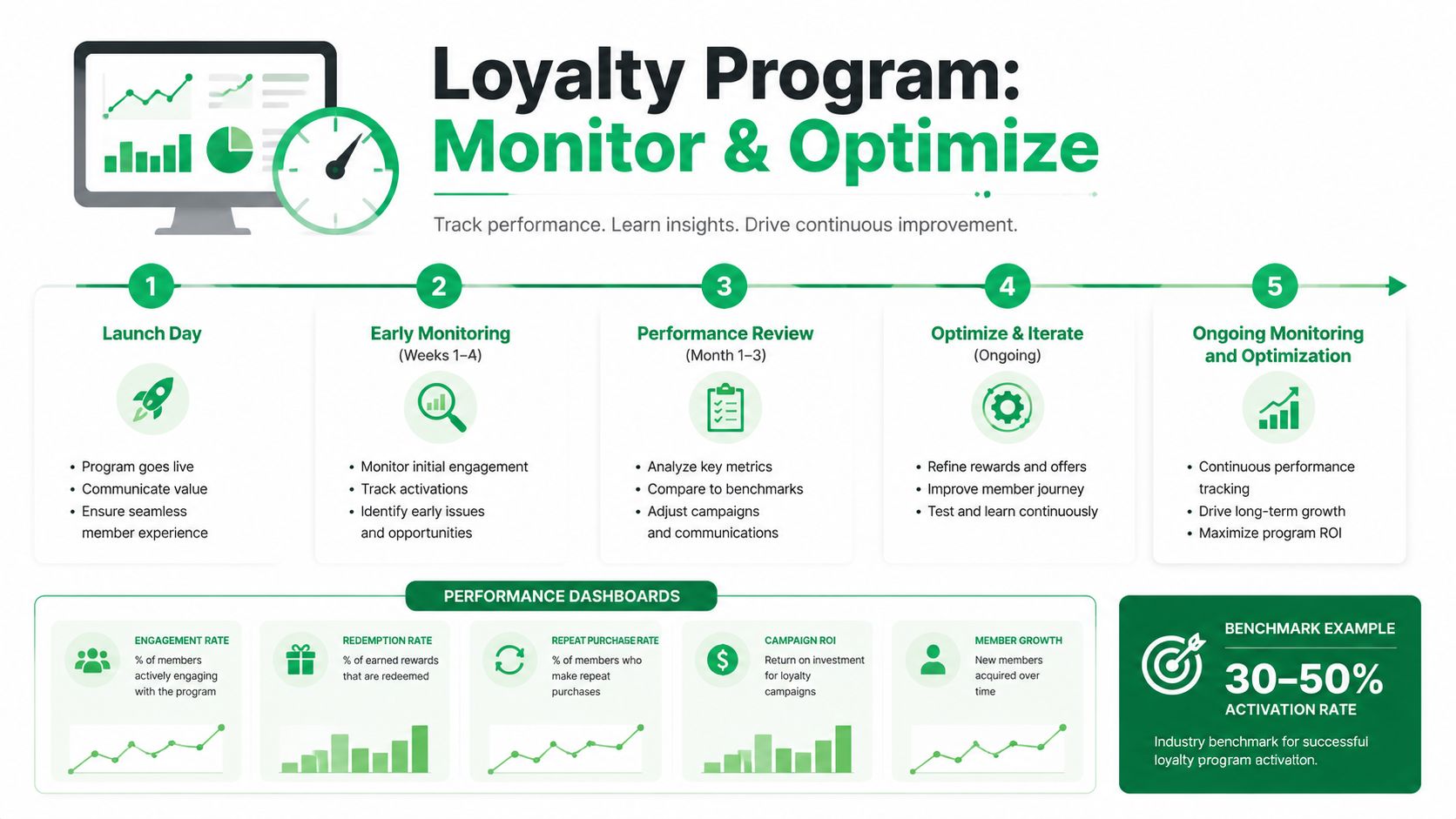
A strong program tracks active member rate, redemption rate, repeat purchase rate, CLV uplift, and NPS delta from day one, then uses those metrics to drive optimization cycles (Whitelabel Loyalty guide). That matters because launch enthusiasm can hide weak engagement. A big signup spike means little if members don’t come back.
Watch behavior in three rhythms
Weekly checks should focus on health signals. Are members enrolling, earning, and redeeming without friction. Monthly reviews should compare campaign activity to purchase behavior. Quarterly reviews should look at tier movement, reward costs, and whether the program still aligns with margin goals.
The operating benchmarks from data-backed guidance are useful here. One source reports 30–50% enrollment among regular customers in 90 days, 60–70% activation, and a 30–50% increase in visit frequency when the program is working well (Meed Loyalty analysis). Those are not promises, but they do give you a reality check when a launch looks active yet underperforms in repeat buying.
Optimize the parts customers actually feel
If activation lags, simplify enrollment. If redemption is low, shorten the path to the first reward. If customers join but don’t progress, the tier logic may be too distant or the reminders too weak. The fix should match the failure mode, not just the headline metric.
A lot of teams waste time overanalyzing the wrong variable. They ask whether the logo needs changing when the core issue is that members can’t tell how to get value. That’s where a clean dashboard and a disciplined review cadence help. They keep the team focused on behavior, not opinions.
The program should get easier to understand after launch, not harder.
Ensure Compliance and Provide Execution Templates
A loyalty program can be a growth engine and still create legal trouble if the privacy and reward terms are sloppy. Small businesses often skip this review because the program feels lightweight compared with a full subscription product. That shortcut is risky. Once customer data, consent, and reward promises are live, the program needs real governance.
BCG’s guidance is clear that next-generation programs need regulatory readiness across markets, and failure to address GDPR or CCPA in design can lead to fines and damaged brand trust (BCG loyalty evolution). That’s not just a multinational problem. Even smaller operators can run into issues if they collect data without clear permission, explain redemption poorly, or mishandle member communications.
Lock down the essentials before launch
Terms and conditions should explain how points are earned, when they expire, how redemption works, and what happens if the program changes. Privacy notices should describe what data is collected and why. Internal SOPs should tell staff how to enroll members, resolve missing points, and handle complaints without improvising at the counter.
A few execution templates help keep rollout clean.
- Enrollment email: confirm signup, restate the first benefit, and show the next step.
- Reward reminder: explain what the customer has earned and how to redeem it.
- Pilot rollout checklist: verify data capture, reward logic, messaging timing, and staff scripts before going wider.
- Reward table outline: list each reward, its trigger, its cost assumption, and its approval owner.
Treat compliance as part of the offer
Customers don’t need legal jargon, but they do need to trust the exchange. If the offer is generous and the rules are hidden, trust erodes fast. If the rules are simple and the privacy posture is clear, the program feels safer and easier to join.
That’s especially important for SMBs that rely on word of mouth. A messy launch doesn’t just create support tickets. It can make customers hesitant to opt in at all. Strong execution protects the margin, protects the brand, and makes the program easier to scale later.
If you want a loyalty program that survives contact with customers, get the economics, the data flow, and the legal basics right before you launch. A team at Mr. Green Marketing, LLC can help you pressure-test the strategy, tighten the messaging, and build a retention plan that’s designed to hold up.
Leave a Comment
sing in to post your comment or sign-up if you dont have any account.