
Franchise Marketing Strategies – And we need to talk about Franchise Marketing Strategies. Because it’s a totally different beast, right? You’re trying to build this massive, consistent brand… while also empowering dozens—or hundreds—of local owners to win in their own backyards. It’s a constant balancing act. Juggling brand police duties with the need for authentic, local flavor. So, how do you scale growth without sacrificing what makes each location unique? Easy—you don’t. Instead, you build a smarter system, a more connected framework.
This isn’t just a list of generic tips; these are the proven franchise marketing strategies that build empires. We’re diving deep into the actionable playbooks that successful multi-location businesses use to maintain brand integrity while fueling local-level growth. This guide is your blueprint for creating a powerful, unified marketing front that still allows individual franchisees to connect authentically with their communities.
From locking down brand messaging and dominating local search to implementing co-op advertising that actually works, we’re breaking down the exact plays that unify your brand and supercharge franchisee success. We’ll cover everything from multi-location lead generation and social media community building to reputation management and omnichannel customer experiences. You will get specific, actionable insights designed for immediate implementation. Let’s get into the frameworks that separate the stagnant franchises from the unstoppable ones.
1. Co-op Advertising & Brand Consistency Programs
Cooperative advertising programs are a cornerstone of successful franchise marketing strategies, creating a powerful synergy between corporate and local efforts. Essentially, the franchisor pools marketing funds—often from both corporate contributions and franchisee fees—to launch campaigns that benefit everyone. And this approach allows franchisees to tap into a much larger marketing budget and higher-quality creative assets than they could afford on their own, amplifying their local reach while maintaining a unified brand message.
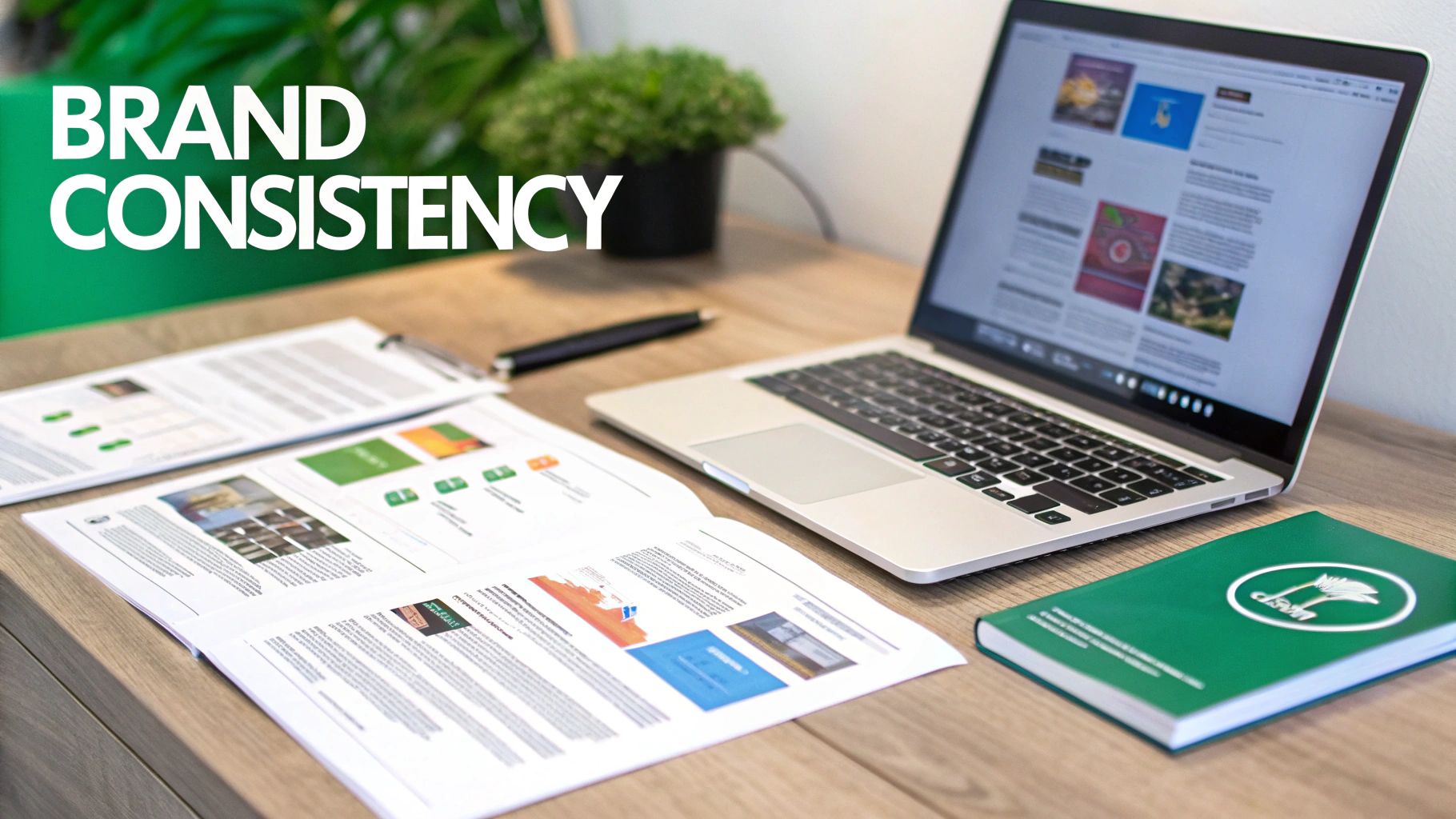
Think of McDonald’s or Subway. Their national campaigns create massive brand awareness, but it’s the co-op structure that empowers local owners to run promotions for the McRib’s return or the “Footlong of the Day” in their specific market. This model ensures the core branding—logos, slogans, and overall feel—remains consistent, preventing brand dilution while allowing for essential local-level flexibility. The customer experience feels familiar and reliable, no matter which location they visit.
How to Implement a Co-op Program
To make this strategy work, you need more than just a shared fund. You need a system.
- Establish Clear Contribution & Usage Rules: Define how funds are collected (e.g., a percentage of sales) and the specific marketing activities they can be used for, such as local radio spots, social media ads, or direct mail campaigns.
- Provide a Digital Asset Management (DAM) System: This is non-negotiable. A DAM is a centralized online library where franchisees can easily access pre-approved logos, ad templates, social media graphics, and brand guidelines. This prevents franchisees from creating off-brand materials.
- Create Tiered Marketing Packages: Offer different levels of marketing support or template packages that scale with a franchisee’s size or investment level. This provides a clear path for growth and ensures everyone has a starting point.
- Conduct Quarterly Brand Audits: Regularly review local marketing materials—from social media pages to in-store flyers—to ensure compliance. This isn’t about being punitive; it’s about protecting the brand’s integrity for everyone involved.
Key Insight: A successful co-op program is built on a foundation of trust and empowerment. By providing high-quality tools and clear guidelines, franchisors enable franchisees to become effective local brand ambassadors, not just business operators.
2. Multi-Location Lead Generation & Local SEO Strategy
While national brand awareness sets the stage, the real battle for customers is won at the local level. And a data-driven local SEO and lead generation strategy is how you win it. This approach focuses on making each individual franchise location hyper-visible to customers searching for your services in their immediate area. It combines optimized Google Business Profiles, location-specific website pages, and targeted local advertising to drive measurable foot traffic and online inquiries directly to the franchisee.
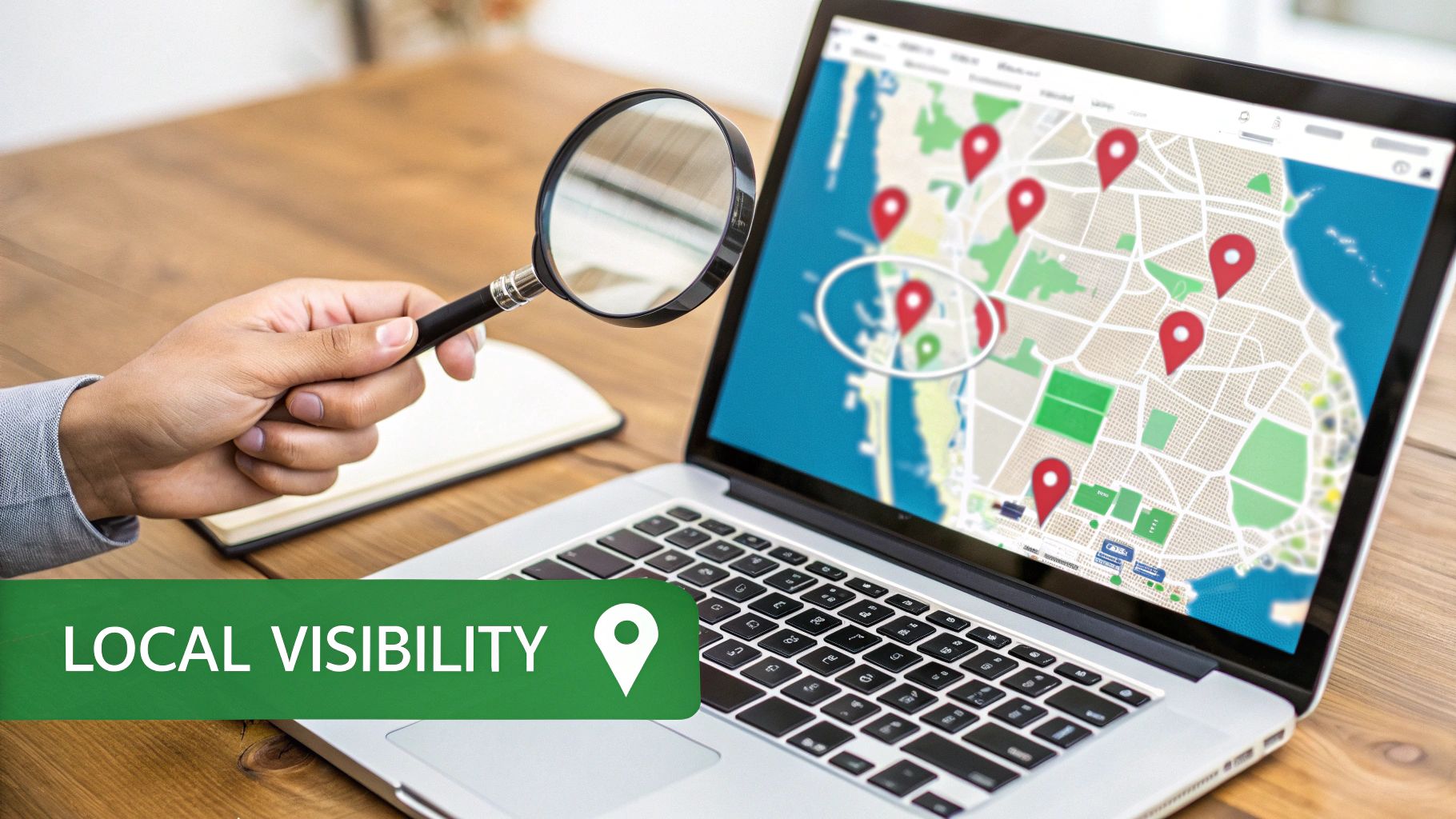
Think about how RE/MAX agents dominate hyper-local real estate searches or how Anytime Fitness franchisees often appear first when you search for “gym near me.” They achieve this by treating each location as a unique digital storefront. This is one of the most crucial franchise marketing strategies because it directly connects corporate brand-building efforts to a franchisee’s bottom line—turning broad interest into local sales. It ensures that when a potential customer is ready to buy, your local outlet is the most visible and accessible option.
How to Implement a Local SEO Program
A successful multi-location strategy requires a centralized system that empowers local execution.
- Create Unique Location Pages: Each franchisee needs a dedicated page on the corporate website. This page should feature unique content, local keywords, contact info, hours, and customer testimonials specific to that location.
- Centralize Google Business Profile (GBP) Management: Use a multi-location dashboard to manage and optimize all franchisee GBP listings. Ensure consistency in categories and branding while allowing franchisees to post local updates and respond to reviews.
- Establish a Review Management Protocol: Create a system for generating and responding to reviews. Encourage franchisees to solicit feedback and provide them with templates for responding to both positive and negative comments to protect brand reputation.
- Develop Localized Link-Building Campaigns: Pursue partnerships with local businesses, sponsor community events, and get listed in local directories for each franchise location to build local authority and search rankings. You can learn more about mastering SEO for a multi-location business to scale these efforts effectively.
Key Insight: Winning local search isn’t about having one great website; it’s about having dozens or hundreds of highly-optimized local digital presences. Empower franchisees with the tools to manage their local reputation while maintaining central control over core SEO best practices.
3. Social media community building, User-generated content & Influencer/Ambassador Programs
This strategy moves marketing from a one-way broadcast to a multi-directional conversation, empowering franchisees, customers, and local influencers to become active brand storytellers. It’s about building an authentic, engaged community around your brand rather than just pushing ads. This approach leverages the power of social proof by encouraging organic content creation—everything from customer testimonials to local ambassador shout-outs—which builds trust far more effectively than traditional advertising alone. And it harnesses the unique local flavor each franchisee brings to the table.
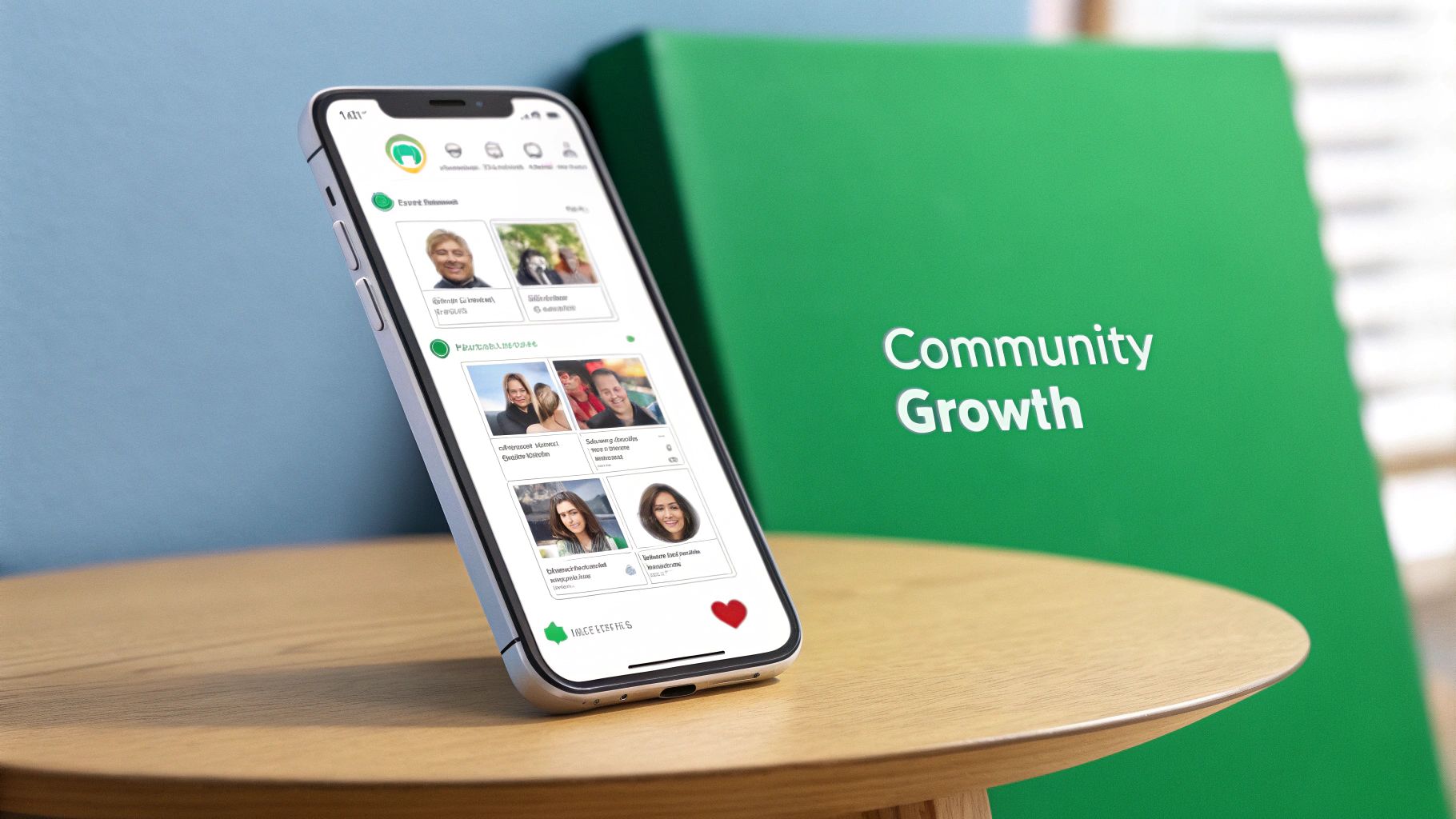
Look at how fitness franchises partner with local wellness influencers or how Chipotle amplifies customer-created TikToks about their favorite bowl combinations. These brands aren’t just selling a product; they’re curating a culture. By creating branded hashtag campaigns, sharing user-generated content (UGC), and building ambassador programs, they transform customers into a volunteer marketing army. This is one of the most cost-effective franchise marketing strategies for generating authentic reach and fostering deep brand loyalty.
How to Implement a Community-First Social Strategy
Building a community requires structure, enablement, and genuine engagement.
- Provide Franchisees with Content Calendars: Give your local operators a head start with monthly content themes, post ideas, and pre-designed templates that align with national promotions and seasonal trends.
- Establish Clear UGC Guidelines: Create and distribute a simple rulebook for sharing customer content. This should cover how to get permission, what content aligns with brand values, and how to properly credit creators, ensuring brand safety.
- Identify and Nurture Micro-Influencers: Focus on local voices (10k-100k followers) who have an authentic connection with their audience. Develop tiered partnership models—from free products to fixed fees—to build long-term relationships instead of one-off posts.
- Launch Branded Hashtag Campaigns: Create a simple, memorable hashtag for a specific promotion or event and encourage both franchisees and customers to use it. Use hashtag tracking tools to monitor conversations and amplify the best content across corporate channels.
Key Insight: The most powerful marketing doesn’t come from your corporate office; it comes from a happy customer sharing their experience. Your job is to create the platform and the encouragement for them to do so, turning individual experiences into a collective brand narrative.
4. Franchise Marketing Strategies – Email Marketing Automation & Franchisee Communication Systems
A centralized email marketing infrastructure is one of the most powerful franchise marketing strategies for driving customer loyalty and repeat business at scale. This approach combines sophisticated automation—like customer journey triggers and audience segmentation—with simple, easy-to-use systems that empower local franchisees. It allows the corporate brand to deliver personalized communications while enabling owners to execute effective local campaigns without needing deep technical expertise.
Think about the emails you get from major brands. Domino’s sends you reorder reminders for your favorite pizza, and fitness franchises use behavioral triggers to send a “we miss you” offer if you haven’t attended a class in a while. These aren’t one-off emails; they’re part of an automated system. This strategy ensures brand messaging remains consistent across all locations while leveraging customer data to deliver highly relevant content that boosts customer lifetime value.
How to Implement Email Automation
A successful system requires more than just an email platform; it needs a thoughtful framework.
- Build Lockable, Customizable Templates: Create email templates with a drag-and-drop editor. The core branding—logo, footer, and brand colors—should be locked, but franchisees should have customizable sections for local offers, events, or news.
- Establish Automated Customer Journeys: Set up core automated email sequences at the corporate level. These can include a welcome series for new customers, birthday offers, and re-engagement campaigns for inactive subscribers.
- Segment Audiences by Value & Behavior: Create audience segments based on purchasing history, visit frequency, or customer lifetime value. This allows both corporate and franchisees to send targeted messages to their most valuable customers.
- Provide Training and Benchmarking Data: Equip franchisees with training on email marketing best practices. And provide them with performance benchmarks (e.g., average open rates, click-through rates) so they can see how their local campaigns compare to the network average.
Key Insight: The goal of franchise email automation isn’t to take control away from franchisees—it’s to give them a more powerful, efficient tool. A well-designed system handles the heavy lifting of automation and branding, freeing owners to focus on creating compelling local offers.
5. Franchise Marketing Strategies – Pay-Per-Click (PPC) Campaign Management & Budget Optimization
For franchises, a pay-per-click (PPC) strategy is a powerful lever for driving immediate, measurable results. It’s not just about running a few ads—it’s about a scalable system that combines the franchisor’s high-level oversight with crucial franchisee input. This approach centralizes campaign management and budget allocation, ensuring brand messaging stays consistent while allowing for the local optimization needed to win in different markets. And this hybrid model maximizes return on ad spend (ROAS) and drives a steady stream of leads across the entire network.
Think about a national HVAC franchise. Corporate can run broad campaigns targeting keywords like “AC repair” or “furnace installation.” But a well-executed franchise PPC strategy allows the franchisee in Phoenix to bid more aggressively during a heatwave on terms like “emergency AC repair Phoenix,” while the franchisee in Boston focuses on “furnace maintenance deals.” This is one of the most direct franchise marketing strategies for capturing high-intent customers at the exact moment they need a service, ensuring that marketing dollars are spent with maximum efficiency.
How to Implement a Scalable PPC Program
A successful franchise PPC program requires structure, data, and clear communication. It’s about building a machine that learns and optimizes over time.
- Establish Centralized Campaign Structures: Create master campaigns at the corporate level with separate ad groups targeting each franchise location or territory. This allows for both brand consistency and geo-specific performance tracking.
- Use Aggressive Negative Keyword Lists: A shared, constantly updated negative keyword list is critical. This prevents franchisees from wasting money by showing up for irrelevant searches like “HVAC school” or “DIY furnace repair.”
- Set Clear ROAS & CPL Targets: Define what success looks like for each location. A new territory might have a higher cost-per-lead (CPL) target initially, while an established one should meet a specific return on ad spend (ROAS) goal.
- Build Monthly Performance Reviews: Create templated performance reports that compare key metrics—like click-through rate, conversion rate, and CPL—across all franchise locations. This fosters a sense of friendly competition and highlights best practices. For a deeper dive into the fundamentals, this guide to paid advertising can be a great resource.
Key Insight: A winning PPC strategy empowers local owners with data-driven insights while maintaining central control over brand and budget. It transforms advertising from a simple expense into a predictable, scalable lead generation engine for the entire franchise system.
6. Video Content Marketing & Visual Storytelling for Brand Connection
Video isn’t just a content format; it’s the most powerful storytelling medium available to modern marketers. This franchise marketing strategy leverages both professional and user-generated video to build authentic brand connections, showcase franchisee success, and demonstrate products or services in a dynamic way. And in a crowded digital space, video cuts through the noise, driving higher engagement and creating the emotional resonance needed for customer loyalty and franchisee recruitment.
Consider home service franchises that use before-and-after videos to showcase the quality of their work, or fitness franchises that share powerful member transformation stories. These narratives do more than just sell a service—they build a community and prove the brand’s value proposition. Video allows potential customers and franchisees to see the brand in action, making the concept tangible and far more compelling than static text or images ever could.
How to Implement a Video Marketing Program
A successful video strategy requires a blend of high-polish corporate content and authentic local stories.
- Create a Centralized Video Content Calendar: Plan your video production on a quarterly basis. This should include “hero” content like brand stories or franchisee testimonials, as well as shorter clips for social media, tutorials, and promotional videos.
- Encourage User-Generated Content (UGC): Launch a program that incentivizes franchisees and customers to submit their own videos. Offer gift cards or discounts for the best customer testimonials or behind-the-scenes clips. This provides a steady stream of authentic, low-cost content.
- Optimize for Search & Social: Every video needs to be optimized. For YouTube, this means keyword-rich titles, detailed descriptions with links to landing pages, and relevant tags. For social media, it means creating vertical formats and adding captions for silent viewing.
- Develop Video “Kits” for Franchisees: Provide franchisees with simple guidelines, basic equipment recommendations (like a ring light and microphone), and templates for creating consistent, high-quality local videos that align with the brand.
Key Insight: Video humanizes your franchise. It gives a face to local owners and a voice to happy customers, transforming your brand from a corporate entity into a trusted part of the community.
7. Amazon Marketplace Optimization & E-Commerce Growth for Product-Based Franchises
For product-based franchises, ignoring Amazon isn’t an option—it’s a massive missed opportunity. This strategy focuses on treating Amazon and other e-commerce marketplaces as primary sales channels, combining listing optimization, advertising, and reputation management. And this approach allows franchises to meet customers where they already are, capturing significant revenue while reinforcing brand authority outside of traditional brick-and-mortar or direct-to-consumer websites.
Think of a health supplement or beauty care franchise. While individual locations drive local sales, a centralized, expertly managed Amazon presence can generate hundreds of thousands in monthly revenue. This creates a powerful flywheel effect: strong marketplace sales boost brand recognition, which in turn drives more foot traffic to local franchisee locations. It’s a specialized but critical component of modern franchise marketing strategies that supports multi-channel growth and taps into a ready-to-buy audience.
How to Implement Amazon Marketplace Optimization
Success on Amazon requires a dedicated, systematic approach that goes far beyond simply listing products.
- Conduct Deep Keyword & Competitor Research: Use tools like Helium 10 or Jungle Scout to identify high-volume, relevant keywords your target customers are searching for. Analyze top competitor listings to find gaps in their strategy you can exploit.
- Create A+ Content & High-Quality Visuals: Invest in professional product photography, including lifestyle images and infographics. Utilize Amazon’s A+ Content feature to build visually rich, brand-centric product pages that tell a story and drive conversions.
- Implement a Proactive Review Generation System: Your goal is to get 50+ positive reviews as quickly as possible before scaling ad spend. Use automated email follow-ups or “Request a Review” features to encourage feedback from satisfied customers.
- Run Targeted PPC Advertising Campaigns: Allocate a portion of your marketing budget to Amazon PPC. Start with automatic campaigns to gather data, then create manual campaigns targeting the most profitable keywords to scale your visibility and sales. For a deeper dive into this, you can learn more about how to improve Amazon sales.
Key Insight: Optimizing for Amazon is not a “set it and forget it” task. It requires continuous monitoring of performance metrics, competitor actions, and pricing to maintain a competitive edge and maximize your franchise’s e-commerce potential.
8. Franchise Recruitment & Lead Generation Through Content Marketing
Franchise marketing strategies aren’t just for attracting customers—they’re crucial for attracting the right franchisees to grow the brand. Content marketing is a powerful engine for this, shifting the focus from a hard sell to educating and nurturing potential owners. And this approach positions the franchisor as a trusted authority, using valuable content to attract, engage, and convert qualified entrepreneurs who are actively researching business opportunities.
Think about how brands like Anytime Fitness or JAN-PRO find new owners. They don’t just run ads saying “Buy a Franchise.” Instead, they create a resource hub filled with franchisee success stories, detailed ROI case studies, and articles on the benefits of business ownership. This content addresses the core questions and concerns of potential investors, building trust long before a sales call ever happens. The goal is to guide a prospect from “I’m curious about owning a business” to “This specific franchise is the right opportunity for me.”
How to Implement a Franchise Recruitment Content Strategy
A successful recruitment funnel is built, not stumbled upon. It requires a systematic content plan.
- Develop High-Value Lead Magnets: Create in-depth resources that prospects will trade their contact information for. Think downloadable ROI calculators, comparison guides positioning your opportunity against competitors, or abridged versions of your financial disclosure documents.
- Feature Authentic Franchisee Testimonials: Social proof is everything. Produce high-quality video interviews and written case studies showcasing the success and satisfaction of your current franchisees. This makes the opportunity tangible and relatable.
- Implement a Nurture Sequence: Use marketing automation to create an email follow-up sequence once a lead is captured. This series should deliver educational content, answer common questions, and systematically move prospects through the decision-making process.
- Maintain an Educational Blog or Resource Center: Consistently publish content on topics relevant to franchise ownership—financing, site selection, day-to-day operations, etc. This attracts organic traffic and establishes your brand as an expert in the field.
Key Insight: The best franchisee candidates are often the most informed. By investing in educational content, you attract a higher caliber of prospect, streamline the sales cycle, and ensure new owners are aligned with your brand’s vision from day one.
9. Omnichannel Customer Experience & Unified Messaging Strategy
An omnichannel approach moves beyond simply being present on multiple channels; it’s about creating a single, seamless, and unified customer experience across every touchpoint. This strategy integrates your website, social media, email, in-store experience, and customer service into one cohesive journey. The goal is to ensure a customer’s interaction with the brand is consistent, personalized, and frictionless, whether they’re browsing on their phone or speaking with a franchisee in a physical location.
Think of Starbucks. You can order ahead on the app, pay with your phone, and earn loyalty points that are instantly redeemable in any store. The experience is perfectly integrated. This is one of the most powerful franchise marketing strategies because it builds deep customer loyalty. And it reduces friction—a customer who starts a conversation online shouldn’t have to repeat themselves when they call a local franchise. This continuity is the hallmark of a true omnichannel system.
How to Implement an Omnichannel Strategy
Building a unified experience requires a deep commitment to both technology and training.
- Map the Customer Journey: Start by charting every possible interaction a customer has with your brand, from initial discovery to post-purchase support. Identify key friction points where the experience breaks down between channels.
- Invest in a Unified Customer Data Platform (CDP): A CDP is crucial for creating a single view of the customer. It integrates data from your website, CRM, point-of-sale systems, and social media, allowing for truly personalized marketing and service. To build a robust and unified messaging strategy across all franchise touchpoints, a foundational understanding of what is omnichannel customer service is essential.
- Train Franchisees on the Omnichannel Philosophy: Your local partners are on the front lines. They need extensive training not just on the tools, but on the “why” behind the strategy, so they can deliver a consistent brand experience.
- Establish Clear Brand Governance: Create and enforce strict guidelines for messaging, promotions, and customer service responses across all channels to ensure every franchisee communicates with one unified brand voice.
Key Insight: An omnichannel strategy isn’t just a marketing tactic; it’s a customer-centric business philosophy. By breaking down the silos between corporate and local—and between digital and physical—you create a powerful, unified brand experience that competitors will struggle to replicate.
10. Reputation Management & Review Generation Systems
In today’s digital-first world, your online reputation is your brand’s reputation. A proactive system for managing and generating reviews is one of the most critical franchise marketing strategies, transforming customer feedback from a reactive chore into a powerful engine for growth. This involves more than just hoping for good reviews—it’s about systematically encouraging satisfied customers to share their experiences, building social proof that directly influences new customer decisions.
Think about a local service franchise, like a plumber or an electrician. Before a homeowner even thinks about calling, they’re checking Google, Yelp, or Angi. A location with a 4.8-star rating and hundreds of positive reviews will get the call over a competitor with a 3.5-star rating and a handful of mixed comments. A robust review generation system ensures a steady stream of positive feedback that builds trust, improves local SEO rankings, and provides an invaluable feedback loop for both the franchisee and the corporate office. And this protects the brand’s integrity at every single touchpoint.
How to Implement a Reputation Management System
A successful program requires a blend of technology, training, and consistent execution.
- Automate Review Requests: Use software to automatically send review requests via email or SMS to customers within 24-48 hours of a service or purchase. This timing is crucial as it catches customers when the positive experience is still fresh.
- Create Franchisee Dashboards: Provide each franchisee with a simple dashboard to monitor their location’s ratings, see new reviews in real-time, and track response rates. This gamifies the process and creates accountability.
- Establish Response Protocols & Templates: Train franchisees and their staff on how to respond to both positive and negative reviews. Provide pre-approved templates that ensure a consistent, professional, and empathetic brand voice while allowing for personalization.
- Address Negative Feedback Immediately: Mandate a 24-hour response time for all negative reviews. A prompt, solution-oriented public response can often turn a negative situation into a demonstration of excellent customer service. To further dive into maintaining a positive image, consult an essential online reputation management guide.
Key Insight: Reputation management isn’t just about damage control; it’s about proactive brand building. By making it easy for happy customers to become advocates, you create a powerful, self-sustaining marketing asset for every single franchisee.
10-Point Franchise Marketing Strategy Comparison
| Strategy | Implementation Complexity | Resource Requirements | Expected Outcomes | Ideal Use Cases | Key Advantages |
|---|---|---|---|---|---|
| Co-op Advertising & Brand Consistency Programs | Medium — governance, approval workflows required | Moderate — co-op funds, DAM, approved vendors, templates | Consistent brand identity, lower franchisee marketing cost, faster rollouts | Franchise systems needing centralized brand control and national/local campaigns | Cost sharing; brand equity protection; simplified compliance |
| Multi-Location Lead Generation & Local SEO Strategy | High — per-location optimization and tracking | High — SEO/PPC specialists, location pages, analytics and review management | Increased local leads, improved map/search visibility, lower CAC | Local-service, retail or location-dependent franchises | Highly qualified intent traffic; scalable by territory |
| Social Media Community Building & Influencer/Ambassador Programs | Medium–High — coordination, moderation, influencer management | Moderate — community managers, incentives, influencer budgets, content tools | Higher engagement, organic reach, local advocacy and UGC | Consumer-facing, lifestyle, F&B and retail franchises | Authentic content; lower paid spend; viral amplification potential |
| Email Marketing Automation & Franchisee Communication Systems | Medium — platform setup and integrations | Moderate — email platform, templates, segmentation, training | Improved retention, repeat purchases, measurable campaign ROI | Franchises with repeat customers and CRM data | Personalized automation; consistent messaging at scale |
| PPC Campaign Management & Budget Optimization | High — continuous bidding and performance tuning | High — ad spend, paid media experts, tracking and landing pages | Immediate traffic and leads; measurable ROAS; rapid testing | Competitive categories needing fast lead volume | Rapid scale; precise attribution; centralized expertise |
| Video Content Marketing & Visual Storytelling | Medium — production planning and distribution workflows | Moderate–High — production budget, editors, distribution plan | Higher engagement, improved SEO, stronger brand connection | Brands benefiting from demos, testimonials, recruitment | High engagement; repurposable assets; emotional storytelling |
| Amazon Marketplace Optimization & E‑Commerce Growth | High — platform rules, inventory and ads complexity | High — listing optimization, advertising budget, inventory management | Increased marketplace sales and visibility; scalable e‑commerce channel | Product-based franchises selling consumer goods online | Access to large buyer base; rapid scaling via marketplace |
| Franchise Recruitment & Lead Generation Through Content Marketing | Medium — content program and nurture workflows | Moderate — content creators, CRM, webinars, legal review | Qualified franchisee leads, stronger authority, reduced sales cycle | Franchisors seeking new franchisees and lead qualification | Long-term lead generation; pre-qualified prospects; measurable ROI |
| Omnichannel Customer Experience & Unified Messaging Strategy | Very High — systems integration and organizational change | Very High — CDP/CRM, integrations, training, governance | Seamless CX, higher LTV, better cross-channel attribution | Large franchises aiming for consistent multi-touch experiences | Unified data-driven personalization; reduced customer friction |
| Reputation Management & Review Generation Systems | Medium — protocols, monitoring and response workflows | Moderate — review platforms, automation, monitoring, staff training | Improved ratings, local SEO boost, higher conversion rates | Local service, medical, restaurant and retail franchises | Increased trust and social proof; actionable feedback for ops improvements |
Bringing It All Together: Your Franchise Growth Engine
And there you have it. We’ve navigated the complex, dynamic landscape of franchise marketing, moving from high-level brand governance all the way down to the granular tactics of local lead generation. The ten strategies we’ve explored—from co-op advertising and local SEO to omnichannel experiences and franchisee recruitment—aren’t just a random assortment of good ideas. They are interconnected gears in a powerful, system-wide growth engine.
The core challenge, and the greatest opportunity, in franchise marketing is the constant balancing act between corporate control and local empowerment. It’s the art of creating a brand that is instantly recognizable on a national scale yet feels deeply personal and relevant in every single neighborhood it serves. Achieving this balance is the ultimate goal of the franchise marketing strategies we’ve outlined.
Synthesizing the Strategies: From Theory to Action
Let’s distill this comprehensive playbook into its most critical takeaways. True success doesn’t come from dabbling in a dozen different areas at once. It comes from building a strong, integrated system where each part supports the others.
- Foundation First (Brand & Compliance): Before you can scale, you need a stable foundation. This means solidifying your brand consistency programs and reputation management systems. A unified brand voice and a stellar online reputation are the bedrock upon which all other local marketing efforts are built. Without this, your marketing spend is less efficient.
- Local Dominance (SEO, PPC, Social): Your franchisees live and die by their local visibility. The strategies for multi-location SEO, geo-targeted PPC, and community-centric social media are not optional. They are the primary drivers of foot traffic and local leads. The key is to create playbooks and templates at the corporate level that franchisees can easily customize and deploy.
- Systemic Growth (Recruitment & Enablement): A franchise system is a living entity; it needs to grow. Using content marketing for franchise recruitment fills your pipeline with qualified, engaged candidates. Simultaneously, robust email automation and communication systems ensure your existing franchisees are informed, supported, and aligned with corporate objectives.
- Customer-Centricity (Omnichannel & E-commerce): Finally, it all comes back to the customer. An omnichannel strategy ensures a seamless experience whether a customer interacts with your brand online, in-store, or via a mobile app. For product-based franchises, optimizing your Amazon and e-commerce presence is no longer a side project—it’s a primary revenue channel that requires dedicated focus.
Your Next Move: Building Your Custom Engine
So, where do you begin? The sheer volume of franchise marketing strategies can feel overwhelming, but the path forward is simpler than it seems. Don’t try to boil the ocean.
Start with an honest assessment. Where is your system’s biggest point of friction?
- Are you struggling with inconsistent branding across locations? Focus on co-op programs and brand governance first.
- Are your franchisees invisible in local search results? Prioritize a multi-location SEO and reputation management overhaul.
- Is your franchise development pipeline running dry? Build out a content marketing strategy geared toward recruitment.
Pick one, maybe two, of these critical areas and commit to mastering them. Create the processes, build the templates, provide the training, and measure the results. Once that gear in your growth engine is spinning smoothly, move to the next. This methodical, focused approach is how you build sustainable momentum. The goal isn’t just to execute marketing tactics; it’s to build a scalable, repeatable system that empowers every single franchisee to win in their local market, all while strengthening the national brand. When central strategy and local execution fuse together, that’s the moment your franchise transforms from a collection of stores into a true market powerhouse.
Ready to stop guessing and start building a high-performance growth engine for your franchise? The team at Mr. Green Marketing, LLC specializes in designing and implementing the exact franchise marketing strategies covered in this guide, from local SEO to system-wide brand management. Let us help you identify your biggest opportunities with a free, no-obligation audit of your current marketing system.
Leave a Comment
sing in to post your comment or sign-up if you dont have any account.