
Half of adult social media users visit platforms intending to learn more about brands or their content, according to DataReportal's Digital 2025 analysis. That makes social more than an entertainment channel. Buyers are also checking whether your product solves their problem, whether your business looks credible, and whether taking the next step feels worthwhile.
Most social media strategy examples showcase brands with budgets and production teams that smaller businesses can't reproduce. But you don't need to reproduce the campaign. You need to understand the mechanism behind it, the constraint that made it workable, and the smallest useful version you can run next month.
Eight brands, eight playbooks, and a practical question: what can you copy? Wendy's offers a lesson in recognizable replies. Glossier shows how customer participation can support product discovery. Gymshark gives marketers a useful model for aligning creator incentives with sales.
These aren't interchangeable tactics. A character-led video series needs a reliable performer. A seasonal promotion needs staff who can fulfill the offer. A creator program needs enough margin to pay partners without losing money.
And attention isn't the finish line. Before borrowing any of these approaches, decide what customers should do afterward: ask a question, visit a store, book an appointment, or buy. That decision separates an entertaining account from a strategy your business can afford.
Table of Contents
- 1. Wendy's Witty Brand Voice on X (Twitter)
- 2. Duolingo's Mascot-Driven TikTok Strategy
- 3. Glossier's Community-Led Content Model
- 4. Chipotle's Boorito Halloween Campaign
- 5. Old Spice's Real-Time Personalized Video Responses
- 6. Liquid Death's Anti-Brand Brand Strategy
- 7. Gymshark's Creator Affiliate Program
- 8. Starbucks' White Cup Contest
- How the eight social media strategies compare
- Turning Eight Playbooks Into Your Next Campaign
1. Wendy's Witty Brand Voice on X (Twitter)
Wendy's sharp, playful replies on X make customer interaction part of its public-facing personality. The useful lesson isn't that every business should roast people. It's that a recognizable voice can make an ordinary exchange worth reading.
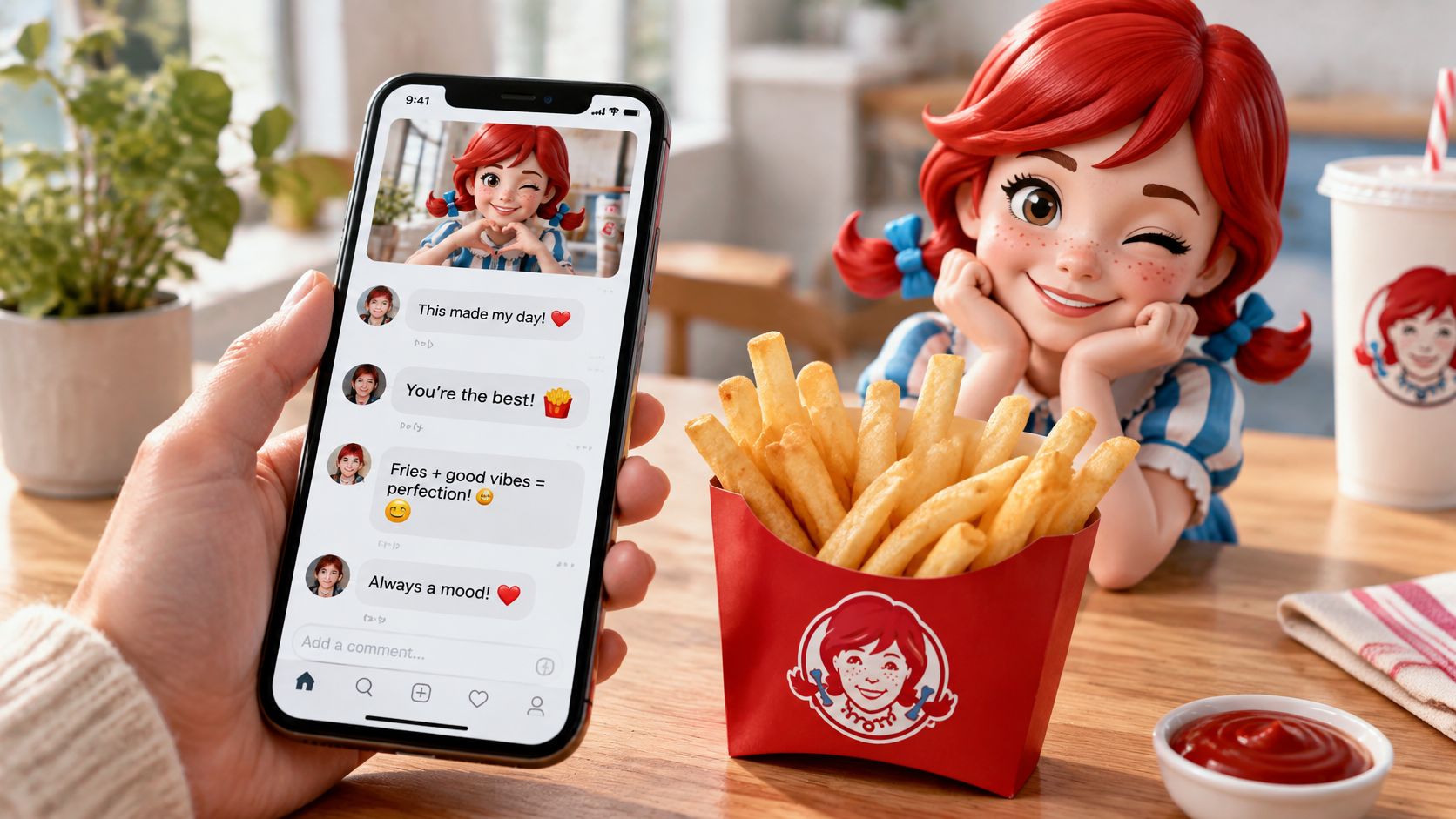
The mechanism is conversational: answer the person in front of you while giving everyone watching a reason to pay attention. The Carter Wilkerson nugget exchange is a recognizable example of turning a customer request into a public challenge, rather than replying with a standard promotional message.
The constraint is judgment. A playful response to a willing participant is different from a joke aimed at someone reporting a missing order, an allergy concern, or poor treatment.
Copy the Voice, Not the Aggression
Say a neighborhood pizza shop wants more local conversation. Its social manager could answer topping debates, celebrate customer creations, and make gentle jokes about pineapple arguments while keeping order problems straightforward.
Build a short voice guide before posting:
- Define the personality. Choose traits such as friendly, dry, enthusiastic, or mischievous, with sample replies.
- Mark the boundaries. Keep health, discrimination, payment disputes, and personal information out of public jokes.
- Assign an owner. Give someone responsibility for checking mentions and moving sensitive issues into private support.
Practical rule: Resolve the customer's problem before trying to entertain the audience.
For next month's test, track meaningful conversations, relevant profile visits, and customer-service resolution alongside shares. Skip insults your team wouldn't comfortably say across a counter. If the brand voice only works when your funniest employee is available, simplify it until someone else can use it consistently.
2. Duolingo's Mascot-Driven TikTok Strategy
Duo, Duolingo's green owl, gives the app a character people can recognize before they read a caption. The mascot's exaggerated personality turns familiar product experiences, including learning reminders and streaks, into material for recurring jokes.
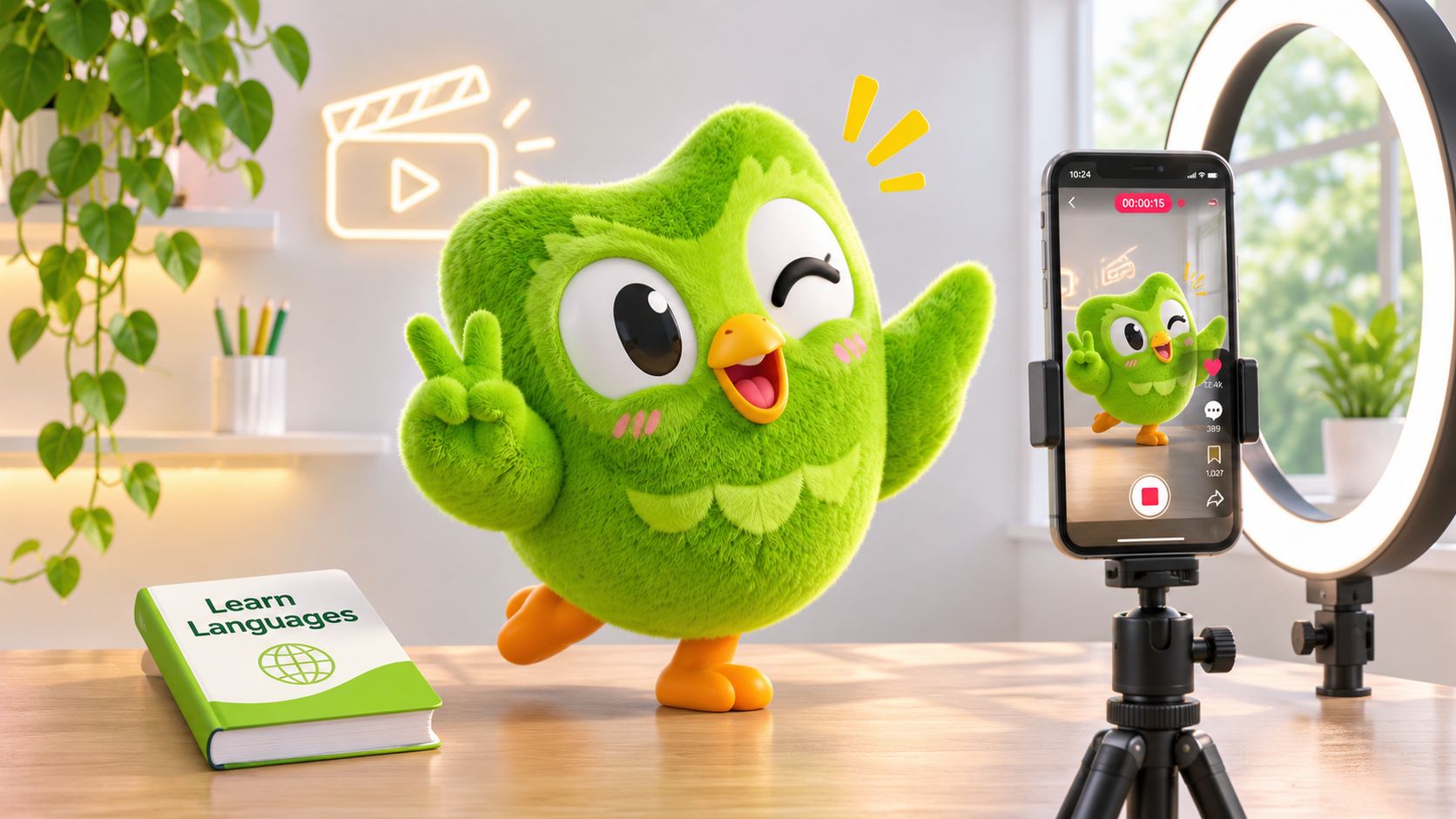
The mechanism is continuity. Viewers don't have to learn a new premise with every post because the character supplies the context. Trend-based humor becomes more distinctive when audiences already understand who's delivering it.
The constraint is production discipline. A recurring character needs a consistent personality, an available performer, and someone who can reject ideas that don't fit. Chasing every trend can make the character less recognizable, not more.
Build a Series Before Buying a Costume
A bookkeeping service could create a recurring character who spots avoidable invoice mistakes. A pet groomer could use a puppet to explain appointment preparation. Neither business needs a full mascot costume, but both need a repeatable premise.
Write a simple character bible covering what the character wants, what frustrates them, and what they never joke about. Then separate evergreen episodes from timely trend riffs so you can batch the dependable material without making trend content stale.
Use a deliberate mix of types of content for social media, including character sketches, demonstrations, and direct answers to customer questions. Otherwise, you risk building an entertaining account that barely explains the service.
For next month, test the character against a straightforward presentation of the same subject. Compare watch time, saves, relevant profile visits, and qualified inquiries. Copy the recurring format; skip the assumption that louder or stranger always means better.
3. Glossier's Community-Led Content Model
A customer showing how a product fits into an ordinary routine answers a different question from a polished product photograph. The photograph shows what you sell. The customer shows what using it might feel like.
Glossier's community-led approach, rooted in Into The Gloss, makes customer routines, photos, and feedback central to the brand conversation. The mechanism is peer context: prospective buyers can assess the product through someone else's experience rather than relying entirely on brand claims.
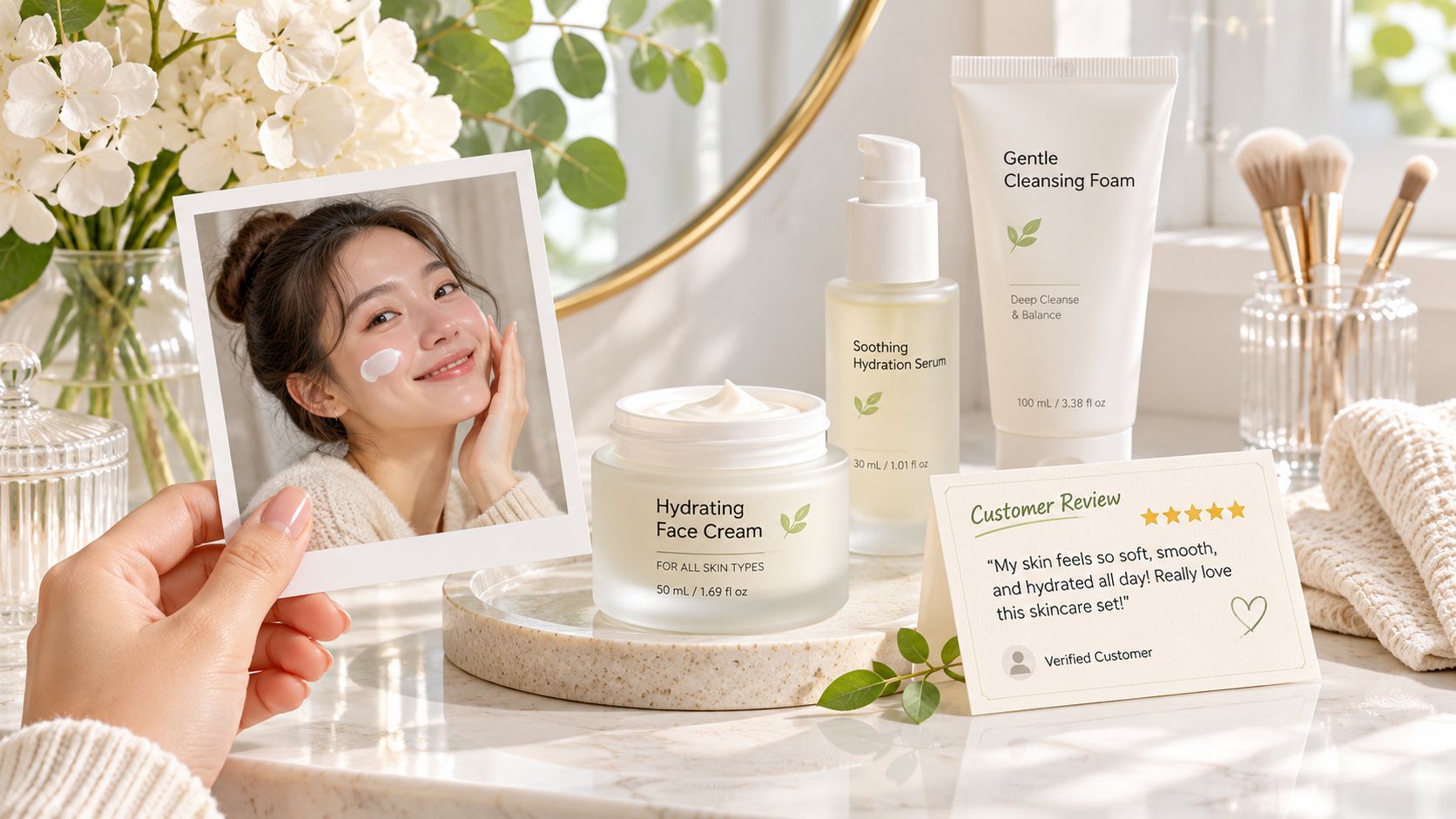
The constraint is participation. You can't schedule a dependable stream of customer content unless you ask clearly, manage permissions, and respond when people contribute. Nor should you confuse a vocal group of followers with your entire customer base.
Make Contributions Useful to Buyers
Say an independent skincare seller wants content for a moisturizer launch. Instead of asking customers to post anything, ask them to show where the product fits in their routine and explain what texture they prefer.
- Request specific material. Give customers a clear prompt without scripting their opinion.
- Confirm permission. Record where the creator agrees you may reuse the content, and credit them.
- Preserve context. Don't edit a qualified opinion into an unconditional endorsement.
- Close the loop. Explain which feedback you acted on and which suggestions weren't feasible.
Consistent social media community management matters more here than collecting attractive images. Someone needs to answer questions beneath the posts and identify recurring objections.
Next month, pair customer-created material with brand-made demonstrations. Compare product-page visits, useful questions, and purchases where attribution is available. Copy the invitation to participate. Skip the idea that customer content is free, effortless, or automatically persuasive.
4. Chipotle's Boorito Halloween Campaign
Chipotle's Boorito concept connects a seasonal occasion with a clear reason to act. Costume participation, an offer, and social sharing fit together naturally because customers already understand the Halloween context.
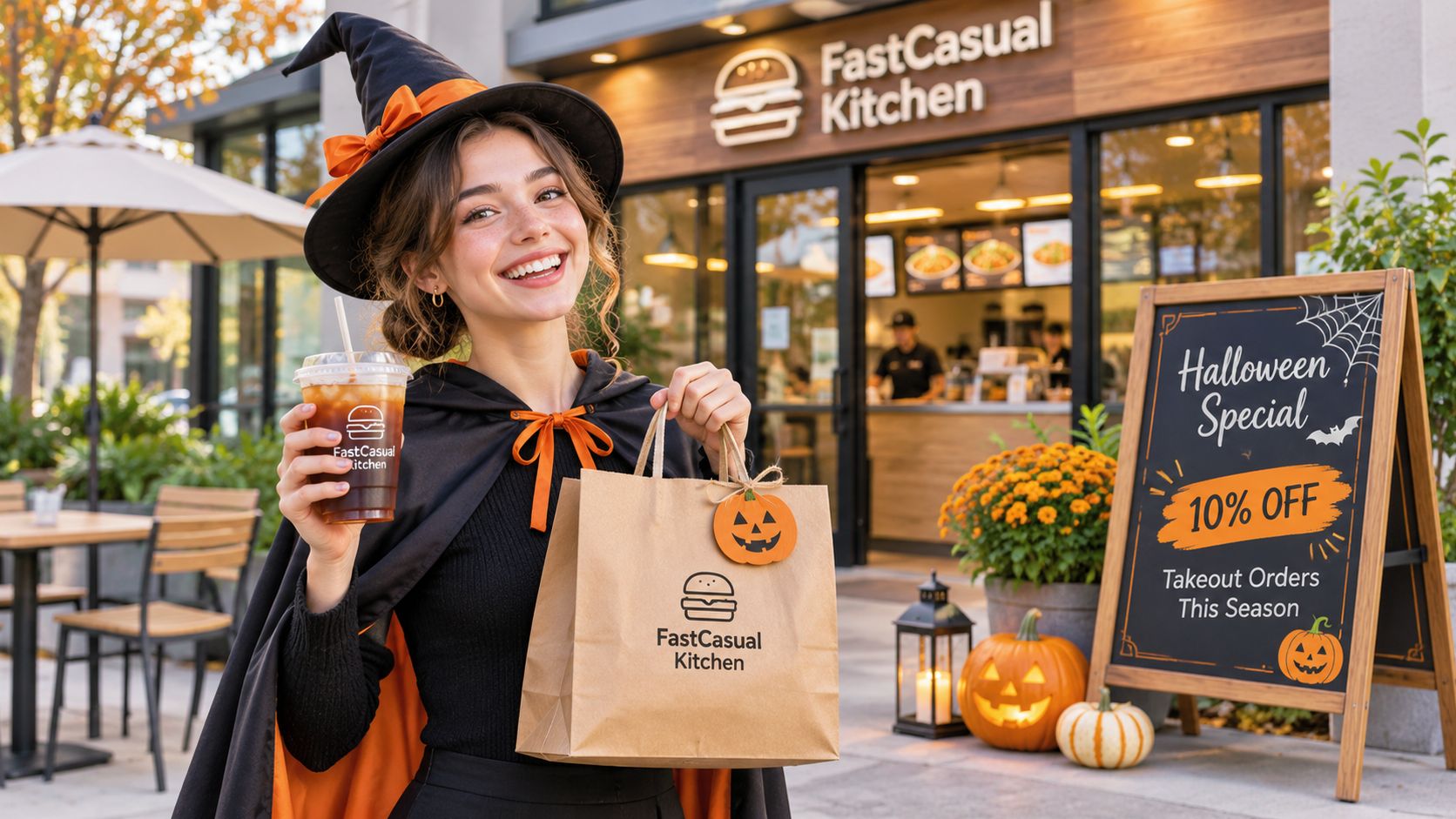
The mechanism is a timely participation trigger. Customers don't need an elaborate explanation of why they might dress up or share a costume photograph. The business connects that existing behavior to a visit.
The constraint is fulfillment. Offer rules, participating locations, ordering channels, and staff instructions have to agree. A promotion that looks simple online can still create confusion at the register.
Design the Store Experience First
A local café could run a seasonal costume event with a clearly defined qualifying purchase and an optional customer-photo feature. A multi-location salon might use a seasonal styling showcase instead of a discount, protecting margin while giving customers something to share.
Before announcing the event:
- Check the economics. Calculate contribution margin after the offer, packaging, staffing, and any paid promotion.
- Brief employees. Give staff the same eligibility and redemption instructions customers see.
- Make sharing optional. Don't make someone publish personal content just to understand the offer.
- Connect visits to the campaign. Use a register code or booking-source field alongside social reporting.
A busy location isn't proof of a profitable promotion.
For next month's version, choose an occasion your customers already care about, even if it isn't Halloween. Compare redemptions, average order value, staffing pressure, and contribution margin with a relevant ordinary period. Copy the seasonal fit and clear participation rule. Skip the discount if customers would have purchased anyway or your team can't serve the extra demand well.
5. Old Spice's Real-Time Personalized Video Responses
Old Spice's personalized response campaign featuring Isaiah Mustafa took an established advertising character and let audiences interact with him. Instead of treating the original commercial as a finished asset, the brand used viewer questions as prompts for additional performances.
The mechanism was specific recognition. A reply addressed to a real person gave that person a reason to share, while the character and production style made the response entertaining for everyone else.
The constraint was the response operation behind the camera. Writers, performers, production staff, and approvers had to work together. A small business shouldn't confuse fast publishing with improvising every decision.
Run a Bounded Response Session
Say a bicycle shop launches a maintenance clinic. Its mechanic could invite questions about noisy brakes, tire wear, and cleaning, then record short answers during a scheduled response session.
Prepare a filming area, caption template, question queue, and approval owner beforehand. Answer the most useful questions, not just the strangest ones, and avoid diagnosing safety-critical problems from incomplete information.
Accessibility belongs in that preparation. Research on creators with sensory impairments in Kenya identifies infrastructural, economic, social, and algorithmic barriers affecting creation and visibility; a practical response is to provide captions, readable text, and descriptions of important visual actions.
The relevant advantages of social media marketing come from making expertise accessible and giving interested viewers a next step. Link the answers to a booking page, a relevant guide, or the product being discussed.
For next month, set a clear submission window and a clear finish. Measure useful questions answered, qualified inquiries, and appointments attributable to the session. Copy the personal relevance. Skip the pressure to remain permanently available or match a national advertiser's production pace.
6. Liquid Death's Anti-Brand Brand Strategy
Liquid Death packages canned water in an identity associated with heavy-metal imagery, dark humor, and deliberately exaggerated messaging. Its entertainment-led approach makes the contrast part of the appeal: an ordinary product presented with an unusually forceful personality.
The mechanism is distinctive framing, not shock by itself. Music-video-style content, absurd premises, and satirical product messaging give the brand a recognizable creative territory.
The constraint is audience fit. Humor that works for a particular group can repel another, and that trade-off must be intentional. A business serving anxious customers or handling sensitive problems shouldn't borrow confrontational language just because it attracts attention.
Find a Position You Can Sustain
Say a cleaning-products startup wants an alternative to immaculate, aspirational household imagery. It could build a recurring series around realistic messes and the frustration of cleaning before visitors arrive.
That's a more useful starting point than choosing profanity, dramatic packaging, or a stunt. Define the customer frustration first, then choose a tone the company can carry through product pages, support replies, and packaging.
- Pick a clear audience. Identify whose problem and sense of humor you understand.
- Repeat a useful premise. Turn the personality into demonstrations or a recognizable series.
- Test comprehension. Check whether viewers can explain what you sell after watching.
- Protect the promise. Make sure the product performs without the joke.
Keep the purchase experience reassuring even when the creative is irreverent. In SOTI's social commerce report, 67% of global consumers worried about purchasing through social platforms.
For next month, test a bold creative concept against a straightforward product demonstration. Compare qualified traffic and purchases, not just reactions. Copy the specificity. Skip controversy that leaves buyers uncertain about the product or the business behind it.
7. Gymshark's Creator Affiliate Program
A creator partnership becomes more commercially useful when the creator's audience, content, and incentives fit the product. Gymshark's fitness-creator model offers a practical reference point through product relationships, ambassador activity, and trackable promotional codes.
The mechanism is alignment. Creators demonstrate products in a relevant setting, while affiliate arrangements connect compensation to attributable sales. That's different from buying an isolated mention and hoping the audience remembers it.
The constraint is unit economics. Commissions aren't your only expense: product samples, shipping, discounts, returns, management time, and content rights can all affect profitability.
Recruit for Relevance, Then Measure Margin
Say a resistance-band seller wants to work with creators. A mobility coach whose audience regularly asks about home workouts may be a better fit than a general lifestyle account with a broader following.
Give partners a product brief that explains appropriate uses, prohibited claims, disclosure expectations, payment terms, and return treatment. Leave room for their own demonstration style; an affiliate program loses much of its value when every creator reads identical copy.
- Track distinct partners. Use unique codes and tagged links, then reconcile them with completed orders.
- Assess audience fit. Review comments, questions, and existing product recommendations.
- Separate costs. Record commissions, samples, discounts, and any production fees.
- Review customer quality. Consider returns and repeat purchases, not just initial sales.
Margin test: A creator who generates revenue but leaves no contribution profit hasn't solved acquisition.
For next month, recruit a manageable group of closely matched creators and agree on a review period before launching. For Amazon sellers, use available marketplace attribution tools where eligible, and don't assume an off-platform click became a marketplace sale. Copy the incentive alignment. Skip follower-count shopping and commission terms your margin can't support.
8. Starbucks' White Cup Contest
Starbucks' White Cup Contest used an everyday brand object as a creative prompt. Customers decorated cups and shared designs through #WhiteCupContest, turning a familiar purchase into something participants could make their own.
The mechanism is structured creativity. A blank canvas can be intimidating, but a recognizable object and a defined task give people somewhere to start. Sharing the work also lets participants express something about themselves, rather than repeat a brand message.
The constraint is entry effort. A design challenge may attract enthusiastic contributors while excluding customers who don't draw, have limited time, or can't use the proposed materials comfortably.
Offer an Easy Way Into the Idea
A bakery could invite customers to decorate a printable cake-box panel. A garden center could ask for photographs of creatively arranged planters. Keep the activity connected to the product, but don't make advanced artistic ability the price of participation.
Publish clear eligibility, judging criteria, deadlines, content permissions, and moderation rules before collecting entries. If you want to manufacture, advertise with, or otherwise reuse a winning design, explain that plainly rather than hiding it inside broad permission language.
Make participation accessible with readable instructions, an easy submission route, and a way to ask questions. Feature entries throughout the campaign so people can understand the range of acceptable contributions.
For context, Pew Research Center's 2025 survey found that 80% of U.S. adults ages 18–29 used Instagram. That can support an Instagram test for a business serving that group, but it doesn't establish where your own customers will enter.
Next month, track eligible submissions, relevant new contacts, permissioned assets, and purchases separately. Copy the clear creative prompt. Skip prizes so disconnected from your product that they mainly attract people who'll never become customers.
How the eight social media strategies compare
| Item | Primary Business Goal | Main Platform | Best Fit For |
|---|---|---|---|
| Wendy's Witty Brand Voice on X (Twitter) | Build brand personality and engagement | X (Twitter) | Brands with a naturally playful voice |
| Duolingo's Mascot-Driven TikTok Strategy | Increase brand recall and ongoing visibility | TikTok | Brands with a strong mascot or character |
| Glossier's Community-Led Content Model | Build trust and loyalty through customer content | E-commerce and consumer brands | |
| Chipotle's Boorito Halloween Campaign | Drive seasonal visits and social sharing | Social media and in-store | Local and multi-location businesses |
| Old Spice's Real-Time Personalized Video Responses | Extend campaign reach through direct engagement | YouTube and Twitter | Brands able to produce fast, personalized content |
| Liquid Death's Anti-Brand Brand Strategy | Differentiate the brand and build awareness | Social media | Startups with a clear, bold identity |
| Gymshark's Creator Affiliate Program | Drive sales through creator partnerships | Instagram and YouTube | E-commerce brands seeking measurable creator sales |
| Starbucks' White Cup Contest | Encourage participation and user-generated content | Social media | Local businesses with a product customers can personalize |
Turning Eight Playbooks Into Your Next Campaign
Pick one mechanism, not an entire brand personality. Wendy's conversational replies, Duolingo's recurring character, and Gymshark's creator incentives solve different problems and require different operating capabilities.
Start with the business outcome. If prospects don't understand your product, prioritize demonstrations or personalized answers. If buyers hesitate because they lack confidence, customer routines and credible creator explanations may be more useful than another entertainment-led campaign.
Then identify the constraint you can't ignore. A seasonal event depends on operational capacity. A mascot depends on performance and production. Community-led content depends on participation, permission, and someone who'll keep responding after the launch.
Write a Test Your Team Can Actually Run
Keep the test brief concrete enough that someone else can execute it:
- Audience and problem. Name the customer and the question, hesitation, or behavior you're addressing.
- Mechanism and format. Choose the repeatable activity, such as customer demonstrations or a scheduled video-response session.
- Conversion path. Specify the landing page, booking route, store offer, or product listing customers should reach.
- Success measure. Choose a business metric and record the supporting signals needed to interpret it.
- Decision rule. Agree on what would justify expanding, revising, or stopping the test.
Don't judge every stage by the same standard. In Involve Digital's university admissions case study, prospecting produced conversions at an average A$194.70, while retargeting averaged A$125.53 per conversion. The practical lesson is to separate acquisition from follow-up, not to borrow those costs as a benchmark for your business.
And don't stop at clicks. Keep form completions, qualified leads, booked appointments, completed purchases, and returns distinct wherever your systems allow. Otherwise, a cheap traffic source can look successful while your sales team spends time on poor-fit inquiries.
Give the test an owner and record production time as well as media spend. A format that works only through rushed approvals and unpaid overtime isn't ready to scale. Neither is a campaign whose tracking can't distinguish curiosity from a useful customer action.
At Mr. Green Marketing, LLC, we begin by listening, identifying your strengths, and building a custom plan around your goals, audience, budget, and industry. A free audit and performance report can help reveal visibility gaps and prioritize the next practical test.
The best social media strategy examples don't give you a script to copy word for word. They help you make a sharper decision about what to try, what to measure, and what to leave out.
Mr. Green Marketing, LLC offers customized social media and digital marketing strategies for local businesses and e-commerce brands, with reporting tied to client goals. Visit Mr. Green Marketing, LLC to request a free audit and performance report and discuss which of these approaches fits your audience, resources, and next campaign.
Leave a Comment
sing in to post your comment or sign-up if you dont have any account.