
Analysis Questions Examples: What separates a business that keeps growing from one that’s just reacting every quarter? Usually, it isn’t access to more data. It’s the ability to ask better questions of the data already sitting in Google Analytics, Search Console, Amazon Seller Central, ad platforms, CRM dashboards, and call logs.
And that’s the gap teams often miss.
They ask reporting questions instead of analysis questions. Reporting asks, “What happened?” Analysis asks, “Why did it happen, what does it mean, and what should we do next?” That shift changes everything. It’s the difference between staring at a dip in lead volume and tracing it back to a broken form, weak offer, bad traffic mix, or a page that asks too much of the visitor.
A useful statistical question has to allow for variability. That’s the core distinction explained in LibreTexts on statistical questions/08:_Data_Sets_and_Distributions/41:_Data_Variability_and_Statistical_Questions/41.02:_Statistical_Questions). “How many pixels are in our logo?” has one answer. “What percentage of our landing page visitors convert by traffic source?” has variation, patterns, and opportunity. That’s where strategy lives.
Good analysis questions examples don’t just help analysts. They help founders decide where to spend, marketers decide what to test, and sales teams understand whether lead quality is shifting or just volume. They also connect well with adjacent research work, especially if you’re collecting voice-of-customer feedback through tools like these 8 essential survey questions examples.
Below are the kinds of questions strong agencies use in practice. Not classroom exercises. Not generic “look at your KPIs” advice. Actual diagnostic questions, the framework behind them, and the kind of answer that leads to action.
1. Analysis Questions Examples: Conversion Rate Optimization Analysis
Why keep paying for more clicks if the page is leaking intent?
That is the first CRO question that matters. Conversion rate optimization analysis is not a design critique or a list of button tests. It is a structured way to find where qualified visitors lose momentum, why they hesitate, and which change is most likely to improve revenue without increasing traffic spend.
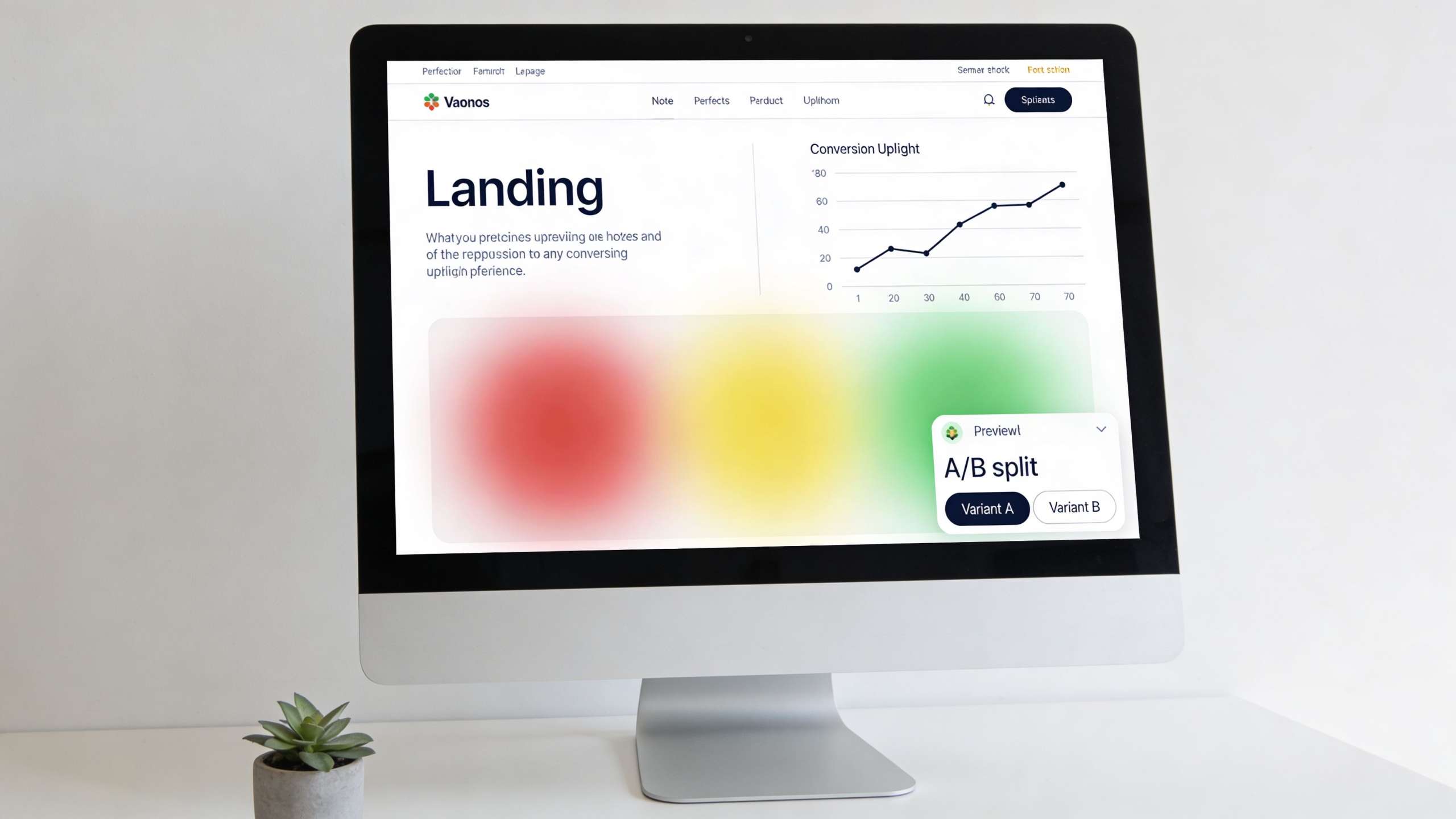
The strongest analysis questions in CRO are diagnostic, not cosmetic:
- Where does intent break down: Which step in the form, checkout, or booking flow creates the biggest drop-off?
- Which message creates friction: Does the headline reflect the ad, keyword, or referral source that brought the visitor in?
- What are we asking too early: Are we requesting contact details, budget info, or commitment before trust exists?
- What proof is missing: Do visitors see pricing clarity, testimonials, case studies, guarantees, or product evidence before the CTA?
This is how agency teams separate surface issues from profit issues. A page can look polished and still underperform because the offer is weak, the traffic is mismatched, or the call to action arrives before the page has earned it.
How strategists frame the question
Weak CRO questions sound like this: “How do we improve conversions?”
Useful ones are narrower and testable: “Are first-time paid social visitors abandoning because the page asks for a demo before establishing credibility?” That version points the team toward evidence. Scroll depth. Form starts. Field abandonment. Session recordings. Device splits. Traffic source splits. Actual buyer intent.
A strong hypothesis gives you a clear next move: “We believe reducing the form fields and bringing customer proof above the fold will increase completed submissions from cold traffic because visitors do not yet trust the brand enough to book a demo.”
Specific beats clever. Every time.
What strong CRO analysis looks like
Good CRO analysis follows a simple framework:
- Start with the page closest to revenue. Product pages, pricing pages, lead forms, checkout, high-intent landing pages.
- Segment the traffic. Branded search, non-brand organic, paid social, email, referral, direct. Different visitors fail for different reasons.
- Map friction to evidence. Heatmaps, recordings, funnel reports, CRM quality data, page speed, mobile usability, and form analytics.
- Write one hypothesis per issue. One testable change. One expected outcome.
- Prioritize by impact and effort. A headline and proof-stack test on a high-volume landing page usually beats a full redesign of a low-traffic page.
That process is what separates a strategist from a dashboard watcher.
In practice, a useful answer often sounds like this: “Branded search traffic converts because the buyer already knows the company. Paid social traffic drops before the form because the page asks for a demo before proving value. Test a stronger above-the-fold promise, move testimonials and client logos higher, and reduce the form to the minimum needed for sales follow-up.”
That answer gives a team something to ship.
Practical rule: Start with the highest-traffic page that sits closest to revenue. A modest gain there usually produces more ROI than a major redesign on a low-volume page.
Analysis Questions : What to test first
Teams waste time when they change layout, copy, offer, imagery, and form fields all at once. If conversions move, nobody knows why. If they fall, the rollback gets messy.
Start with one variable categories at a time:
- Message match: headline, subhead, offer framing
- Friction: form length, checkout steps, required fields
- Trust: reviews, case studies, guarantees, certifications
- Clarity: CTA copy, pricing language, feature explanation
- Hierarchy: what appears above the fold, what gets visually emphasized
The order matters. Message and offer problems usually cost more than button color problems.
If you need a practical baseline before running tests, these conversion rate optimization best practices cover the fundamentals that should already be in place.
One more trade-off matters. Not every conversion lift is a business win. I have seen lead forms produce more submissions after removing qualifying fields, then create a sales pipeline full of weak-fit leads. Better CRO analysis checks both conversion rate and downstream quality. More form fills mean little if close rate collapses.
A quick visual on testing workflow helps:
2. Analysis Questions Examples: Root Cause Analysis for Performance Declines
When performance drops, weak teams jump to explanations. Strong teams separate the symptom from the cause.
A traffic decline, lower lead count, softer close rate, rising cost per lead, or weaker Amazon sales velocity can all look similar in a dashboard. They aren’t the same problem. Root cause analysis starts by refusing to guess.
Start with the problem statement
Write the issue in plain language. “Organic leads declined after the site migration.” Good. “Google penalized us after the migration.” That’s already an assumption.
Then pull a timeline. Analytics, Search Console, CRM, server logs, ad platform changes, site deployments, tracking changes, review changes, pricing updates, competitor moves. Root cause work is rarely elegant. It’s cross-checking until the pattern stops moving.

A fishbone diagram or the 5 Whys framework helps when teams are emotionally attached to the wrong explanation. So does one uncomfortable question: what evidence would disprove our current theory?
Most “channel problems” turn out to be measurement, messaging, or technical problems.
Analysis Questions Examples: Questions worth asking
- What changed right before the decline: Code deployment, bid strategy, creative swap, inventory issue, offer update, policy change, tracking modification?
- Is the decline universal or segmented: All devices, one landing page, one campaign type, one geography, one SKU?
- Did conversion behavior change or only reported conversion behavior: Are leads down, or did tracking break?
- Did traffic quality change: Same sessions, weaker intent?
- Did user experience degrade: Slow pages, broken forms, checkout bugs, image failures, mobile layout issues?
One of the biggest mistakes I see is blaming the platform first. Google update. Meta volatility. Amazon algorithm. Sometimes that’s true. Often it isn’t.
A strong answer sounds like this: “Lead volume appears down, but call center logs are steady. Form submissions fell after a plugin update, and tracking also broke on one confirmation page. We have both a true UX issue and a reporting issue.”
That kind of answer leads to action fast. Roll back the form change. Restore event tracking. Annotate the reporting gap. Then reassess.
If the team can’t explain the timeline in a few sentences, they haven’t found the root cause yet. They’ve found noise.
3. Analysis Questions Examples: Competitive Analysis and Market Positioning
Most competitive analysis is lazy. It turns into a screenshot collection of competitor homepages, ad copy, and pricing pages. Useful? Sometimes. Strategic? Not by itself.
Real competitive analysis asks where the market is crowded, where it’s weak, and where your offer can win without becoming a clone of the current category leader.
Better questions than “What are competitors doing?”
Try these instead:
- What promise does each competitor lead with
- What buyer objection are they trying to neutralize first
- Where are they overinvested in polish but weak in proof
- Which topics, use cases, or customer segments are underserved
- What are they unwilling or unable to say because of their positioning
That last one matters more than people think. Positioning isn’t just what you say. It’s what your competitors can’t credibly say.
If you’re a local service business, a useful market question may be whether competitors are weak on trust and follow-up. If you’re an e-commerce brand, it may be whether everyone has similar photography, similar claims, and weak post-click storytelling. If you’re selling on Amazon, it may be whether the top listings are keyword-heavy but benefit-light.
Analysis Questions Examples: How to structure the review
Use tiers, not one flat list.
- Direct competitors: Same buyer, same core offer.
- Indirect competitors: Different offer solving the same problem.
- Aspirational benchmarks: Strong operators outside your category that set a quality bar for UX, content, or brand.
Then compare them across a short set of attributes. Messaging, social proof, content depth, offers, review patterns, ad angles, sales friction, page quality, and retention hooks. Keep it tight. If your matrix has too many attributes, nobody will use it.
One useful way to think about analysis questions comes from data journalism’s idea of looking at different “angles” such as scale, change, ranking, variation, exploration, relationships, and bad data, referenced in this video on analytical angles. In business strategy, that translates well. Scale asks how big the gap is. Ranking shows who’s leading. Variation reveals where competitors are inconsistent. Relationships uncover what likely drives the result.
Copying a competitor’s tactic without understanding the job it performs is how brands waste quarters.
A good answer might look like this: “Competitors dominate generic service pages, but none of them explain process clearly or show strong before-and-after proof. We shouldn’t race them on sameness. We should own clarity, proof, and a tighter niche promise.”
That’s where analysis questions examples become useful. They force strategic choices instead of producing another deck full of observations.
4. Analysis Questions Examples: Statistical Significance and Hypothesis Testing
How many winning tests were never real wins?
It happens constantly in marketing. A variant gets an early lift, the team pushes it live, and revenue barely moves. Or worse, performance drops because the original read came from a small sample, one noisy segment, or a test that was checked too often.
Statistical significance and hypothesis testing protect budget from false confidence. They help teams separate a real signal from random fluctuation before they change bids, redesign pages, or roll out a new offer across the account.
The core analysis question is simple: Is this result strong enough to justify a business decision? That is the strategist’s version of the textbook question, and it is the one that matters. A test does not need to look interesting. It needs to be decision-worthy.
For a clean primer, What Is Statistical Significance is useful background. In practice, the work is operational. Write the hypothesis before launch. Choose one primary metric. Set the sample threshold and stopping rule in advance. Then let the test run without checking the chart every few hours and talking yourself into a winner.
What agencies actually test for
Strong teams are not asking only whether Version B beat Version A. They are asking a tighter set of diagnostic questions:
- What exact hypothesis are we testing
- Which metric determines the decision
- How much lift would matter financially
- Is the sample large enough for the size of change we care about
- Did we keep the stopping rule consistent
- Does the result hold across meaningful segments such as device, traffic source, or audience type
That last point matters more than many teams expect.
A headline can raise conversion rate for paid search traffic and hurt branded traffic at the same time. An email offer can improve click rate while lowering qualified lead rate. If analysts only report the top-line lift, the business gets a partial answer and makes a full-budget decision.
A practical example
Say a landing page variant shows a higher conversion rate after four days. That looks promising, but a strategist still needs to check whether the sample is mature, whether one traffic source is inflating the result, and whether the lift is large enough to matter after media costs and sales quality are factored in.
That is the trade-off. Waiting for confidence slows decisions. Acting too early creates expensive mistakes.
I usually prefer a slower rollout over a fast false positive. A weak test result pushed sitewide can burn weeks of engineering time, distort reporting, and send paid traffic into an underperforming experience. The cost is not theoretical. It shows up in CAC, lead quality, and missed pipeline.
What a strong answer looks like
A good answer sounds like this:
“Variant B is ahead, but the current sample does not support a rollout yet. We will keep the test running to the pre-set threshold, check performance by traffic source and device, and only ship if the lift holds at a level that changes revenue meaningfully.”
That answer does not sound flashy. It sounds expensive to ignore.
The point of this type of analysis question is not academic rigor for its own sake. It is decision control. Expert teams use hypothesis testing to avoid scaling noise, protect budget, and make changes they can defend to leadership with a straight face.
5. Analysis Questions Examples: Customer Journey and Attribution Analysis
If you only look at the final click, you’ll misread the buying process. That’s one of the most common analysis failures in lead generation and e-commerce.
A branded search click or direct visit often gets credit because it happened last. But that doesn’t mean it created the demand. Another channel may have done the heavy lifting earlier.

The questions that uncover the real path
Start with these:
- Which channel introduces the buyer to us
- Which channel brings them back
- Which touchpoint resolves the final objection
- Where do paths stall or lengthen
- Which sources create low-volume but high-intent journeys
This matters even more now because search behavior isn’t limited to classic search engines. One forward-looking source claims AI search platforms such as Perplexity and ChatGPT are projected to drive 35% of U.S. SMB traffic in Q4 2025, referenced in this video discussing AI-driven search shifts. Treat that as a directional market signal, not a blanket truth for every business. But it does reinforce the bigger point: customer journeys are getting messier, not cleaner.
What good attribution analysis looks like
Good attribution work usually starts simple. Last-click baseline first. Then compare that with assisted conversions, path length, and time-lag views. You want to see whether top-of-funnel channels are creating demand that lower-funnel channels harvest later.
A strong answer sounds like this: “Paid social rarely gets last-click credit, but it appears early in higher-value paths. Organic branded search and direct close the conversion later. Cutting social would make our final-touch channels look efficient right up until pipeline softens.”
That’s a very different conclusion from “social doesn’t convert.”
Don’t ask channels to do jobs they weren’t hired to do. Awareness channels rarely look best on last click. Closing channels rarely create demand on their own.
What works is consistent UTM discipline, CRM source mapping, and alignment between analytics and sales feedback. What doesn’t work is changing attribution models every month until one makes your favorite channel look smarter.
The best analysis questions examples in attribution aren’t about assigning perfect credit. They’re about making better budget decisions with imperfect but useful evidence.
6. Analysis Questions Examples: Content Performance and Topic Cluster Analysis
Why does a content program with steady traffic still miss revenue targets?
Because traffic is rarely the primary KPI. Content analysis gets useful when it connects topics, formats, and internal link paths to pipeline influence, not just sessions and rankings. That is the difference between a publishing calendar and a strategy.
Agencies that do this well do not just ask which post got the most visits. They sort questions by job. Topic selection. Search intent. Cluster coverage. Conversion path. Content decay. That structure helps diagnose why a library grows without strengthening demand generation.
Useful content analysis questions
- Which topics attract qualified visitors who match our ICP
- Which pages assist conversions, even if they do not close them
- Which formats work best at each stage, education, comparison, validation, and decision
- Where do we have cluster gaps around high-intent buyer questions
- Which supporting pages strengthen a pillar page, and which ones compete with it
- Which existing assets deserve a refresh because they rank but fail to move visitors forward
Topic cluster analysis works best when the cluster is built around a commercial question buyers are trying to answer. Broad themes get attention. Decision-stage themes get action. Good strategy needs both, but not in equal proportion.
Here is the practical test I use. If a topic cannot be mapped to a real buyer question, a product angle, or a next-step CTA, it usually becomes a pageview asset instead of a revenue asset. Useful content earns one of three jobs clearly. Bring in the right audience, help them evaluate options, or move them to a sales action.
What a great answer looks like
A weak answer says, “Our blog posts perform best.”
A strong answer sounds like this: “Introductory educational content drives the most organic sessions, but comparison and implementation content produces stronger product-page engagement and more demo assists. The cluster is top-heavy. We need more decision-stage pages, tighter internal links from educational content, and CTAs matched to evaluation intent.”
That answer gives a team something to do this quarter.
It also reflects a real trade-off. Top-of-funnel content often wins on reach. Bottom-of-funnel content usually wins on efficiency. If the content team is measured only on traffic, they will keep producing low-friction topics. If leadership wants pipeline, measurement has to reward assisted conversions, qualified visits, and progression to high-intent pages.
Channel context matters too. Organic search often favors detailed evergreen explainers. Email may pull stronger engagement from opinionated takes or customer proof. Social can amplify short-form visuals, hooks, and contrarian points that would underperform in search. Roll all of that into one bucket and the team will optimize for the wrong outcome.
Some of the best gains come from fixing what already exists. Strengthen cluster links. Add missing comparison sections. Match CTAs to intent. Update pages that rank for valuable queries but send visitors nowhere useful. The same discipline matters on marketplace content as well. Teams working across both owned content and ecommerce can apply similar page analysis principles from this guide on improving Amazon sales through listing and conversion optimization.
The strategist’s question is simple. Which content assets create business momentum, and which ones only create activity? That is the point of this type of analysis. It turns a pile of URLs into a system that supports rankings, buyer education, and revenue.
7. Analysis Questions Examples: Amazon Marketplace Performance and Listing Optimization Analysis
Why does one listing keep spending while another keeps selling?
Amazon exposes weak analysis fast. A listing can get traffic and still lose money if the image fails to earn the click, the copy fails to answer objections, or operations keep breaking rank momentum. Agencies that work in this channel do not ask whether performance is “good” or “bad.” They sort the problem by type so the fix is obvious.
Start with the diagnosis framework.
- Traffic problem: Are impressions too low because indexing, keyword coverage, or ad visibility is weak?
- Click problem: Are shoppers seeing the listing but choosing another result because the main image, title, rating, or price creates a weaker first impression?
- Conversion problem: Are detail page visitors hesitating because the bullets, A+ content, reviews, or offer structure do not resolve the purchase question?
- Retention problem: Are returns, negative reviews, or repeat complaints telling you the listing promise and product experience do not match?
That structure matters because different symptoms need different fixes. I have seen brands cut price to solve a click-through issue. It rarely works for long. If the thumbnail does not communicate value and the title buries the use case, cheaper traffic just means cheaper missed opportunity.
Questions strategists ask before changing the listing
Use questions that isolate the constraint:
- Which search terms generate impressions but weak click-through rate
- What do the top competing listings communicate in the first screen that this listing does not
- Which objections appear repeatedly in reviews, Q&A, and return reasons
- Does pricing look high, or does the page fail to justify the price
- Is ad spend compensating for a weak listing, or amplifying a strong one
- Did the decline start with content changes, stock instability, review shifts, or a competitor move
That last question is where real diagnosis happens. Amazon performance drops are often multi-causal. Rank slips after an inventory interruption. Conversion falls after a cheaper competitor gains review volume. CTR drops because the category visual standard changed and the hero image did not.
What strong analysis usually finds
The best findings are specific enough to act on. “Improve the listing” is not analysis. “Main image blends into the result set, title leads with brand language instead of use case, and two-star reviews keep mentioning sizing confusion” is analysis.
Sometimes the issue sits in the listing itself. Bullets read like a spec sheet. A+ content looks polished but says nothing about fit, durability, ingredients, or compatibility. The page answers the brand’s favorite points, not the buyer’s actual concerns.
Sometimes the issue sits outside the page. Inventory gaps interrupt ranking. Review velocity slows. PPC carries discovery, but the product detail page does not convert well enough to support profitable growth. Reputation also affects marketplace efficiency. Brands that need to address review patterns and public complaint themes should tighten their social reputation management process alongside listing updates.
One practical discipline helps here. Do not treat every weekly fluctuation as a crisis. Compare the movement against the listing’s normal range, then match it to a likely cause. If CTR moved after a main image change, investigate click appeal. If conversion moved after review sentiment shifted, investigate trust and offer clarity. If both moved after a stock issue, the operational explanation is stronger.
On Amazon, the listing is the sales rep. Confusing sales reps make ad spend expensive.
A strong answer sounds like this: “Visibility is adequate on core non-brand terms, but click-through rate is weak because competitors communicate size and use case faster in the thumbnail set. Conversion then falls on the detail page because review language raises durability concerns that the bullets and A+ content never address.”
That is the strategist’s toolkit in practice. Separate the problem type, connect the symptom to the likely cause, then fix the page, the offer, or the operation that is limiting growth.
For brands working through those improvements, this guide on how to improve Amazon sales is a practical place to start.
8. Analysis Questions Examples: Brand Health and Perception Analysis
Why do some campaigns hit their traffic goals and still fail to build momentum? In many cases, the channel is not the primary issue. The market does not trust the brand enough, does not understand the offer fast enough, or does not see a meaningful difference from competitors.
That is why agencies treat brand health analysis as a diagnostic discipline, not a soft branding exercise. The goal is to identify the specific perception gaps that raise acquisition costs, weaken conversion rates, and limit retention before those issues show up as a broader revenue problem.
Questions that reveal brand reality
Strong brand analysis starts with sharper questions, because vague questions produce vague answers.
- What do prospects believe we do best, and is that the position we want to own
- What language do customers use that our homepage, ads, and sales materials ignore
- At what point does trust weaken before a lead or purchase
- What outcome do buyers believe they get from us beyond the product or service itself
- Which themes dominate positive mentions, negative mentions, and neutral mentions
- How does perception differ by audience segment, channel, or stage of awareness
This is the strategist’s toolkit at work. Separate awareness problems from trust problems. Separate messaging gaps from proof gaps. Separate a positioning issue from a reputation issue. Different question types lead to different fixes.
The inputs should also be mixed on purpose. Surveys can show pattern direction. Interviews explain the motivation behind those patterns. Review mining surfaces repeated friction points. Sales call transcripts expose objections buyers will not always admit in a form. Search behavior helps confirm how the market frames the category. Social comments often reveal the emotional layer.
Used together, those sources give a more reliable view of brand health.
A practical rule matters here. Do not ask whether the brand is “good” or “bad.” Ask which concerns appear repeatedly, which messages create confidence, which segments respond differently, and which perception problems are expensive enough to fix now.
What useful brand analysis sounds like
Weak analysis usually stays generic. “People like us.” “We need more awareness.” “The brand feels dated.” None of that tells a team what to change.
A strong answer sounds like this: “Prospects understand our category and pricing, but they do not see a clear reason to choose us over similar providers. Existing customers consistently praise responsiveness and follow-through. Our website and paid creative barely mention either one. Trust improves after direct contact with sales, which means the marketable proof exists, but the brand presents capabilities before outcomes. The fix is to lead with responsiveness, show proof earlier, and tighten claims that currently sound interchangeable.”
That answer gives a business something to do. Update the homepage message. Rewrite ad copy. Add proof near conversion points. Adjust sales scripts to reinforce the same promise. If review sentiment is part of the trust gap, improve the social reputation management process so recurring complaints stop shaping first impressions.
Brand perception analysis matters most when trust drives the sale, referrals influence pipeline quality, or the market sees several providers as interchangeable. In those situations, brand health is not a side project. It is a performance issue with direct revenue consequences.
8-Point Analysis Questions Comparison
| Analysis | Implementation complexity | Resource requirements | Expected outcomes | Ideal use cases | Key advantages |
|---|---|---|---|---|---|
| Conversion Rate Optimization (CRO) Analysis | Moderate, requires test processes and iterative changes | CRO tools (A/B), analytics, traffic, design/dev time | Measurable lift in conversion rate and revenue | High‑traffic landing pages, PPC funnels, e‑commerce checkouts | Direct revenue uplift; data‑backed improvements |
| Root Cause Analysis (RCA) for Performance Declines | Moderate–High, investigative and cross‑functional | Full analytics access, logs, time for diagnosis, stakeholder input | Identifies true causes and prevents recurrence | Sudden traffic/ conversion/ ranking drops | Solves underlying issues; avoids wasted fixes |
| Competitive Analysis and Market Positioning | Low–Moderate, research and synthesis | Market tools, competitor audits, analyst time | Clear positioning, opportunity identification, benchmarks | Market entry, rebranding, strategic planning | Reveals gaps and differentiation opportunities |
| Statistical Significance and Hypothesis Testing | High, technical statistical expertise required | Statistical tools, sufficient sample sizes, time to collect data | Validated test results; lower risk of false decisions | A/B and multivariate tests; experiment validation | Ensures reliable decisions; prevents false positives |
| Customer Journey and Attribution Analysis | High, complex multi‑channel modeling | Attribution platforms, consistent UTM tagging, integrated data | Accurate channel contribution insights; optimized budgets | Multi‑channel campaigns, budget allocation planning | Reveals assisted conversions and path effects |
| Content Performance and Topic Cluster Analysis | Moderate, analysis plus strategic mapping | Historical content data, SEO tools, content team | Topic prioritization, improved topical authority and SEO | Content strategy, editorial planning, SEO growth | Identifies high‑ROI topics; improves site authority |
| Amazon Marketplace Performance and Listing Optimization | Moderate, platform‑specific tactics | Amazon analytics, keyword tools, creative assets, PPC management | Higher ranking, CTR, conversion and sales velocity | Amazon sellers seeking revenue growth | Directly tied to Amazon sales; quick optimization wins |
| Brand Health and Perception Analysis | High, long‑term, qualitative and quantitative | Surveys, social listening, research budget, recurring tracking | Awareness, sentiment, loyalty metrics and strategic guidance | Rebranding, brand positioning, long‑term growth | Builds long‑term equity; supports premium positioning |
Analysis Questions Examples: From Questions to Actionable Strategy
The pattern across all eight approaches is pretty clear. Better outcomes start with better analysis questions. Not more dashboards. Not more software. Better questions.
That matters because weak questions create shallow work. “Why is traffic down?” is broad enough to invite speculation. “Which pages lost qualified entrances after the last deployment, and did that coincide with slower load times, ranking shifts, or broken tracking?” forces the team to investigate. One question creates meetings. The other creates action.
This is also why good analysis questions examples tend to sound more operational than academic. They’re built to support decisions. Should we change the page or the traffic source? Is this a messaging problem or a demand problem? Did this campaign fail because the audience was wrong, or because the offer never had a chance? Those are strategy questions with budget implications.
The smartest teams also understand trade-offs. A clean attribution model may still miss part of the story. A statistically careful test may take longer than leadership wants. A competitive review may show a real market gap that the brand still can’t credibly own. Analysis doesn’t remove judgment. It sharpens it.
And yes, there’s a human side to this. Sometimes the answer you find isn’t the answer the room wanted. The redesign didn’t help. The ad account wasn’t the problem. The content team published plenty, but not on the topics that drive revenue. The sales issue started with weak qualification. Good analysis is valuable precisely because it interrupts convenient stories.
One more practical point. Don’t try to operationalize all eight frameworks at once. That’s how businesses create process theater. Pick the area closest to a live business constraint. If leads are expensive, start with CRO and attribution. If growth has stalled, start with competitive positioning and content analysis. If Amazon performance is volatile, begin at the listing and inventory level. If response in the market feels fuzzy, brand health may be the bottleneck.
Document the questions. Write down the assumptions. Define what evidence would change your mind. Then pull the right data and build a clear hypothesis. That rhythm matters more than any single tool.
Over time, this becomes a compounding advantage. Teams that question well test better. Teams that test better learn faster. Teams that learn faster waste less budget and recover more quickly when something breaks. That’s how analysis stops being a reporting function and becomes part of the growth engine.
If there’s one takeaway, it’s this: analysis is not the act of gathering numbers. It’s the act of asking disciplined questions that lead to better decisions. Do that consistently, and the ROI follows because the business gets sharper at every layer.
If you want that kind of sharper marketing diagnosis, Mr. Green Marketing, LLC can help. The team starts with the questions that matter, then turns the answers into a practical plan across SEO, PPC, CRO, Amazon, branding, web, and reputation. If you need a clearer path to growth, request a free audit and performance report.
Leave a Comment
sing in to post your comment or sign-up if you dont have any account.