
Benefits of local SEO – And we need to talk. Because if you run a business with a physical address or serve a specific geographic area, you’re sitting on a goldmine of high-intent customers. The thing is, they can’t find you. They’re searching right now—literally, on their phones—for ‘plumbers near me’ or ‘best coffee in Pensacola,’ and your competitors are showing up first. The secret sauce isn’t some complex, billion-dollar marketing scheme. It’s local SEO.
The benefits of local SEO go way beyond just ‘ranking higher.’ We’re talking about tangible, revenue-driving results that turn searchers into customers. It’s about dominating your neighborhood, building real-world trust, and creating a sustainable flow of leads that doesn’t depend on expensive ads. Not just about getting seen; it’s about being chosen by the people who are ready to buy, right now, in your service area.
This guide breaks down the ten most impactful advantages of a focused local search strategy. We’ll cover everything from driving actual foot traffic and boosting conversion rates to building unshakable brand authority in your community. To fully harness these advantages, it’s crucial to understand a broader set of local marketing strategies that complement your SEO efforts. Each point in this list is designed to be actionable, providing clear steps you can take to see real growth. Let’s get into the specific, measurable ways local SEO can fundamentally change your business.
1. Benefits of local SEO: Increased Foot Traffic and In-Store Visits
One of the most immediate and tangible benefits of local SEO is its direct impact on getting real, paying customers through your physical doors. It’s about converting a digital search into a real-world visit. When a potential customer searches for “emergency plumber near me” or “best coffee in downtown Austin,” local SEO ensures your business appears prominently in the search results—especially in the coveted Google Map Pack. This isn’t just about visibility; it’s about capturing high-intent users actively seeking your products or services right now.
For businesses like retail stores, restaurants, clinics, and service providers, foot traffic is the lifeblood of their revenue stream. And a well-executed local strategy directly fuels this. Think of a multi-location dental practice that sees a 40% jump in appointment bookings after optimizing its Google Business Profiles for each service area. Or a local HVAC company that dominates searches for “AC repair + city name,” capturing high-value emergency calls that competitors miss. A real difference.
How to Turn Clicks into Footsteps
To achieve this, your digital storefront needs to be as clean and inviting as your physical one. Start with the essentials and then layer in more advanced tactics.
- Optimize Google Business Profile (GBP): This is non-negotiable. Fill out every section completely—accurate address, hours, phone number, services, and high-quality photos.
- Build Hyper-Local Content: Create service pages or blog posts targeting specific neighborhoods or landmarks. For example, a page titled “Expert Plumbing Services in the South Park Neighborhood” can capture highly specific, ready-to-buy searchers.
- Encourage Customer Reviews: Actively solicit reviews through post-visit emails or in-store QR codes. Positive reviews are a massive trust signal for both Google and potential customers.
- Utilize Google Posts: Share weekly updates, promotions, or events directly on your GBP listing. This keeps your profile fresh and engaging.
These actions not only boost rankings but also provide the crucial information customers need to choose you over a competitor. It’s a powerful cycle: visibility leads to traffic, which leads to reviews, which in turn boosts visibility. If you’re looking to dive deeper into how this translates into sales, you can explore the connection between local SEO and effective lead generation strategies.
2. Benefits of local SEO: Higher Conversion Rates from Qualified Local Intent Traffic
Beyond just driving traffic, one of the most powerful benefits of local SEO is the quality of that traffic. It attracts customers with high-intent, meaning they aren’t just browsing—they’re actively looking for a solution in their immediate area. When someone searches for “emergency dentist in Phoenix” or “car insurance quotes Tampa,” they’ve already decided to make a purchase. Your job is simply to be the best, most visible option. This pre-qualified traffic converts at a significantly higher rate because it closes the gap between search and solution.
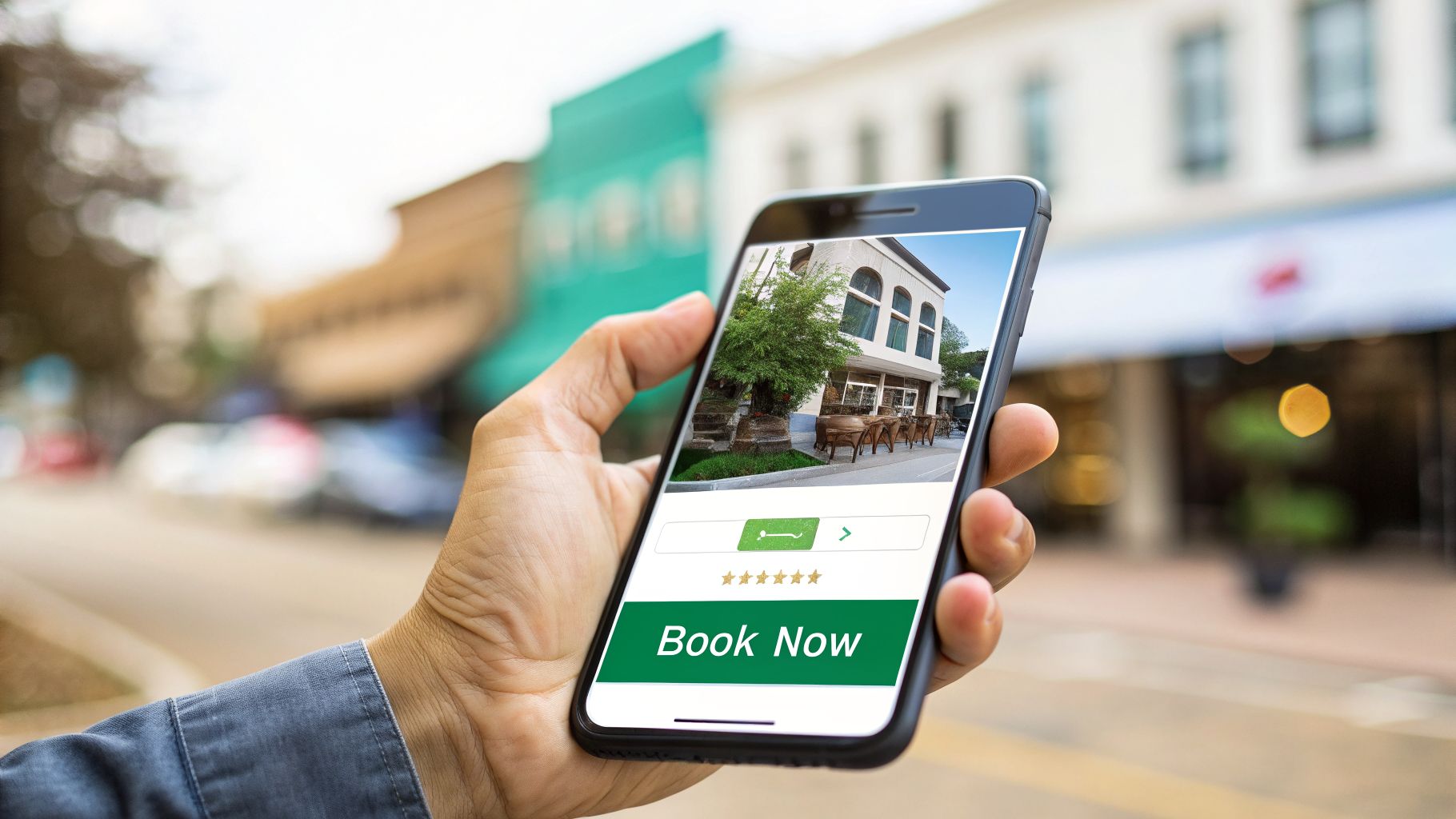
This translates directly to a healthier bottom line. For instance, a local insurance agent ranking for city-specific keywords might see a 15% conversion rate from that traffic, compared to a mere 2% from broader, national keyword campaigns. And for an emergency plumber, capturing “burst pipe + neighborhood” searches via a landing page with a clear quote form means booking high-value, same-day appointments that competitors completely miss. It’s about meeting an urgent need at the precise moment it arises.
How to Convert Local Intent into Sales
Capturing these high-intent users requires a strategic approach that makes it incredibly easy for them to take the next step. You need to remove all friction between their search and your service.
- Create Hyper-Local Landing Pages: Develop unique pages for each service area. Tailor them with location-specific testimonials, case studies, and photos of your team working in that neighborhood to build instant rapport.
- Prioritize Click-to-Call CTAs: Since a huge portion of local searches happen on mobile devices, make your phone number a prominent, clickable call-to-action (CTA) at the top of your site.
- Showcase Local Trust Signals: Display local certifications, community awards, or mentions of your involvement in neighborhood events. These signals tell a potential customer, “We’re part of your community.”
- Use Local Schema Markup: Implement local structured data on your website. This is code that explicitly tells Google your service areas, hours, and offerings, helping you show up for the most relevant searches.
By focusing on these conversion-centric tactics, you’re not just appearing in searches; you’re building a direct pipeline for the most valuable, ready-to-buy customers in your market. It’s a crucial step in turning visibility into profitability.
3. Benefits of local SEO: Competitive Advantage in Underserved Markets
One of the most strategic benefits of local SEO is the ability to establish a digital stronghold before your competitors even realize the battle has begun. Many businesses, especially larger national chains or slower-moving local rivals, neglect hyper-specific local optimization. This creates a golden opportunity for savvy businesses to capture underserved markets and build an almost insurmountable lead in local search rankings. It’s about being the first and best answer for customers in a specific geographic area.
This advantage is particularly potent for new businesses or those expanding into new territories. Imagine an independent coffee shop launching a focused local SEO campaign in an up-and-coming neighborhood six months before a Starbucks is even announced. By the time the corporate giant arrives, the local shop already owns searches like “best coffee near me” and has a deep well of positive local reviews. Or think of a family-owned pharmacy that ranks number one for “pharmacy in Eastgate” long before a national chain moves in, securing customer loyalty through sheer digital presence. A huge head start.
How to Claim Your Digital Territory
Winning in an underserved market requires a proactive, almost preemptive, strategy. You need to identify the gaps and fill them aggressively before anyone else does.
- Audit Your Local Competition: Start by identifying three to five specific neighborhoods or service areas where your top competitors have a weak or non-existent digital footprint. Look for incomplete Google Business Profiles or a lack of localized content.
- Target Long-Tail Local Keywords: Focus on highly specific, low-competition keywords like “emergency roof repair in the Bayview district.” These often have lower search volume (10-50 searches a month) but represent high-intent customers and are easier to rank for quickly.
- Build Local Citations Aggressively: In your first 90 days, focus on getting your business name, address, and phone number (NAP) listed in dozens of relevant local directories. Consistency is key.
- Engage in Genuine Community Involvement: Sponsor a local youth sports team or partner with a nearby non-profit for an event. This not only builds real-world goodwill but also creates valuable local backlinking opportunities for your website.
By planting your flag early, you force competitors to play catch-up. This proactive approach transforms local SEO from a marketing tactic into a powerful competitive moat, securing market share and building a loyal customer base that sees you as the go-to local authority.
4. Benefits of local SEO: Cost-Effective Lead Generation Compared to Paid Advertising
For businesses with tight marketing budgets, the battle between organic and paid channels is constant. One of the most compelling benefits of local SEO is its ability to deliver a sustainable stream of high-quality leads at a fraction of the cost of pay-per-click (PPC) advertising. While PPC offers instant visibility, you pay for every single click—and that cost disappears the moment you turn off the campaign. Local SEO, on the other hand, is about building a long-term digital asset.
Think of it as owning your digital real estate instead of renting it. An upfront investment in strategy and optimization pays dividends for months, even years, as your organic rankings improve and stabilize. A single well-optimized service page can become a lead-generation machine that works for you 24/7 without a per-click cost. For example, a local HVAC contractor might spend $3,000 on an initial local SEO push. That investment could easily generate over $2,000 in monthly lead value for more than a year, dramatically lowering their long-term customer acquisition cost.
How to Maximize Your Organic ROI
Shifting focus from paid ads to organic growth requires a strategic approach. It’s about building momentum that lasts.
- Calculate True Customer Lifetime Value (CLV): To accurately measure SEO ROI, you need to know what a customer is worth over their entire relationship with your business, not just the first transaction.
- Track Organic Leads Separately: Use your CRM or analytics to tag and monitor leads coming from organic search. This allows you to measure channel performance and see the direct impact of your SEO efforts.
- Combine SEO with Nurturing: Use the high-intent traffic generated by local SEO to build your email list. Nurturing these leads through email marketing can significantly increase conversion rates.
- Reinvest a Portion of Savings: As you reduce your reliance on paid ads, reinvest a percentage of those savings back into your SEO. Use it to create more hyper-local content or optimize for additional service areas.
By focusing on building this sustainable lead engine, businesses can achieve a much lower cost-per-lead and create a powerful competitive advantage that isn’t dependent on a daily ad budget. It’s a smarter, more scalable way to grow.
5. Improved Brand Trust and Authority in Local Markets
One of the less-discussed but incredibly powerful benefits of local SEO is its ability to build deep-seated trust and authority within your community. It’s about more than just being visible; it’s about being seen as the go-to, credible, and established choice. When a potential customer sees your business consistently at the top of local search results and on Google Maps, it creates a powerful psychological effect. And this perception of leadership and relevance directly translates into customer confidence.
This digital trust is the modern-day equivalent of word-of-mouth. Think of a local dental practice with a 4.8-star rating and over 200 glowing reviews that converts 25% more consultations than a competitor with a shaky 3.2-star average. Or a family-owned restaurant that feels like a community institution, not just because of its food, but because its high-visibility Google Maps presence and consistent local citations project stability and trustworthiness. This authority convinces customers to choose you—often before they even visit your website.
How to Build a Trustworthy Local Brand
Building this digital credibility involves nurturing your online reputation with the same care you put into your services. It’s a combination of social proof and consistent messaging.
- Systematize Your Review Process: Don’t leave reviews to chance. Implement a consistent process using post-service emails, in-store QR codes, or even SMS messages to request feedback from happy customers.
- Engage with Every Review: Respond to all reviews, both positive and negative, ideally within 48 hours. A thoughtful response to criticism can often build more trust than a dozen five-star ratings.
- Showcase Social Proof on Your Site: Feature your best customer testimonials, case studies, and local awards prominently on your location-specific landing pages.
- Highlight Community Involvement: Feature photos from local events, sponsorships, or charity work on your GBP and website. This reinforces that you are an invested member of the community.
These actions create a “halo effect,” where positive signals in one area (like reviews) boost your credibility across the board, reducing purchase hesitation. It’s a foundational element of how local SEO can significantly improve brand awareness and solidify your market position.
6. Expansion and Scaling Across Multiple Locations Efficiently
One of the most powerful, yet often overlooked, benefits of local SEO is its incredible scalability. Unlike traditional marketing that requires a proportional increase in budget for each new market, a local SEO framework is highly repeatable. It allows franchises and multi-location businesses to expand systematically, dominating dozens of markets without starting from scratch every single time. It’s about creating a proven blueprint that can be deployed efficiently, again and again.
For businesses with growth ambitions, this is a game-changer. Think of a regional HVAC contractor that uses a perfected local SEO strategy to scale from one city to eight, doubling its revenue in under two years. Or a national pizza franchise that ranks in the Google Map Pack for ‘pizza near me’ across 25 different markets simultaneously. The core strategy remains the same—only the location-specific details change. This efficiency is critical for franchise growth and achieving regional market dominance.
How to Build a Scalable Local SEO Machine
To replicate success across multiple locations, you need a centralized strategy with localized execution. It’s about building templates and processes that make each new launch faster and more effective than the last.
- Create Location Page Templates: Design a high-converting landing page template. This template should have standardized sections for services and branding, but also designated areas for unique, local content—like the address, phone number, local testimonials, and neighborhood-specific keywords.
- Centralize Citation Management: Use a tool like Yext or BrightLocal to manage Name, Address, and Phone (NAP) consistency across all locations from a single dashboard. This prevents data inconsistencies that can kill local rankings.
- Develop Market-Specific Keyword Plans: While the core services are the same, how people search can vary by region. Conduct unique keyword research for each market to uncover local opportunities and slang.
- Systematize Local Link Building: Create a process for acquiring local backlinks in each new market. This could involve joining the local Chamber of Commerce, sponsoring community events, or partnering with non-competing local businesses.
This structured approach transforms expansion from a series of disjointed marketing efforts into a streamlined, predictable engine for growth. If you manage multiple locations, mastering a repeatable strategy is essential, and you can learn more about the nuances of SEO for multi-location businesses to refine your approach.
7. Enhanced Mobile Search Visibility and User Experience
Local search and mobile are practically inseparable. With over 70% of local searches happening on smartphones, one of the most significant benefits of local SEO is how it naturally enhances your mobile presence. When a user searches for “walk-in clinic near me” on their phone, they aren’t just looking for information—they’re looking for an immediate solution. Local SEO is built to capture these high-intent, on-the-go moments. It’s about ensuring your business is not just visible, but also instantly usable on the small screen.
Think about it. A fast-food restaurant that dominates mobile searches for “food open now” captures a huge late-night crowd that competitors miss. Or an urgent care facility that appears first for mobile searches during flu season sees a surge in patients. This alignment with mobile-first indexing priorities means that by optimizing for local, you are automatically delivering a superior user experience with fast load times, click-to-call buttons, and one-tap directions. This isn’t just a bonus; it’s a core function of modern local search.
How to Win the Mobile-Local Game
A seamless mobile experience is your best salesperson for customers on the move. Your website and GBP must be optimized to convert that mobile glance into a real-world action—a call, a visit, or a reservation.
- Implement Click-to-Call Buttons: Place a prominent, clickable phone number in your website’s header and footer. Make it effortless for a mobile user to contact you.
- Add One-Tap Directions: Your address on your site and GBP listing should link directly to Google Maps, removing any friction for a potential visitor.
- Test Your Mobile Page Speed: Use tools like Google PageSpeed Insights to analyze your mobile site’s performance. Aim for a score of 75+ to prevent users from bouncing.
- Monitor Mobile-Specific Keywords: Dive into your Google Search Console reports to see what terms mobile users are searching for. You’ll often find more “near me” and voice-search style queries to target.
Focusing on these elements ensures that when a mobile user finds you, the path to becoming a customer is as short and simple as possible. And this focus is a crucial piece of building a strong, profitable online presence, especially when you consider how it integrates with a broader digital marketing strategy for small business.
8. Competitive Intelligence and Market Positioning Insights
Local SEO is far more than just a marketing tactic; it’s a powerful business intelligence tool. It provides a direct lens into your local market, revealing what your competitors are doing, what customers are complaining about, and where untapped opportunities lie. This isn’t about guesswork—it’s about using real-world search and review data to make strategic business decisions that give you a sharp competitive edge. And this intelligence can inform everything from service offerings to marketing messages.
This benefit moves beyond simple ranking improvements and into the realm of strategic positioning. Imagine a dental practice analyzing competitor reviews and noticing a consistent complaint—no one offers weekend appointments. An immediate, actionable insight to create service differentiation. Or a fitness studio that uses local search data to discover a rising demand for “senior fitness classes,” allowing them to launch a specialized program and capture an entirely new, underserved market segment. This is one of the most strategic benefits of local SEO because it directly impacts your core business model.
How to Turn Data into a Competitive Advantage
Leveraging local SEO for intelligence means actively listening to what the local digital landscape is telling you. It’s about systematically gathering and analyzing data to find your next big move.
- Analyze Competitor Keywords: Use tools like Semrush or Ahrefs to see which local keywords your competitors rank for that you don’t. This reveals gaps in your own content and targeting strategy.
- Perform Review Sentiment Analysis: Manually read through your top competitors’ Google and Yelp reviews. Look for recurring themes, both positive and negative. What do customers love? What do they hate? These are your opportunities.
- Map Your Competitive Landscape: Create a “heat map” of your service area to identify which competitors are strongest in specific neighborhoods. This can highlight geographic areas where you can focus your efforts for easier wins.
- Track Local Search Trends: Pay attention to seasonal or emerging search volume trends using Google Trends (filtered by location). This can help you anticipate demand for services like “emergency AC repair” in summer or “holiday catering” in winter.
By turning local search data into a feedback loop, you stop reacting to the market and start proactively shaping it. This proactive stance ensures your business not only stays relevant but becomes a leader in its local niche. This strategic approach to growth is why understanding your local digital ecosystem is so crucial, a concept we explore further in our guide to scaling with franchise SEO.
9. Sustainable Long-Term Growth and Compounding Returns
Unlike paid advertising—which vanishes the moment you stop paying—one of the most powerful benefits of local SEO is its ability to build a sustainable, long-term business asset. It’s about planting a tree, not just renting a billboard. The initial effort compounds over time, creating a predictable stream of traffic and leads that grows more efficient and valuable each month. This isn’t just about temporary visibility; it’s about building lasting digital equity.
As your business accumulates positive reviews, authoritative local citations, and a strong content footprint, its authority in Google’s eyes solidifies. Think of a local service provider who invests $8,000 in a comprehensive local SEO campaign in their first year. By year two, that foundational work is generating $3,000 in monthly recurring leads with only minimal ongoing investment. The initial cost has been paid back many times over, and the lead generation engine continues to run on its own momentum.
How to Cultivate Compounding Value
Building this long-term asset requires a strategic, patient approach. It’s a marathon, not a sprint, and the biggest returns come to those who stick with it.
- Focus on Foundational Assets: Invest early and heavily in high-quality content, photos, and a complete Google Business Profile. These are the assets that appreciate in value over time.
- Track Long-Term Metrics: Measure your success using 12-month rolling averages for organic traffic and cost-per-lead, not just month-to-month fluctuations. This reveals the true compounding growth trend.
- Be Patient Through the Initial Phase: The first 3-6 months of a local SEO strategy often show slow progress as Google indexes changes and builds trust. Resisting the temptation to abandon the strategy during this period is crucial for long-term success.
- Continuously Expand Your Footprint: Never stop building. Consistently add new content, target adjacent service areas, and solicit new reviews. Growth accelerates as your foundation of authority grows stronger.
This approach transforms your marketing from a recurring expense into a capital investment. And a well-executed local SEO strategy creates a durable competitive advantage that is incredibly difficult for newcomers to replicate, securing your market position for years to come.
10. Integration with Omnichannel Marketing Strategy and Synergy
Local SEO doesn’t operate in a vacuum; its true power is unlocked when it serves as the foundational layer of a broader, integrated marketing strategy. Think of it as the anchor that holds your entire omnichannel approach together. When a customer finds you through a local search, that’s just the first touchpoint. An effective strategy ensures that this initial discovery is amplified across paid search, social media, email, and content marketing, creating a seamless and persuasive customer journey.
This synergy turns a single search into a multi-channel conversation. Local SEO provides the initial, high-intent visibility, which then fuels the entire marketing ecosystem. A customer discovers your business through the Google Map Pack, and suddenly they’re seeing your retargeting ads on social media, receiving a welcome email after signing up for a newsletter, and reading blog content that reinforces your local expertise. And this is one of the most powerful long-term benefits of local seo—it makes every other marketing dollar you spend work harder.
How to Weave Local SEO into Your Marketing Fabric
Creating this synergy requires a deliberate, cross-channel approach. It’s about ensuring your messaging is consistent and that each channel feeds and informs the others.
- Create Audience Segments: Use your organic local search traffic in Google Analytics to build highly targeted audience segments. You can then use these segments for paid remarketing campaigns on platforms like Facebook or Google Ads, reaching users who have already shown interest.
- Let Insights Guide Content: Use the data from your local SEO efforts—like customer questions from your GBP, popular review topics, and top-performing local keywords—to inform your social media content calendar and email marketing campaigns.
- Implement UTM Tracking: Use UTM codes on links in your GBP, social profiles, and email campaigns to precisely track how customers move between channels. This helps you measure the synergistic effects and understand the true ROI of your integrated strategy.
- Maintain Consistent Messaging: Ensure your unique value proposition, address, and local differentiators are consistent across all platforms. A real estate agent dominating local search should use the same branding and messaging in their Facebook ads and email newsletters to build trust and recognition.
10-Point Comparison of Local SEO Benefits
| Item | Implementation complexity | Resource requirements | Expected outcomes | Ideal use cases | Key advantages |
|---|---|---|---|---|---|
| Increased Foot Traffic and In-Store Visits | Moderate — GMB, local pages, citations | Ongoing listing management, photos, review outreach | More physical visits and immediate revenue | Retail, service providers, multi-location franchises | Direct link between visibility and foot traffic; high-intent visitors |
| Higher Conversion Rates from Qualified Local Intent Traffic | Moderate — location pages + tracking | Landing page development, conversion tracking, mobile CTAs | Higher conversion rates, lower CPA per lead | Appointment-based services, emergency services, local sellers | Pre-qualified local intent yields stronger conversions |
| Competitive Advantage in Underserved Markets | Low–Moderate — local content & citations | Local outreach, niche content, backlinks | Faster path to top rankings in specific areas | Startups, new locations, SMBs in emerging neighborhoods | First-mover advantage and defensible local authority |
| Cost-Effective Lead Generation Compared to Paid Advertising | Moderate — SEO strategy and measurement | Initial investment, content, ongoing maintenance | Lower long-term cost-per-acquisition, predictable leads | SMBs with tight budgets, franchises reducing PPC spend | Organic leads without per-click costs; compounding ROI |
| Improved Brand Trust and Authority in Local Markets | Low–Moderate — review systems and citations | Review management, PR/community efforts, schema | Stronger trust, reduced purchase hesitation | Healthcare, legal, professional services, restaurants | Social proof via reviews and consistent local presence |
| Expansion and Scaling Across Multiple Locations Efficiently | High — templates, dashboards, coordination | Centralized tools, project management, standardized content | Scalable local rankings across many markets | Franchises, multi-location service providers | Economies of scale and centralized control for many locations |
| Enhanced Mobile Search Visibility and User Experience | Moderate — mobile-first optimization | Web dev for speed, mobile CTAs, testing | Improved mobile rankings and one-tap conversions | Quick-service restaurants, urgent care, on-the-go services | Captures majority of “near me” mobile intent; low friction |
| Competitive Intelligence and Market Positioning Insights | Moderate–High — analysis & reporting | Analytics tools, research time, analyst expertise | Actionable market gaps and competitor weaknesses | Businesses planning expansion or differentiation | Data-driven identification of local opportunities and pain points |
| Sustainable Long-Term Growth and Compounding Returns | Moderate — consistent long-term effort | Ongoing content, citations, review accumulation (12–24 months) | Predictable, compounding organic traffic and leads | Businesses seeking durable acquisition channels | Durable asset with decreasing CPA and compounding value |
| Integration with Omnichannel Marketing Strategy and Synergy | High — cross-channel coordination | Cross-channel tools, analytics, team alignment | Amplified ROI across paid, email, social, organic | Brands using paid, social, email alongside SEO | Repurposable content and audience data that boost multiple channels |
Ready to Put These Benefits to Work? It Starts with a Plan.
We’ve journeyed through the entire local SEO landscape, from the immediate win of higher Map Pack rankings to the long-term, compounding returns of a sustainable digital presence. And the evidence is overwhelming. The true benefits of local SEO aren’t just about showing up in a search result; they’re about fundamentally changing how your community interacts with your business. It’s the difference between being a name on a sign and becoming the go-to provider people trust and recommend.
The core takeaway is this: local search is not an isolated marketing channel. It’s the central hub connecting your online presence to real-world action. Each benefit we’ve discussed—from increased foot traffic and higher conversion rates to building unshakeable brand authority—works in synergy. Dominating local search means you’re there at the precise moment a customer needs you, whether they’re on their phone looking for “pizza near me” or asking a voice assistant for the best-rated plumber in town. This isn’t just marketing; it’s being an integral, reliable part of the local economy.
From Theory to Action: Your Next Steps
Knowing these benefits is the first crucial step. Now, it’s time to translate that knowledge into a tangible strategy. Don’t let the scope of the task lead to paralysis. Progress begins with small, deliberate actions.
Here’s a simple, actionable path forward:
- Conduct a Baseline Audit: You can’t chart a course without knowing your starting point. Begin with a comprehensive audit of your Google Business Profile. Is every field filled out? Are your photos recent and high-quality? What are customers saying in the Q&A section? This initial check-up will reveal immediate opportunities for improvement.
- Prioritize Your NAP Consistency: Your Name, Address, and Phone number are the foundational pillars of local SEO. Use a tool or a manual process to check your citations across key directories like Yelp, Apple Maps, and industry-specific sites. Inconsistencies erode trust with both search engines and customers—fix them with ruthless efficiency.
- Develop a Review Generation System: Passive hope is not a strategy. Create a proactive system for requesting reviews from satisfied customers. This can be as simple as a follow-up email with a direct link or a QR code on a receipt. Consistent, positive reviews are the single most powerful social proof in the local search ecosystem.
- Create Hyper-Local Content: Think beyond generic blog posts. Write about local events you’re sponsoring, create case studies featuring local clients, or develop neighborhood-specific service pages. This content signals to Google that you are deeply embedded in the community you serve.
Remember, converting these hard-won local leads into repeat customers is the ultimate goal. To fully capitalize on the traffic generated by local SEO and ensure long-term customer retention, consider integrating a dedicated loyalty application for small businesses as part of your strategic plan. This closes the loop, turning first-time visitors into lifelong advocates.
The journey to mastering local SEO is a marathon, not a sprint. But by focusing on these foundational elements, you begin building momentum that creates a powerful competitive moat. The benefits of local SEO are there for the taking—all it requires is a commitment to a strategic, consistent plan.
Ready to stop guessing and start growing? The team at Mr. Green Marketing, LLC specializes in transforming local search potential into real-world revenue. We’ll build a custom, strategy-led plan that makes these benefits a reality for your business.
Leave a Comment
sing in to post your comment or sign-up if you dont have any account.